Breed Guide6 min read

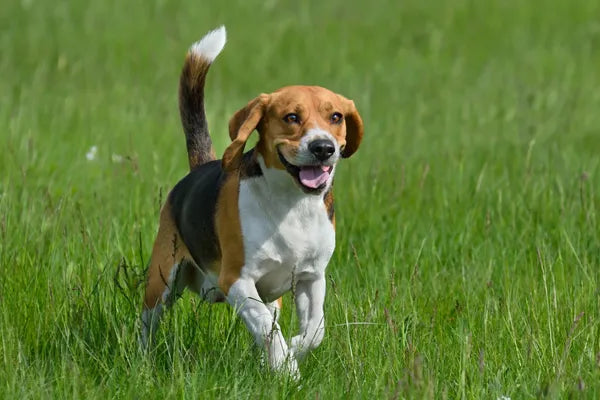
Beagle

  • Good with children
  • Suitable for first-time owners
  • Calm temperament
  • Low grooming commitment
  • Good with other pets
Beagle Breed Guide
Temperament

Friendly, curious and merry. One of the most genuinely good-natured of all dog breeds — rarely aggressive, sociable with people and other dogs, and excellent with children. Driven by nose and food reward. Prone to following scent at the expense of all recall training. Known for a distinctive howl (bay) when excited or left alone.

Lifespan
12–15 years
Adult Size
Two size varieties: under 33 cm (under 13 inch) and 33–40 cm (13–15 inch). Weight 8–14 kg.
Care Level
Low to Medium
Coat Type

Short, dense, hard double coat. Moderate shedder year-round. Easy to maintain; not hypoallergenic.

Energy Level

Medium to High. Needs at least 45–60 minutes of active exercise daily.

is this the right breed for you?

Owner Suitability

Good for active families and first-time owners willing to commit to the breed's specific exercise, scent management and training needs. Not suitable for households with no secure fencing or those seeking a dog that can be walked reliably off-lead in unfenced areas.

Where the breed comes from

Origin & History

The Beagle is one of the oldest hound breeds, with ancestry traceable to small pack hounds used in England as far back as the 14th century. Selectively developed as a scent hound for tracking small game — primarily hare and rabbit — in packs, the Beagle was bred for stamina, excellent nose and a merry, pack-oriented temperament. Standardised in the mid-19th century in England and introduced to Australia where it became a consistently popular family and companion dog. Under the Australian National Kennel Council (ANKC), the Beagle is classified in Group 4 (Hounds).

Get it right early

Tips for First-Time Owners

  1. 1 Secure your yard before the puppy arrives — every fence, gate, gap and potential dig site. A Beagle following a scent has no traffic awareness and a determined one will find every weakness in your perimeter.
  2. 2 Accept that reliable off-lead recall in unfenced areas may never be fully achievable — use long lines in open spaces and only allow off-lead access in fully secured areas.
  3. 3 Measure every meal and resist the soulful eyes — Beagles are expert food beggars and obesity is the most common preventable health issue in the breed.
  4. 4 Commit to the ear care routine — weekly checks and cleaning prevent the painful, recurring ear infections to which this breed is prone.
  5. 5 Channel the nose — scent work, nose games and snuffle mats are the most effective enrichment for this breed and significantly reduce problem behaviours driven by boredom.
Daily Routine

Care & Exercise

Beagles are active, scent-driven dogs requiring at least 45–60 minutes of exercise daily. A securely fenced yard is strongly recommended — Beagles that catch an interesting scent will follow it single-mindedly and have no road sense once in scenting mode, making off-lead exercise in unfenced areas dangerous. All outdoor spaces must be fully escape-proof; Beagles are determined diggers and can squeeze through surprisingly small gaps. Training should start early and requires patience — Beagles are intelligent but independent and easily distracted by scent. Positive reinforcement training using high-value food rewards is most effective. Feeding a measured, quality diet is important as Beagles are notoriously food-motivated and prone to obesity.

Coat Care Routine

Grooming

The Beagle is one of the lower-maintenance breeds for grooming. The short dense coat requires only a weekly brush with a hound mitt or rubber grooming glove to remove loose hair and keep the coat in good condition. Bathe every four to six weeks or as needed — Beagles can acquire a characteristic 'houndy' odour that some owners find stronger in warm weather. Ears must be checked and cleaned weekly; the long, pendulous ears restrict airflow and are prone to infections. Trim nails every three to four weeks. Brush teeth regularly — dental disease is common. Check paws regularly for grass seeds.

Did you know

Fun Facts

The Beagle's nose contains approximately 225 million scent receptors, compared to approximately six million in a human — giving it one of the most powerful senses of smell of any dog breed and making scent work the most natural and fulfilling activity available for the breed.

Snoopy, the most recognised fictional dog in history and one of the longest-running comic strip characters in the world, is a Beagle — first appearing in Charles Schulz's Peanuts strip in 1950 and bringing the breed to global popular recognition for more than 70 years.

Beagles are one of the most widely used breeds in detection work globally — their exceptional scenting ability, compact size, non-threatening appearance and food motivation make them ideal for quarantine detection at international airports. The Australian Department of Agriculture's Detector Dog Program includes Beagles as a primary detection breed.

Day-to-day interaction

Handling & Socialisation

Socialisation from puppyhood is straightforward with this friendly, sociable breed — Beagles are naturally gregarious and generally enjoy meeting people and other dogs. Puppy school is still recommended for basic obedience foundations. Recall training is a significant challenge with this breed; never rely on an off-lead Beagle in an unfenced area, regardless of how well trained it appears. Use long lines for recall training in open spaces. Positive, food-based reward training is highly effective given the breed's food motivation.

Keep them stimulated

Enrichment

Scent-based enrichment is the most natural and effective form of enrichment for a Beagle — nose work, sniff walks, hide-and-seek with food treats, and formal scent detection activities suit this breed's intelligence and natural drives perfectly. A snuffle mat or scatter feeding in the garden encourages natural foraging. Puzzle feeders provide mental stimulation and slow eating. Varying walk routes and introducing new environments provides novel scent experiences. A securely fenced garden where the dog can explore freely provides excellent daily enrichment. Interactive toys, chew toys and food-dispensing toys help manage energy on low-activity days.

What to watch for

Common Health Issues

Obesity: The most common preventable health issue in the breed. Beagles are extremely food-motivated with a poor 'off switch' for eating. Measure all food carefully, limit treats, and maintain a healthy body weight throughout life.

Ear Infections: Pendulous ears create the same moist, warm environment as in Cocker Spaniels. Weekly ear checks and cleaning are essential.

Intervertebral Disc Disease (IVDD): Spinal disc problems reported in the breed. Avoid excessive jumping in puppies.

Hypothyroidism: Reduced thyroid function causing weight gain, lethargy and coat changes; manageable with medication.

Epilepsy: Idiopathic epilepsy is reported in some lines; source from reputable breeders.

Vocalisation: Beagles bay and howl — this is a behavioural characteristic rather than a health issue but can be a significant concern for neighbours. Assess your living situation before acquiring this breed.

Everything you need

Essentials Shopping List

Setup checklist

  • Quality medium-breed dog food (age-appropriate; portion-controlled)
  • Stainless steel food and water bowls
  • Collar with ID tag
  • Harness (front-clip recommended for lead pulling)
  • Standard lead and long training lead (essential for recall training)
  • Crate
  • Dog bed or crate mat
  • Hound glove or rubber grooming mitt
  • Short-bristle brush
  • Ear cleaning solution
  • Dog toothbrush and dog-safe toothpaste
  • Nail clippers
  • High-value training treats (small, smelly)
  • Fillable rubber chew toy
  • Chew toys (variety; Beagles chew heavily)
  • Puzzle feeder
  • Snuffle mat
  • Fetch toy
  • Poo bags and dispenser
  • Dog-safe enzymatic cleaner
  • Flea, tick and worming prevention (vet recommended)
  • Pet insurance (from day one)
FAQ

Commonly Asked Questions

  • Are Beagles easy to train?

    They are intelligent but independent and highly scent-driven, making training more challenging than for more biddable breeds. They respond well to positive, food-based reinforcement but require patient, consistent training. Recall training in unfenced areas should not be relied upon.

  • Do Beagles bark a lot?

    Beagles are vocal — they have a distinctive howl (bay) that they use when excited, bored or left alone. This is a breed characteristic that should be assessed carefully if you live in close proximity to neighbours.

  • Can a Beagle live in an apartment?

    Possible but challenging. Beagles need significant daily exercise and can be vocal, which may disturb neighbours. If apartment-living is the plan, commitment to substantial daily exercise and enrichment is essential.

  • How much exercise does a Beagle need?

    45–60 minutes of active exercise daily at minimum, ideally including opportunities for off-lead running in a secure area and scent-based activities.

  • Are Beagles good with children?

    Yes — one of the most genuinely child-friendly breeds. They are gentle, sociable and playful with children of all ages.

Need help?Our specialists are in-store every day to help with sourcing, training and supplies.

Visit Kellyville Pets