Breed Guide6 min read

French Bulldog

Frenchie · French Bull · Bouledogue Français (French)

  • Low grooming commitment
  • Apartment-friendly
  • Good with other pets
  • Low exercise needs
  • Suitable for first-time owners
  • Good with children
French Bulldog Breed Guide
Temperament

Affectionate, playful, adaptable and companionable. Devoted to their family. Generally good with children and other pets when well socialised. Moderate energy levels that suit a range of household types. Can be stubborn — responds better to positive reinforcement than repetition. Known for entertaining and clownish behaviour.

Lifespan
10–12 years
Adult Size
8–14 kg; 27–35 cm tall at the shoulder. Compact, muscular and low to the ground.
Care Level
Low to Medium
Coat Type

Short, smooth, fine and shiny coat. Moderate shedder year-round — more than the coat length would suggest. Not hypoallergenic.

Energy Level

Low. Short daily walks appropriate; avoid exercise in heat or humidity. Never exercise in hot weather.

is this the right breed for you?

Owner Suitability

Suitable for first-time owners, apartment dwellers and less active households — but only for those who fully research and accept the breed's significant health considerations. The French Bulldog's health needs require an owner prepared to monitor breathing, manage temperature carefully and budget for potentially significant veterinary costs.

Where the breed comes from

Origin & History

Despite its name, the French Bulldog originated in England. In the mid-1800s, lace workers in Nottingham bred miniature versions of the English Bulldog as lap dogs and companions for work. When these workers relocated to France during the Industrial Revolution, they brought their small bulldogs, which were enthusiastically adopted by Parisian society, refined further, and eventually named the French Bulldog. The breed came to Australia, where it has become one of the most popular breeds in the country. Under the Australian National Kennel Council (ANKC), the French Bulldog is classified in Group 7 (Non-Sporting).

Get it right early

Tips for First-Time Owners

  1. 1 Understand BOAS before purchasing — breathing difficulty is the defining health challenge of this breed and affects the majority of individuals to some degree. Ask breeders for BOAS grading, view the parents breathing in person, and budget for possible corrective surgery.
  2. 2 Never exercise a French Bulldog in hot or humid weather — the inability to pant effectively makes them acutely vulnerable to heat stroke, which can be fatal within minutes. Mandatory indoor air conditioning during Australian summers.
  3. 3 Clean facial folds and tail pocket daily — skin fold dermatitis is entirely preventable with a consistent daily cleaning and drying routine.
  4. 4 Source only from an ANKC-registered breeder who health-screens for BOAS, hip dysplasia and hemivertebrae — and avoid non-standard colours (blue, chocolate, merle) which are associated with additional health risks.
  5. 5 Take out pet insurance from day one — BOAS surgery, IVDD treatment and ongoing skin and ear management can generate very significant veterinary costs over the dog's lifetime.
Daily Routine

Care & Exercise

French Bulldogs are low-exercise dogs that suit apartment living and less active households — two short daily walks are typically sufficient. The most critical care considerations for this breed relate to heat management and respiratory health. French Bulldogs must never be exercised in hot or humid weather — their compromised airways make them unable to cool effectively by panting, and they can develop life-threatening heat stroke rapidly. In Australian summers, early morning or evening exercise is mandatory; provide air conditioning indoors during hot weather. Daily cleaning of facial folds, regular ear care and weight management are the primary daily care commitments. BOAS assessment and potentially corrective surgery is an important veterinary discussion for many individuals.

Coat Care Routine

Grooming

The short coat requires only a weekly brush with a grooming glove or rubber brush to remove loose hair. However, the most critical grooming task for the French Bulldog is daily cleaning of the facial folds. Moisture, food and bacteria accumulate in the skin folds around the nose, mouth and chin, causing skin fold dermatitis if not cleaned and dried daily. Use a soft, dry cloth or unscented dog-safe wipe to clean between every fold and dry thoroughly. Tail pockets (the skin fold around the tail base, where present) require the same daily attention. Clean and dry ears weekly — French Bulldogs are prone to ear infections. Bathe every three to four weeks. Brush teeth regularly. Trim nails every three to four weeks.

Did you know

Fun Facts

The French Bulldog became so fashionable in Paris in the late 19th century that wealthy American socialites began bringing them back to the United States in large numbers — and in 1912, a first-class passenger on the Titanic was travelling with a French Bulldog insured for the equivalent of today's approximately AU$17,000. The dog did not survive.

Studies conducted as recently as 2025 found that 64% of French Bulldogs showed signs of BOAS — making it the most prevalent health condition in the breed and more common than in almost any other brachycephalic breed. Dogs Australia supports the Cambridge Respiratory Function Grading Scheme to help identify and selectively breed away from the most severely affected individuals.

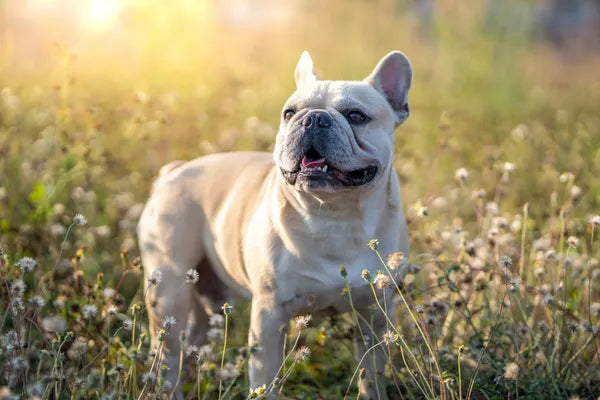
The French Bulldog's distinctive 'bat ears' — large, upright, rounded at the top and wide at the base — are one of the most recognisable features of the breed and are a required characteristic of the breed standard. Early French Bulldogs brought to America had a variety of ear shapes; it was American breeders who standardised the bat ear as the defining feature.

Day-to-day interaction

Handling & Socialisation

Socialisation from puppyhood is important — French Bulldogs are generally friendly and sociable, but can become anxious or reactive without adequate early exposure. Puppy school is recommended. Training should be positive and reward-based; the breed is intelligent but independent and can be stubborn if training is repetitive or relies on punishment. Keep sessions short, varied and fun. The breed's popularity has led to widespread puppy farming — sourcing from an ANKC-registered breeder who health-screens is critically important.

Keep them stimulated

Enrichment

French Bulldogs are moderately playful and benefit from mental stimulation that does not require strenuous physical exertion. Interactive puzzle feeders, short trick-training sessions, gentle indoor play and calm interaction with family members are ideal. Chew toys and food-dispensing toys provide engagement. Avoid high-energy activities and never play or exercise in heat. Sniff walks (allowing the dog to explore at its own pace) are well-suited to this breed's physical limitations. Keep enrichment calm, cool and indoors during warm weather.

What to watch for

Common Health Issues

Brachycephalic Obstructive Airway Syndrome (BOAS): The most significant and defining health challenge of the breed. BOAS results from the flat facial structure — narrow nostrils (stenotic nares), elongated soft palate, and sometimes a narrowed trachea collectively obstruct the airway, causing breathing difficulty that ranges from mild to severe. Studies suggest up to 64% of French Bulldogs show signs of BOAS. Corrective surgery (widening nostrils and shortening the soft palate) significantly improves quality of life in affected dogs. All French Bulldog owners should have a BOAS assessment done by a vet; Dogs Australia supports the Cambridge Respiratory Function Grading Scheme. Heat stroke risk is directly linked to BOAS — never exercise in warm weather.

Intervertebral Disc Disease (IVDD): Spinal disc problems caused by the breed's chondrodystrophic body type. Hind leg weakness or sudden back pain warrants urgent veterinary attention. Keep the dog lean and minimise jumping.

Skin Fold Dermatitis: Infection and inflammation in facial folds and tail pocket; prevented entirely by daily cleaning and drying of all skin folds.

Hip Dysplasia and Patella Luxation: Joint conditions requiring source from health-screened parents.

Ear Infections: Prone due to ear shape; weekly cleaning is essential.

Hemivertebrae: Malformed vertebrae common in screw-tailed breeds; can cause spinal instability.

Everything you need

Essentials Shopping List

Setup checklist

  • Quality small-to-medium breed dog food (age-appropriate; weight-controlled)
  • Stainless steel food and water bowls (slow feeder recommended)
  • Collar with ID tag
  • Harness (front-clip — never a collar for exercise due to tracheal pressure)
  • Short lead
  • Crate
  • Orthopaedic dog bed
  • Rubber grooming glove or soft-bristle brush
  • Unscented dog-safe wipes or soft cloths (daily fold cleaning)
  • Dog-safe shampoo
  • Ear cleaning solution
  • Dog toothbrush and dog-safe toothpaste
  • Nail clippers
  • Training treats (low-fat; small)
  • Fillable rubber chew toy
  • Puzzle feeder
  • Variety of indoor toys
  • Cooling mat (essential for Australian summers)
  • Poo bags
  • Flea, tick and worming prevention (vet recommended)
  • Pet insurance (from day one — essential for this breed)
FAQ

Commonly Asked Questions

  • What is BOAS and does every French Bulldog have it?

    BOAS (Brachycephalic Obstructive Airway Syndrome) affects the majority of French Bulldogs to varying degrees due to their flat facial structure. Symptoms range from mild noisy breathing to severe exercise intolerance and breathing distress. Corrective surgery is available and significantly improves quality of life in affected dogs. Ask breeders for a BOAS grade before purchasing.

  • Can French Bulldogs exercise normally?

    In cool conditions and with appropriate limits, yes — but never in hot or humid weather, which can cause fatal heat stroke rapidly. Two short walks daily in cool conditions is appropriate; air conditioning in Australian summers is not optional.

  • Do French Bulldogs need a lot of grooming?

    The coat needs only a weekly brush. The daily commitment is cleaning facial folds and any tail pocket — moisture trapped in these folds causes painful skin infections if not cleaned and dried every day.

  • Are non-standard colours (blue, chocolate, merle) healthy?

    Non-standard colours are not recognised by the ANKC and are often associated with additional health risks — dilute colour genes can cause skin conditions, and merle breeding increases the risk of hearing and vision defects. ANKC-registered breeders do not breed these colours.

  • Are French Bulldogs good for apartment living?

    Yes — low exercise needs and compact size make them well-suited to apartments. Air conditioning is essential in Australia, as is daily facial fold cleaning.

Need help?Our specialists are in-store every day to help with sourcing, training and supplies.

Visit Kellyville Pets