Breed Guide6 min read

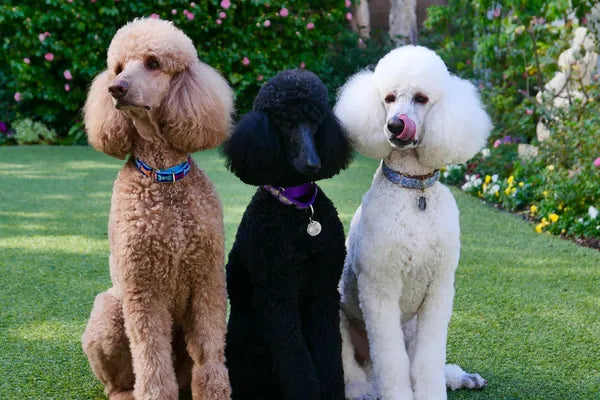
Standard Poodle

Standard Poodle · Pudel (German origin) · Caniche (French) · Standard is the largest of three ANKC-recognised sizes: Standard, Miniature and Toy

  • Easy to train
  • Good with children
  • Suitable for first-time owners
  • Calm temperament
  • Low-shedding
  • Good with other pets
Standard Poodle Breed Guide
Temperament

Highly intelligent, sensitive, loyal and deeply attuned to their owner's emotional state. Playful and enthusiastic with family, generally good with children and other dogs when socialised. Alert without being reactive. Responds exquisitely to positive training — among the most naturally biddable of all large breeds. Sensitive to household tension and inconsistency. Not suited to harsh correction or chaotic environments.

Lifespan
12–15 years — long-lived for a large breed
Adult Size
Typical adults 55–65 cm, 20–35 kg. Males larger than females.
Care Level
Medium to High
Coat Type

Dense, single-layer curly coat. Minimal shedder — shed hair is caught in the curls rather than released. Hypoallergenic-friendly, though not allergen-free. Coat grows continuously and requires regular professional clipping. Never shave — it does not grow back correctly if clipped to the skin.

Energy Level

Medium to High. 45–60 minutes of active exercise daily plus mental stimulation.

is this the right breed for you?

Owner Suitability

Excellent for families, active households, experienced and first-time owners willing to commit to the grooming requirement. Highly adaptable across living situations provided exercise needs are met. Does not suit being alone for long periods. The grooming commitment is ongoing and non-negotiable.

Where the breed comes from

Origin & History

The Poodle is believed to have originated in Germany as a water retriever, with the name derived from the German word Pudel meaning 'to splash in water'. The breed was subsequently refined in France where it became one of the most fashionable and popular dog breeds in European history. The Standard Poodle is the largest and the original of the three Poodle sizes (Standard, Miniature and Toy) and is the oldest — the smaller varieties were developed later from the Standard. Despite its reputation as a pampered salon dog, the Standard Poodle was a serious working retriever and duck hunter; the distinctive clip originated practically, with sections of coat shaved to allow freer movement in water while joints and organs were left covered for warmth and protection. Under the Australian National Kennel Council (ANKC), the Standard Poodle is classified in Group 7 (Utility). Consistently ranked second in canine intelligence assessments behind only the Border Collie.

Get it right early

Tips for First-Time Owners

  1. 1 Commit to professional grooming every four to six weeks and daily brushing between appointments — the Standard Poodle's coat is one of the most demanding of any large breed and neglect rapidly leads to painful, unmanageable matting.
  2. 2 Know the signs of Addison's Disease and discuss it with your vet early — this condition is notably prevalent in Standard Poodles, its signs are often vague and it is easily missed without awareness. Any recurring lethargy or stress-related episodes warrant investigation.
  3. 3 Know the signs of bloat (GDV) — distended abdomen, restlessness and unproductive retching are emergency signs requiring immediate veterinary attention. Feed two smaller meals and avoid exercise around mealtimes.
  4. 4 Source from a reputable breeder who hip-scores, eye-tests, PRA DNA-tests and tests for Von Willebrand Disease and Sebaceous Adenitis.
  5. 5 Invest in pet insurance from day one — GDV surgery, Addison's Disease management and the grooming commitment over a 12–15 year lifespan represent significant ongoing costs.
Daily Routine

Care & Exercise

The Standard Poodle requires 45–60 minutes of active daily exercise — walking, swimming, fetch and varied outdoor activity are ideal. Their exceptional intelligence means physical exercise alone is insufficient; structured training, puzzle feeders and cognitive enrichment are daily necessities, not luxuries. Training should begin from puppyhood and continue throughout the dog's life; the Standard Poodle is one of the easiest breeds to train and genuinely enjoys learning. Bloat (GDV) risk is significant in this deep-chested breed — feed two smaller meals daily and avoid vigorous exercise immediately before and after eating. Addison's Disease is notably prevalent in Standard Poodles and all owners should be aware of the signs. Build separation tolerance from puppyhood. Annual vet checks including hip evaluation and eye checks are recommended.

Coat Care Routine

Grooming

The Standard Poodle coat is one of the highest-maintenance of any large breed. Professional grooming every four to six weeks is non-negotiable — without regular clipping the continuously growing coat becomes impossibly dense and matted. Daily brushing with a slicker brush and steel comb is essential between professional appointments — brush all the way to the skin using a line-brushing technique, not just across the surface. Neglecting to brush to the skin allows invisible under-mats to form that require shaving to correct. The ears grow hair deep in the ear canal — regular professional ear plucking and weekly cleaning prevents chronic infections. Bathe every three to four weeks. Brush teeth daily. Trim nails every three to four weeks.

Did you know

Fun Facts

The Standard Poodle consistently ranks second in Stanley Coren's The Intelligence of Dogs — the most widely cited canine intelligence ranking — behind only the Border Collie. Unlike many 'smart' breeds, Standard Poodles combine high intelligence with an exceptional eagerness to please, making them not only capable of learning a very wide range of commands but also genuinely motivated to do so — a combination that makes them the most trainable of all large breeds.

The Standard Poodle's elaborate show clips — including the iconic Continental clip — are not purely decorative. The original working hunters who used Poodles as water retrievers shaved sections of the coat to reduce drag and waterlogging in cold rivers while leaving dense pom-poms over the joints to protect against cold and rheumatism. The theatrical clip seen in the show ring today is a direct artistic evolution of this practical hunting necessity.

The Standard Poodle was a circus performer on the Australian goldfields in the 19th century — as noted in the Dogs Australia breed profile — making the breed part of Australian cultural history as well as its more glamorous French salon reputation. Their trainability and responsiveness made them ideal circus animals.

Day-to-day interaction

Handling & Socialisation

Early socialisation and puppy school are strongly recommended — Standard Poodles are naturally confident but benefit from structured early exposure to varied people, environments and dogs. Positive, reward-based training is ideal and achieves exceptional results with this breed; the Standard Poodle's intelligence means it can learn a very wide range of commands, tricks and tasks. Sensitivity means the dog reads the owner's tone closely — calm, clear communication is far more effective than volume or repetition. Do not leave alone for extended periods without building independence gradually from puppyhood.

Keep them stimulated

Enrichment

The Standard Poodle's intelligence and working drive make enrichment a fundamental welfare requirement. Structured training — obedience, agility, tracking, scent work, retrieval — provides the best cognitive and physical enrichment. At home, puzzle feeders, hide-and-seek games, trick-training sessions and swimming provide daily engagement. The breed's water retriever heritage means many Standard Poodles are enthusiastic and skilled swimmers. Varied walk routes, novel environments and social outings suit this curious, sociable breed.

What to watch for

Common Health Issues

Bloat (GDV): The most critical acute health risk. Deep-chested large breeds are at meaningful risk of the stomach filling with gas and twisting — a life-threatening emergency. Feed two smaller meals daily; avoid vigorous exercise immediately before and after eating; know the emergency signs (distended abdomen, unproductive retching, restlessness) and seek emergency veterinary care immediately.

Addison's Disease: Inadequate production of adrenal hormones — notably more common in Standard Poodles than most breeds. Signs include lethargy, recurrent digestive problems, weakness under stress and potential collapse in crisis. Addison's is often called 'the great pretender' as its signs are vague and intermittent. Any Standard Poodle showing recurring unexplained gastric upsets or stress-related collapses should be assessed for Addison's Disease.

Hip Dysplasia: Common in large breeds; source from hip-scored parents.

Progressive Retinal Atrophy (PRA): Hereditary eye condition in some lines; source from DNA-tested breeding stock.

Von Willebrand Disease: A hereditary bleeding disorder; DNA testing is available.

Sebaceous Adenitis: A hereditary skin condition causing hair loss and scaling; more common in Standard Poodles than most breeds.

Everything you need

Essentials Shopping List

Setup checklist

  • Quality large-breed dog food (age-appropriate)
  • Stainless steel food and water bowls (slow feeder; no elevated feeder — increases GDV risk)
  • Collar with ID tag
  • Harness
  • Standard lead and long training lead
  • Crate (large)
  • Dog bed
  • Slicker brush and steel comb (daily use)
  • Dematting tool
  • Dog-safe shampoo
  • Ear cleaning solution and ear plucking powder (or book regular professional ear care)
  • Dog toothbrush and dog-safe toothpaste
  • Nail clippers
  • High-value training treats
  • Fillable rubber chew toy
  • High-difficulty puzzle feeders
  • Fetch toy (water-safe)
  • Agility or dog sport enrolment
  • Poo bags
  • Flea, tick and worming prevention (vet recommended)
  • Pet insurance (from day one)
FAQ

Commonly Asked Questions

  • Is a Standard Poodle high maintenance?

    In terms of grooming, yes — professional clipping every four to six weeks and daily brushing are non-negotiable. In terms of temperament and training, it is actually one of the easiest large breeds to own because it is so intelligent, responsive and eager to please.

  • Do Standard Poodles shed?

    Minimally — shed hair is caught in the curls rather than released. This is why regular professional grooming is essential; without clipping, the trapped dead coat causes the coat to mat rather than fall out.

  • What is Addison's Disease and why does it matter for Standard Poodles?

    Addison's is an adrenal hormone deficiency that is more prevalent in Standard Poodles than most breeds. It causes vague, recurring symptoms including digestive upsets and stress-related weakness. It can be life-threatening in an Addisonian crisis. Awareness and early diagnosis are important — discuss this condition with your vet.

  • Are Standard Poodles good family dogs?

    Excellent family dogs — gentle, responsive, great with children and adaptable across household types. Their size and intelligence requires committed training and exercise but they reward it generously.

  • What health tests should I ask a breeder for?

    Hip scores; PRA DNA test; Von Willebrand Disease DNA test; Sebaceous Adenitis assessment; discussion of Addison's Disease history in the breeding lines.

Need help?Our specialists are in-store every day to help with sourcing, training and supplies.

Visit Kellyville Pets