Breed Guide6 min read

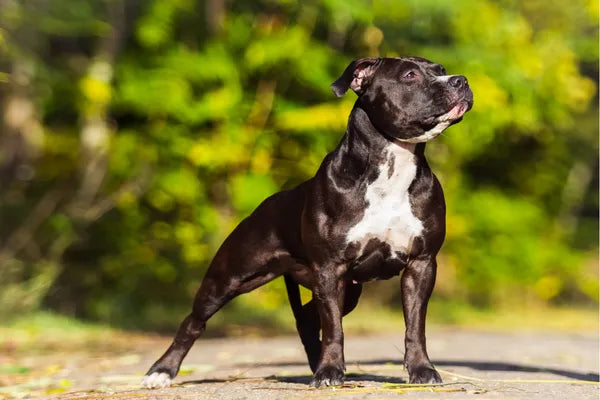
Staffordshire Bull Terrier (English Staffy)

Staffy · Staffie · SBT · Staff · Nanny Dog (historical affectionate nickname) · English Staffy (to distinguish from American Staffordshire Terrier)

  • Good with children
  • Easy to train
  • Low grooming commitment
  • Suitable for first-time owners
Staffordshire Bull Terrier (English Staffy) Breed Guide
Temperament

People-oriented, affectionate and enthusiastic to a fault — the Staffordshire Bull Terrier is one of the most devoted and family-loving of all dog breeds, earning the enduring nickname 'the nanny dog' for its traditionally gentle and tolerant nature with children. Energetic, playful and full of personality. Intelligent and responsive to training. Can be stubborn. High arousal levels that require management, particularly as puppies. Can be dog-selective — early socialisation is important.

Lifespan
12–14 years; well-managed individuals often reach the higher end
Adult Size
Males 13–17kg, 36–41cm; females 11–15.5kg, 33–38cm
Care Level
Low to Medium
Coat Type

Short, smooth, close-lying single coat. Minimal shedder — very low grooming demand. Not hypoallergenic. The short coat provides minimal insulation in cold weather and minimal protection from sun in hot weather — Australian owners should be aware of heat and sunburn risks.

Energy Level

Medium to High. At least 45–60 minutes of vigorous daily exercise.

is this the right breed for you?

Owner Suitability

Good for experienced dog owners, active families and committed first-time owners willing to invest in training and socialisation. One of the most people-oriented and family-devoted breeds available. Requires understanding of the breed's dog-directed tendencies and proactive socialisation management. Not recommended for completely inexperienced households without a commitment to training.

Where the breed comes from

Origin & History

The Staffordshire Bull Terrier originated in the Black Country of Staffordshire, England, in the early 19th century, developed by crossing the Old English Bulldog with terrier breeds — primarily the Black and Tan Terrier — to create a dog that combined the Bulldog's power and courage with the terrier's agility and tenacity. Originally bred for dogfighting after bull-baiting was outlawed in England in 1835, the breed's fighting history was subsequently abandoned and the Staffordshire Bull Terrier was developed as a family companion and show dog. It was officially recognised by the Kennel Club in 1935. Introduced to Australia, the Staffy has become one of the country's most popular and recognisable family breeds. Under the Australian National Kennel Council (ANKC), the Staffordshire Bull Terrier is classified in Group 2 (Terriers).

Get it right early

Tips for First-Time Owners

  1. 1 Socialise extensively from puppyhood — proactive positive exposure to other dogs from the first weeks is the single most effective investment in a manageable, well-adjusted adult Staffy.
  2. 2 Source from a reputable breeder who DNA-tests for L2-Hydroxyglutaric Aciduria (L2HGA) and Hereditary Cataracts (HC) — both are breed-specific, hereditary and fully testable.
  3. 3 Train lead manners from day one using a front-clip harness — the Staffy's strength and enthusiasm on the lead makes early training essential before the dog reaches full size.
  4. 4 Be aware of heat sensitivity — never leave a Staffy in a hot car, limit exercise in warm weather and provide shade and cool water. The short coat does not protect from sun or heat.
  5. 5 Invest in pet insurance from day one — skin allergy management can be an ongoing veterinary cost, and L2HGA treatment is expensive if it occurs.
Daily Routine

Care & Exercise

The Staffordshire Bull Terrier requires at least 45–60 minutes of vigorous daily exercise — they are muscular, energetic dogs that need physical outlets for their energy. Without adequate exercise, boredom-related destructive behaviour and excessive energy are common. Training should begin from the first day home using positive, reward-based methods. The Staffy is intelligent and learns quickly, but can be stubborn and exuberant without consistent guidance. The breed's enthusiasm and strength require lead manners training from puppyhood — a fully grown Staffy pulling on the lead is challenging to manage. Puppy school is strongly recommended. Annual vet checks, dental care and parasite prevention are essential.

Coat Care Routine

Grooming

The Staffordshire Bull Terrier is one of the lowest-maintenance grooming breeds available. The smooth, short coat requires only a weekly wipe-down with a damp cloth or rubber grooming mitt to remove loose hair and keep the coat gleaming. Bathe every four to six weeks or as needed. The short coat provides no insulation — in cold weather a dog coat or jacket may be needed in cooler climates. In hot weather, limit sun exposure and provide shade — the short coat offers minimal UV protection and the breed can be prone to sunburn on pale or pink areas. Check and clean ears weekly. Brush teeth regularly — dental disease is a concern in all breeds. Trim nails every three to four weeks.

Did you know

Fun Facts

The Staffordshire Bull Terrier holds the distinction of being the only dog breed for which the Kennel Club breed standard specifically references its affinity with children — the standard describes the Staffy as 'affectionately known as the nanny dog'. This formal recognition of the breed's child-friendly temperament within the official breed standard is unique in the world of pedigree dogs.

L-2-Hydroxyglutaric Aciduria (L2HGA) is a neurological metabolic disease found almost exclusively in the Staffordshire Bull Terrier — making it one of only a small number of inherited diseases so closely associated with a single breed that it is commonly referred to simply as a 'Staffy disease'. DNA testing has been available since 2009 and all responsible breeders should test before breeding.

The Staffordshire Bull Terrier was bred from the 1830s onward from a cross of the Old English Bulldog with terriers — creating a breed whose documented history begins in legal fighting pits. Within a century of this origin, the breed had transformed entirely into one of the most people-trusting, child-devoted and family-oriented breeds recognised by any kennel club — one of the most remarkable temperament reformations in canine breeding history.

Day-to-day interaction

Handling & Socialisation

Socialisation from puppyhood is critically important for Staffies — while naturally people-friendly, the breed's terrier heritage means early positive exposure to other dogs is essential for developing reliable, manageable on-lead behaviour. Puppy school provides foundational socialisation and training. The breed is strong and enthusiastic — consistent lead manners training from puppyhood produces a far more manageable adult. Use a front-clip harness for lead training. The breed's high arousal levels as puppies require calm, patient management; reward settled behaviour consistently and redirect excitability with a purpose.

Keep them stimulated

Enrichment

Staffies are energetic, intelligent dogs that need both physical and mental stimulation. Vigorous play — fetch, tug, interactive games with the owner — is ideal. Agility, obedience trials and dog sports that channel energy productively suit this breed well. Puzzle feeders and training sessions provide cognitive enrichment. The breed thrives on close involvement in family life — being included in activities is the most natural enrichment available to this people-centred breed. Provide an appropriate outlet for chewing — Staffies are powerful chewers and appreciate durable, appropriately-sized chew toys.

What to watch for

Common Health Issues

Skin Conditions and Allergies: The most common health concern in the breed. Staffies are prone to skin allergies and contact dermatitis, presenting as itching, redness and skin infections. Environmental allergens, food allergies and contact reactions to certain surfaces or products are all possible triggers. Investigation and management with a veterinarian is important for persistently itchy or rash-affected individuals.

Heat Sensitivity: The short coat, brachycephalic-adjacent facial structure (some Staffies have a slightly compressed face) and muscular build make this breed more susceptible to overheating than many breeds. Avoid exercise in hot weather; provide shade and cool water; never leave in a hot car.

L-2 Hydroxyglutaric Aciduria (L2HGA): A neurological condition specific to the breed causing progressive neurological signs. DNA testing is available and should be mandatory in all breeding dogs.

Hereditary Cataracts (HC): A hereditary eye condition; DNA testing available.

Dental Disease: Common; regular brushing is important.

Colour Dilution Alopecia: Skin condition associated with blue colouring; causes patchy hair loss.

Everything you need

Essentials Shopping List

Setup checklist

  • Quality medium-breed dog food (age-appropriate)
  • Stainless steel food and water bowls
  • Collar with ID tag
  • Front-clip harness (essential for lead manners training)
  • Standard lead and long training lead
  • Crate
  • Dog bed
  • Rubber grooming mitt or soft-bristle brush (weekly)
  • Dog-safe shampoo
  • Ear cleaning solution
  • Dog toothbrush and dog-safe toothpaste
  • Nail clippers
  • High-value training treats
  • Durable fillable rubber chew toy
  • Durable tug toy
  • Fetch toy
  • Puzzle feeders
  • Poo bags
  • Flea, tick and worming prevention (vet recommended)
  • Pet insurance (from day one)
FAQ

Commonly Asked Questions

  • Are Staffies dangerous dogs?

    No — the Staffordshire Bull Terrier is not legally classified as a dangerous dog in Australia and is not subject to breed-specific legislation (BSL) in most Australian jurisdictions. It is important to distinguish the Staffy from the American Pit Bull Terrier, which is prohibited in Australia. Staffies have been formally recognised as gentle, child-friendly companion dogs by their breed standard for nearly 90 years.

  • Are Staffies good with children?

    The Staffordshire Bull Terrier is historically one of the most child-friendly breeds — the 'nanny dog' reputation is well-founded. As with all dogs, supervision with very young children is recommended and children should be taught appropriate dog interaction.

  • Can Staffies live with other dogs?

    With early socialisation, many Staffies live happily with other dogs. The breed's terrier heritage means some individuals are selective about other dogs; manageable with proactive socialisation and good lead manners training.

  • What is L2HGA?

    A breed-specific neurological condition causing progressive neurological signs in affected Staffies. DNA testing is available — always ask breeders for L2HGA clear status of both parents.

  • What health tests should I ask a breeder for?

    L2HGA DNA test (mandatory); Hereditary Cataracts (HC) DNA test; discussion of skin allergy and coat health history in breeding lines.

Need help?Our specialists are in-store every day to help with sourcing, training and supplies.

Visit Kellyville Pets