


Green Cheek Conures sleep in a uniquely endearing way — they hang upside down from perches or the cage ceiling while sleeping, which can alarm new owners who mistake the sleeping posture for illness.
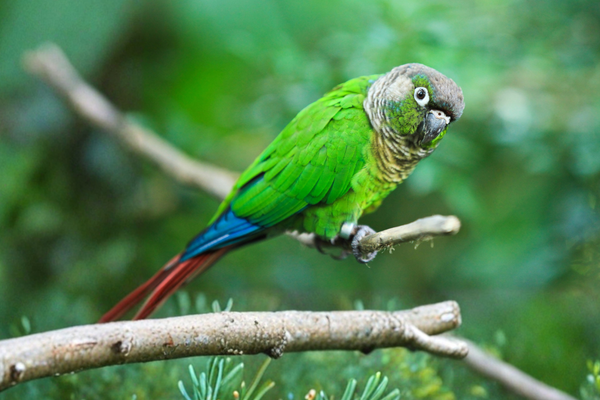
Green Cheek Conure
Pyrrhura molinae
Download the full care guide (PDF)
Free & Print-ready

10-15+ years

25-26cm; 60-80g

Low to Medium


Where they come from
Natural History & Origin


Get it right early
Tips for First-Time Owners
- 1 Green Cheek Conures are 'velcro birds' — they need daily physical contact and companionship to thrive. A minimum of thirty minutes to an hour of active, hands-on interaction every day is important for their psychological wellbeing.
- 2 A sleeping tent or hut in the cage is not just a toy — Green Cheeks naturally roost in enclosed spaces and genuinely benefit from having a secure, enclosed sleeping space in their cage.
- 3 Transition to a pellet-based diet as the dietary foundation — Green Cheeks on seed-only diets develop nutritional deficiencies over time that are entirely preventable.
- 4 These birds are small and easily injured — always be aware of where your bird is when it is out of its cage, particularly underfoot or in furniture that can be sat on.
- 5 Establish an avian vet relationship early — annual health checks and quarterly worming should be part of the routine from the start.
Setting up the habitat
Enclosure & Husbandry
What to feed
Dietary Management
Day-to-day interaction
Handling & Socialisation
Find your next best friend
Browse all Handraised Birds
Our Available Handraised Birds
Did you know
Fun Facts
They have been selectively bred into one of the widest colour mutation ranges of any small parrot, with new mutations continuing to emerge from specialist breeders in Australia and internationally — the pineapple mutation in particular has become one of the most popular parrot colour forms in Australian aviculture.
Despite their small size, Green Cheek Conures have been documented using basic tool-use behaviours in research settings — picking up objects and using them to manipulate food — suggesting a level of cognitive complexity that exceeds expectations based on their body size.
Keep them stimulated
Enrichment
What to watch for
Common Health Issues
Everything you need
Essentials Shopping List
Setup checklist
- Medium-to-large cage — minimum 90 × 50 × 90 cm Bar spacing no greater than 1.5–2 cm Multiple perches of varying diameter: natural timber, textured Sleeping hut or tent (essential species-specific comfort item) Stainless steel food and water dishes (minimum two sets) Quality small parrot pellets Varied fresh fruit and vegetables (daily) Small parrot seed mix (supplement only) Cuttlebone Vitamin supplement (2–3× per week) Broad-spectrum bird wormer (quarterly) Minimum six rotating toys: chew toys, foot toys, foraging toys, swings, bells Foraging toy selection Play gym or play top Large shallow bathing dish or fine-mist spray bottle Cage cover (breathable fabric) Avian-safe cage disinfectant Annual avian vet check (ongoing)
READY TO SET UP
Browse all
Shop the Essentials

Avigrain Wild Bird Mix 20kg
$28.49
View →

Avigrain Small Parrot Mix 20kg
$36.49
View →

Avigrain Budgie Blue 20kg
$52.99
View →

Budgie Mix
from$15.99
View →

Forage Pinecone Bird Treat
from$21.49
View →

Save 10%
Vetafarm Parrot Essentials

Forage Gourmet Conure & Quaker Food
from$17.99
View →

Avigrain Grey Striped Sunflower Seed 15kg
$37.99
View →
FAQ
Commonly Asked Questions
-
Are Green Cheek Conures noisy?
-
What is the difference between a Green Cheek Conure and a Sun Conure?
-
Do Green Cheek Conures talk?
-
Can I keep two Green Cheek Conures together?
-
Do I need a licence to keep a Green Cheek Conure in Australia?
Learn more
See more care guides Read about other species
No articles match that search. Try a different word.

Birds
How to Turn Your Backyard Into a Native Bird Haven
Read
Birds
Fox-Proofing Your Backyard Chickens | Kellyville Pets
Read
Birds
Breeding Budgies: A Complete Beginner's Guide
Read
Birds
How to Choose the Right Toys for Your Bird
Read
Birds
5 Things You Did Not Know About Parrots
Read
Birds
Buying a Pet Bird in NSW: Where to Buy, What to Check and Red Flags to Avoid
Read
Need help?Our specialists are in-store every day to help with set up, licensing and feeding.
Visit Kellyville Pets