


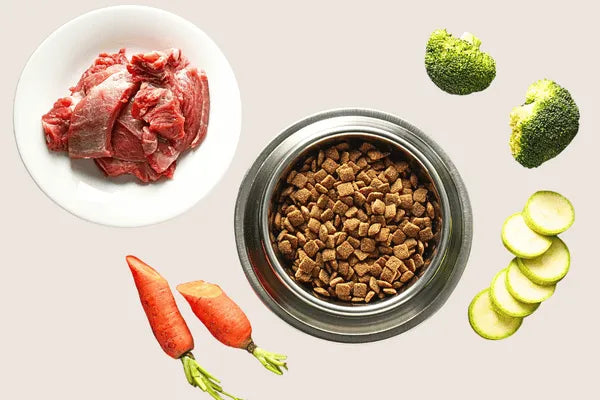
Whether you're switching kibble brands, dipping a toe into wet or fresh food, or considering raw feeding, the biggest mistake owners make is the same one: going too fast. Your dog's gut needs time to adjust to new proteins, fibres and fats, no matter how good the new food is. Here's how to do it properly, plus what to actually look for on the label so you know you're buying quality, not clever packaging.
Why You Can't Just Swap the Bowl Overnight
Dogs don't have the enzyme flexibility we do. A sudden change in protein source or fat content can upset the balance of bacteria in their gut, and the result is usually the same: loose stools, vomiting, or a dog who turns their nose up at dinner altogether. A gradual transition gives their digestive system time to adapt and gives you a chance to spot any sensitivities before they become a full-blown problem.
The golden rule across every type of transition below is the same: slow it down, watch the poo, and don't panic at the first sign of a softer stool (a little looseness on day 2 or 3 is normal - straight-up diarrhoea for more than a day isn't).
Switching Dry Food to Dry Food (Brand X to Brand Y)

This is the most common transition and the easiest to get wrong by rushing. Even if you're moving between two premium kibbles, the protein sources, fat percentages and fibre types can be quite different.
Follow a 7-10 day mix ratio, gradually increasing the new food while decreasing the old:
| Days | Old Food | New Food |
|---|---|---|
| 1-2 | 75% | 25% |
| 3-4 | 50% | 50% |
| 5-6 | 25% | 75% |
| 7+ | 0% | 100% |
If your dog has a sensitive tummy or you're moving to a very different protein (say, chicken-based to kangaroo-based), stretch this out to 10-14 days and hold each stage a day or two longer.
Introducing Wet or Fresh Food to a Dry Diet
Adding wet or fresh food isn't just about taste, it boosts hydration, and fresh options in particular tend to be higher in moisture and easier to digest for dogs with dental issues or fussy appetites.
Start small. A tablespoon or two of wet food mixed through their existing kibble for the first few days is plenty, working up gradually rather than replacing a full meal at once. Fresh food (gently cooked, human-grade meals) tends to be richer than kibble, so the same slow build applies, even more so if your dog has never eaten anything but dry food before.
A mixed diet of kibble plus wet or fresh isn't a compromise, it's actually one of the more balanced ways to feed, giving you the convenience and dental benefits of kibble alongside the moisture and palatability of wet or fresh.
Transitioning to Raw Feeding

Raw is the biggest jump for a dog's gut, because you're not just changing brand or moisture content, you're changing the entire way the food is processed and digested. Raw diets are typically higher in protein and fat and contain none of the cooking process that breaks down some of what's in kibble.
Benefits owners typically notice with raw or raw-inclusive feeding:
- Improved coat condition and skin health
- Better stool quality and smaller stool volume (less filler in, less waste out)
- Cleaner teeth from the chewing action of raw meaty bones
- Often better energy levels and body condition
How to transition
- Never mix raw and kibble in the same meal, they digest at completely different speeds, which can lead to digestive upset. Instead, feed them as separate meals (e.g. raw at breakfast, kibble at dinner).
- Start with a single raw meal a few times a week and build up gradually over 2-3 weeks.
- Introduce one new protein at a time (chicken first, for example, before moving to beef or kangaroo) so you can identify any sensitivities.
- Talk to our team in-store about a complete and balanced raw option, as not all raw products are formulated to meet full nutritional requirements on their own.
If your dog has any existing health conditions (pancreatitis, kidney issues, or a compromised immune system in particular), check with your vet before starting raw.
Mixed Feeding: The Best of Both Worlds
You don't have to pick a lane. Mixed feeding, kibble plus raw, or kibble plus fresh, is a genuinely popular and sensible approach for a lot of households. It gives you the convenience and shelf-stability of kibble day-to-day, with the added benefits of raw or fresh a few times a week. Just remember to keep raw and kibble as separate meals rather than combining them in the one bowl.
What to Actually Look for on the Ingredients List
The front of the bag will tell you almost nothing useful. The ingredients list and guaranteed analysis will tell you everything.
Signs of a high-quality food:
- A named animal protein first on the list (chicken, lamb, kangaroo) rather than a vague "meat meal" or "animal derivatives"
- Whole food ingredients you recognise, rather than a long string of chemical-sounding fillers
- Minimal use of grain fillers like wheat or corn used purely to bulk out the food cheaply
- Named fat sources (chicken fat, salmon oil) rather than generic "animal fat"
- No artificial colours, since your dog doesn't care what colour their kibble is
Red flags to watch for:
- Generic "meat by-products" or "animal digest" high on the list
- Sugar or sweeteners added (dogs don't need it, and it's usually there to make a lower-quality food more palatable)
- A very long ingredient list padded with fillers rather than functional nutrients
Why Cost Per Kilo Is the Wrong Way to Compare
This is where a lot of owners get caught out. A premium food often looks more expensive sitting on the shelf next to a budget brand, but that comparison is misleading if you're only looking at price per kilo.
Premium foods are more nutrient-dense, so your dog needs a smaller serve to meet their daily requirements. Cheaper foods are often bulked out with fillers your dog's body can't use efficiently, meaning you end up feeding more per meal just to get the same nutritional value.
| Budget Brand | Premium Brand | |
|---|---|---|
| Price per kg | $6/kg | $12/kg |
| Recommended daily serve (25kg dog) | 350g | 220g |
| Cost per day | $2.10 | $2.64 |
| Cost per week | $14.70 | $18.48 |
The gap narrows fast once you factor in serving size, and often the premium food works out only marginally more expensive per day, sometimes cheaper, especially once you factor in fewer vet visits from better digestive health and coat condition. Always check the feeding guide on the back of the bag and calculate cost per serve, not just cost per kilo, before deciding what's actually the better value.
Bringing It All Together
Every transition, whether it's a brand swap, adding wet food, or moving to raw, comes down to the same principle: slow and steady wins. Watch your dog's stool, coat and energy levels as your guide, and don't be afraid to stretch the transition period out longer if you notice any sensitivity.
If you're not sure where to start or want help picking the right food for your dog's age, breed and activity level, pop into the Kellyville Pets store and our team can talk you through your options, or check out our full range of dog food online.


