Care Guide6 min read

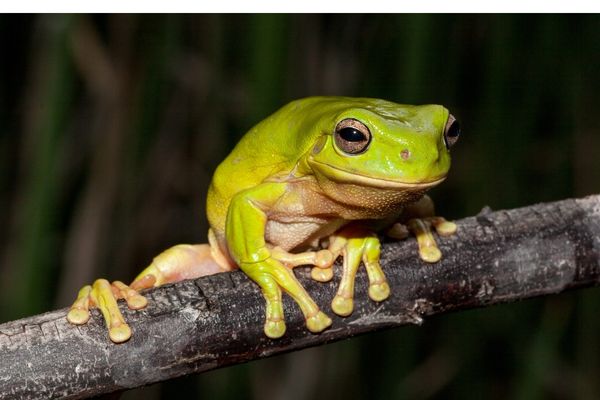
Green Tree Frog

Litoria caerulea

White's Tree Frog (commonly used outside Australia) · Dumpy Tree Frog · Australian Green Tree Frog

Green Tree Frog Care Guide
Lifespan
15-20+ years
Adult Size
6-11cm
Care Level
Low to Medium
Diet

Live insects — primarily crickets, woodies (cockroaches) and black soldier fly larvae

Enclosure

Tall, front-opening glass or PVC terrarium (minimum 60 × 45 × 60 cm) with live or artificial plants, climbing branches, a shallow water dish and high humidity

Temperament

Best appreciated as an observation animal — their activity at dusk and night and their expressive postures make them engaging to watch

Where they come from

Natural History & Origin

Green Tree Frogs are native to northern and eastern Australia, with a natural range extending from the Kimberley region of Western Australia across the Northern Territory and throughout Queensland and into New South Wales. They inhabit tropical and subtropical forests, woodlands, wetlands and areas near permanent water sources. Highly adaptable, they are regularly found in suburban gardens, downpipes, outdoor toilets and sheds — earning them the affectionate nickname 'dunny frog' across northern Australia.

They are nocturnal, emerging after dark to hunt for insects near light sources, and shelter in cool, moist spots during the day. In the wild, they experience warm, humid summers and drier, cooler winters — seasonal variation that influences breeding behaviour in captivity. Their ability to tolerate a wide range of conditions makes them one of Australia's most resilient frog species, and one of the best suited to captive life.

Get it right early

Tips for First-Time Owners

  1. 1 Always source your frog from a licensed, reputable captive breeder — never take animals from the wild, which is illegal and harmful to native populations.
  2. 2 Set up and fully stabilise the enclosure — temperatures, humidity and lighting — for at least one week before bringing your frog home.
  3. 3 Always wet your hands with clean, dechlorinated water before handling; frogs absorb chemicals directly through their skin and even residual soap can cause harm.
  4. 4 Gut-load feeder insects for at least 24–48 hours before offering them — feeding 'empty' insects is one of the most common nutritional mistakes in frog keeping.
  5. 5 Obtain the appropriate fauna keeper licence for your state before purchasing — this is a legal requirement across all Australian states and territories.
Setting up the habitat

Enclosure & Husbandry

Green Tree Frogs are arboreal — they spend the majority of their time off the ground — so height is the most important dimension of their enclosure. A minimum enclosure size for a single adult is 60 cm W × 45 cm D × 60 cm H; for two to three individuals, 60 × 45 × 90 cm is recommended. Front-opening enclosures are strongly preferred, as approaching from above mimics a predator and causes unnecessary stress.

Ventilation is critical — stagnant, poorly circulated air leads to bacterial growth and respiratory disease. Mesh panels or screen tops should provide adequate airflow without excessive moisture loss. Substrate should retain humidity without becoming waterlogged; coconut fibre, sphagnum moss, or a bioactive mix of soil and leaf litter are all suitable options.

Provide multiple cork bark hides, a variety of live or artificial tropical plants (pothos and bromeliads are ideal), and sturdy climbing branches at different heights to encourage natural behaviour. Maintain daytime temperatures of 28–31°C with a gentle drop to 20–24°C at night, regulated in cooler climates by a low-wattage ceramic heat emitter on a thermostat. Humidity should be maintained at 50–70% during the day, rising to 80–90% at night; mist the enclosure once or twice daily using dechlorinated water. A shallow water dish — refreshed daily — completes the setup. Low-output UVB lighting (T5 6% or equivalent) is increasingly recommended and supports long-term health.

What to feed

Dietary Management

Green Tree Frogs are insectivores and require a diet of live prey items to stimulate natural feeding behaviour. Crickets and wood cockroaches (woodies) form the staple diet, supplemented with black soldier fly larvae, silkworms and, occasionally, waxworms or mealworms as high-value treats. Waxworms and mealworms are high in fat and should be offered only sparingly.

All feeder insects must be gut-loaded for at least 24–48 hours before being offered, to maximise nutritional value. Dust insects with a quality calcium supplement at every feeding, and with a combined multivitamin supplement every two to three feedings. Juveniles should be fed daily; adults every two to three days. Prey size should be no larger than the width of the frog's head.

Fresh, dechlorinated or filtered water must always be available in a shallow, escape-proof dish large enough for the frog to soak in. Remove uneaten insects promptly to reduce stress and prevent injury to the frog.

Day-to-day interaction

Handling & Socialisation

Calm and generally tolerant of a well-maintained environment. Green Tree Frogs are not aggressive and rarely attempt to bite. Handling should be kept to a minimum and always brief — no more than five to ten minutes at a time. Always wet hands thoroughly with clean, dechlorinated water before any contact, as dry hands and chemical residues can harm the frog's sensitive skin. Avoid handling during shedding, in the 24 hours following feeding, or if the frog is showing signs of stress such as darkened colouration or frantic movement.

Green Tree Frogs should not be housed with other frog species. Two or more animals of similar size can generally cohabitate, but feeding should be monitored closely to prevent competition.

Find your next best friend

Our Available

Browse all →

Pick a collection or add product blocks in the theme editor.

Did you know

Fun Facts

Green Tree Frogs produce a mild skin secretion called caerulein — a compound studied for potential medical applications including pain relief and blood pressure regulation.

They are capable of changing shade — from bright lime-green to a dull olive-brown — in response to temperature, light levels and mood.

Despite being Australia's most iconic frog, Green Tree Frogs are accomplished travellers; they regularly turn up in grocery deliveries, shipping containers and luggage — sometimes far outside their natural range.

Keep them stimulated

Enrichment

Green Tree Frogs benefit most from a naturalistic, complex enclosure rather than direct interaction. Live or silk plants at multiple heights encourage climbing and provide resting spots that mimic natural foliage. Cork tubes, hollow branches and bark hides give the frog choice in where it rests and shelters. Rearranging the enclosure layout during cleans provides novelty and encourages exploration.

A small, safe drip system or gentle waterfall feature adds sensory stimulation and helps maintain ambient humidity. Offering variety in feeder insect species — crickets, woodies, silkworms, black soldier fly larvae — provides nutritional enrichment and encourages natural hunting behaviour. Placing the enclosure in a quiet room where the frog can detect household movement from a safe distance, without direct disturbance, also supports natural alertness.

What to watch for

Common Health Issues

Chytridiomycosis (chytrid fungus) is one of the most serious diseases affecting frogs worldwide, causing skin deterioration and potentially death. It is best prevented by sourcing only captive-bred animals from reputable, licensed breeders and maintaining strict hygiene practices. Red-leg syndrome is a bacterial infection causing redness on the limbs and abdomen, typically linked to poor water quality or chronic stress — improve husbandry and seek veterinary treatment promptly.

Nutritional deficiencies, including metabolic bone disease, can result from inadequate calcium supplementation or poorly gut-loaded feeder insects — prevent with correct supplementation and a varied diet. Incomplete shedding (dysecdysis) is usually caused by insufficient humidity — maintain correct misting schedules and provide a humid hide if needed. Obesity is a common issue in captive frogs; monitor body condition and limit high-fat food items. Any signs of lethargy, weight loss, skin lesions or behaviour changes warrant prompt assessment by a reptile-experienced veterinarian.

Everything you need

Essentials Shopping List

Setup checklist

  • Front-opening glass or PVC terrarium — minimum 45 × 45 × 60 cm for one adult
  • Mesh ventilation panel or screen top
  • Low-wattage ceramic heat emitter or heat mat
  • Quality thermostat
  • Digital thermometer and hygrometer (dual probe)
  • T5 6% UVB tube and fitting (recommended)
  • Lighting timer
  • Coconut fibre or sphagnum moss substrate
  • Cork bark hides (two to three pieces)
  • Climbing branches
  • Live or artificial tropical plants (pothos, bromeliads)
  • Shallow, escape-proof water dish
  • Hand-held spray bottle for misting
  • Water dechlorinator/conditioner
  • Calcium supplement powder
  • Reptile multivitamin powder
  • Live cricket supply
  • Live wood cockroach (woodies) supply
  • Feeder insect gut-load food
  • Soft feeding tongs
  • Reptile-safe disinfectant
  • Fauna keeper licence (state-specific)
FAQ

Commonly Asked Questions

  • Do Green Tree Frogs need UVB lighting?

    While not historically considered essential, low-level UVB lighting (T5 6% or equivalent) is now increasingly recommended by reptile veterinarians and experienced keepers. It supports natural vitamin D₃ synthesis and contributes to long-term health.

  • Can I keep multiple Green Tree Frogs together?

    Yes, provided animals are of similar size and the enclosure is large enough. Avoid mixing significantly different-sized individuals, as competition can lead to stress and injury.

  • How do I know if my frog is healthy?

    A healthy Green Tree Frog has bright, moist skin, clear eyes, a rounded body without prominent hip bones, and is active and alert at night. Lethargy, weight loss, skin lesions or cloudy eyes warrant a vet check.

  • Do I need a licence to keep a Green Tree Frog in Australia?

    Yes. A fauna keeper licence is required in every state and territory. Requirements, fees and application processes vary — contact your state wildlife authority for current details.

  • Why does my frog change colour?

    Colour changes in Green Tree Frogs are normal and linked to temperature, light levels and mood. A slightly darker or more olive-toned frog during the day is entirely normal; a consistently dull, lethargic frog should be assessed by a vet.

Need help?

Our specialists are in-store every day to help with setup, licensing and feeding.

Visit Kellyville Pets →