


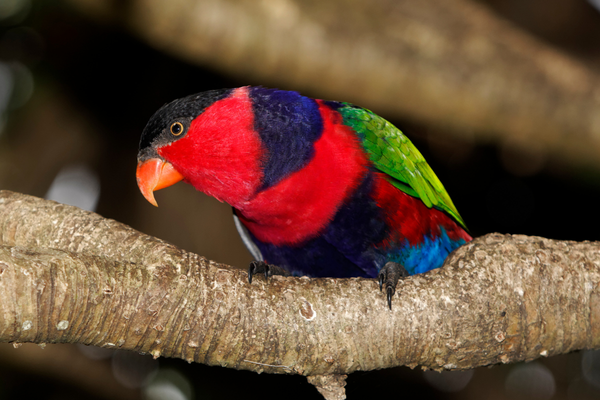
Black-Capped Lories are one of the most strikingly coloured birds in the world — the contrast between the deep glossy red body, vivid green wings, and jet-black cap is considered among the most dramatic in the entire parrot family.
Black-capped Lory
Lorius lory
Download the full care guide (PDF)
Free & Print-ready

25-30+ years

31cm; 200g

Medium to High


Where they come from
Natural History & Origin


Get it right early
Tips for First-Time Owners
- 1 Nectar hygiene is everything — change nectar at least once daily, twice in warm weather, and clean nectar dishes thoroughly at each change. Contaminated nectar is the leading cause of serious illness in captive lories.
- 2 Choose a lorikeet nectar formula specifically low in iron (less than 100 ppm) — lories are particularly susceptible to iron storage disease and dietary iron accumulation.
- 3 Provide a roosting box at all times — Black-Capped Lories use it for sleeping year-round and its absence causes ongoing stress.
- 4 Prepare for the cleaning demands — liquid droppings are a fact of lory life. Easy-clean cage and floor surfaces, daily newspaper liners, and a routine cleaning schedule make this manageable.
- 5 Source from a reputable captive breeder and confirm exotic bird requirements in your state before purchasing.
Setting up the habitat
Enclosure & Husbandry
What to feed
Dietary Management
Day-to-day interaction
Handling & Socialisation
Find your next best friend
Browse all Handraised Birds
Our Available Handraised Birds
Did you know
Fun Facts
All lory species have a brush-tipped tongue — the papillae-covered tip is a highly specialised feeding adaptation that allows rapid, efficient extraction of nectar and pollen from flowers and is found in no other parrot group.
In captivity, Black-Capped Lories have been recorded living over 30 years — making them among the longer-lived of the specialist lory species and a significant long-term commitment for a keeper.
Keep them stimulated
Enrichment
What to watch for
Common Health Issues
Everything you need
Essentials Shopping List
Setup checklist
- Medium-to-large cage — minimum 90 × 60 × 90 cm; outdoor aviary (3m L × 1.2m W × 2m H) strongly recommended
- Easy-clean cage liner (newspaper — changed daily)
- Roosting/nest box (essential)
- Multiple natural timber perches (gum, casuarina, bottlebrush, grevillea)
- Stainless steel food and water dishes (minimum three sets)
- Lorikeet/lory nectar formula — wet and dry, low iron
- Varied fresh fruit (daily)
- Fresh vegetables including leafy greens (daily)
- Vitamin supplement (2–3× per week)
- Broad-spectrum bird wormer (quarterly)
- Large shallow bathing dish or spray bottle
- Rotating toy selection: swings, bells, foraging toys, chew items
- Fresh native branches (gum, casuarina, bottlebrush)
- Waterproof floor mat or easy-clean surface around cage
- Breathable cage cover
- Avian-safe disinfectant
- Annual avian vet check (ongoing)
READY TO SET UP
Browse all
Shop the Essentials

Sheps Lori Wet
from$19.99
View →

Save 10%
Vetafarm Forest Fusion Lori Diet

Bird Feeder Plastic Rectangle
from$4.99
View →

Wooden Bird Perch with Screw
$11.49
View →

Birdzone Chunky Sprouts 250g
$12.99
View →

Natural Plain Bird T Stand
$39.99
View →

Vetafarm Multivet with Moulting Aid
from$23.49
View →

Sheps Lori Dry
from$19.99
View →
FAQ
Commonly Asked Questions
-
How is a Black-Capped Lory different from a Rainbow Lorikeet to care for?
-
Can I use the same nectar formula for a lory as for a lorikeet?
-
Do Black-Capped Lories talk?
-
Do I need a licence to keep a Black-Capped Lory in Australia?
-
How messy are lories?
Learn more
See more care guides Read about other species
No articles match that search. Try a different word.


Need help?Our specialists are in-store every day to help with set up, licensing and feeding.
Visit Kellyville Pets