


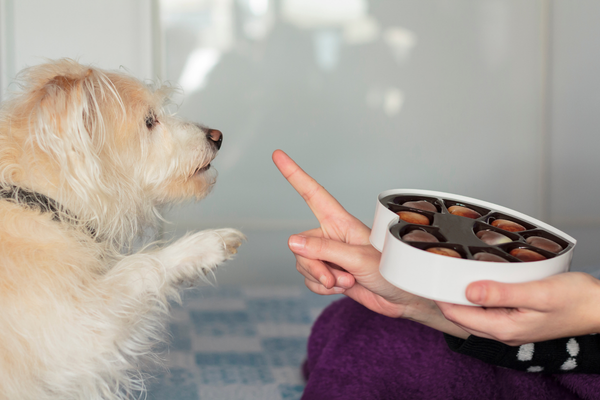
Chocolate might be a favourite human treat, but it should never be given to dogs. Even a small amount can be risky, depending on your dog’s size, the type of chocolate and how much they have eaten.
Chocolate contains theobromine and caffeine, which dogs process much more slowly than people. These compounds can affect the heart, nervous system and digestive system, and in serious cases chocolate poisoning can be life-threatening. Dark chocolate, baking chocolate and cocoa powder are usually more dangerous than milk chocolate because they contain higher levels of theobromine.
What should I do if my dog eats chocolate?
Contact your vet immediately, even if your dog seems fine.
Have these details ready:
- Your dog’s weight
- The type of chocolate eaten
- How much they may have eaten
- When they ate it
- Any symptoms you have noticed
Do not wait for symptoms to appear. Early treatment is often more effective, and your vet will advise the safest next step.
Signs of chocolate poisoning in dogs
Symptoms can vary, but may include:
- Vomiting or diarrhoea
- Restlessness or hyperactivity
- Increased thirst or urination
- Panting
- A fast or irregular heartbeat
- Trembling or muscle twitching
- Seizures
- Collapse in severe cases
If your dog shows any of these signs after eating chocolate, seek urgent veterinary care.
Which chocolate is most dangerous for dogs?
As a general rule, the darker and more bitter the chocolate, the higher the risk.
Higher-risk chocolate includes:
- Cocoa powder
- Baking chocolate
- Dark chocolate
- Cooking chocolate
Milk chocolate is still unsafe, and white chocolate can still cause problems due to its fat and sugar content, even though it usually contains less theobromine.
Keep chocolate safely out of reach
Chocolate poisoning is especially common around Easter, Christmas and birthdays when chocolate is often left on benches, coffee tables, in bags or hidden for egg hunts. Food-motivated dogs can be surprisingly clever, so store chocolate in a closed cupboard or pantry, not on a table or low shelf.
If you want to include your dog in celebrations, choose dog-safe treats instead.
Conclusion
Dogs should not eat chocolate. The risk depends on your dog’s size, the type of chocolate and the amount eaten, but it is always safest to call your vet for advice straight away.


