Care Guide6 min read

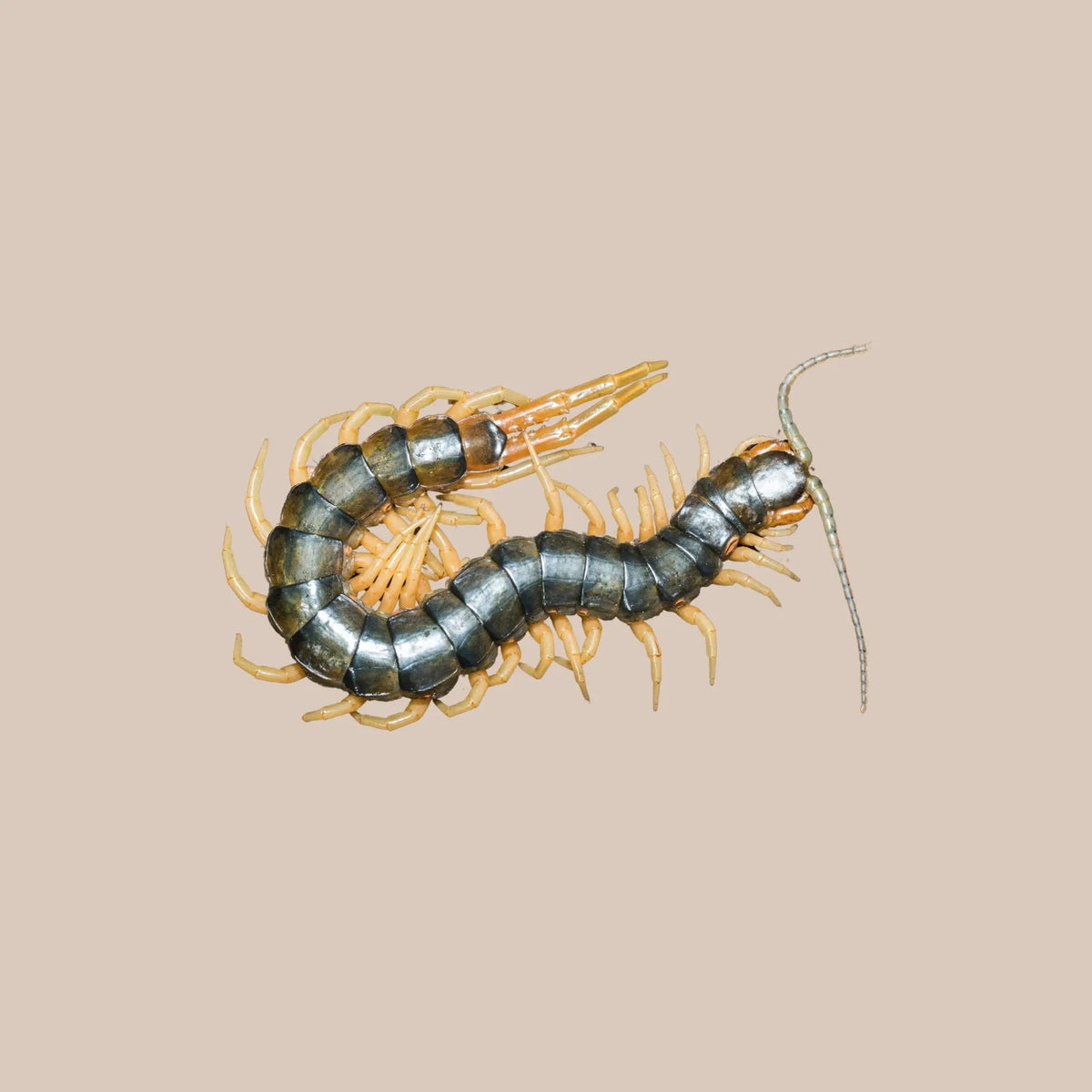
Giant Rainforest Centipede

Ethmostigmus rubripes
Tiger Centipede · Giant Banded Centipede · Australian Giant Centipede

Giant Rainforest Centipede Care Guide
Lifespan
3-5 years
Adult Size
13-20cm
Care Level
Medium to High
Diet

Live invertebrate prey: appropriately sized crickets, woodies (cockroaches), mealworms, wax moth larvae; fed every 5-7 days for adults

Enclosure

Secure, escape-proof enclosure (minimum 20 x 20 x 20 cm for a juvenile; 30 x 30 x 30 cm or larger for adults) with deep coconut peat substrate, bark hides, a moisture gradient and a completely escape-proof lid

Temperament

Impressive, alert and powerful. Centipedes are observation animals, not interactive companions

Where they come from

Natural History & Origin

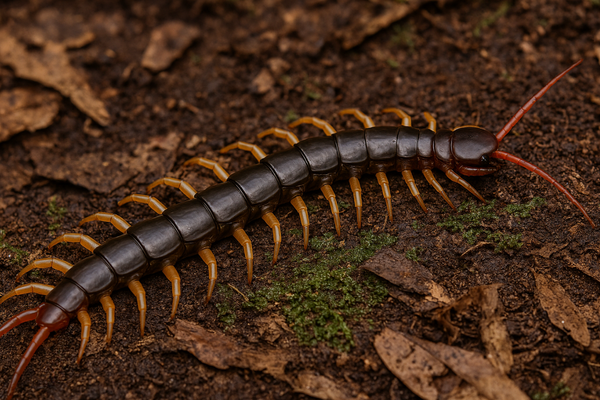
The giant rainforest centipede is distributed throughout northern and northeastern Australia (tropical and subtropical Queensland, Northern Territory, northern New South Wales) and into Papua New Guinea, Indonesia and the Solomon Islands. It is one of the largest centipede species in Australia, routinely reaching 13-17 cm and with exceptional banded forms reaching up to 17-20cm. It inhabits tropical rainforest, savanna woodland, rocky outcrops and suburban gardens, sheltering under logs, bark, rocks and in soil.

Centipedes are apex invertebrate predators: fast-moving, aggressive hunters that detect prey through their highly sensitive antennae and strike with modified front legs (forcipules) that function as venom-delivering fangs. E. rubripes venom is potent enough to subdue frogs, lizards, skinks and small mammals in the wild.

The venom of E. rubripes is medically significant to humans. A bite causes immediate, intense pain that can persist for hours to days. Pain severity varies between individuals — some report extreme, long-lasting pain; others compare it to a wasp or bee sting. No human deaths from E. rubripes bites have been recorded in Australia, though a child's death from a closely related Scolopendra species was recorded in the Philippines. Seek medical attention for any centipede bite, particularly if the person has known allergic reactions to insect venom.

Centipedes are advanced-keeper animals, not beginner pets. They are kept for their impressive appearance and remarkable biology, not for handling. No licence is required in most Australian states; confirm requirements with your state wildlife authority. Source only from reputable captive-breeding invertebrate suppliers.

Get it right early

Tips for First-Time Owners

  1. 1 An escaped centipede is a genuine household hazard: check and double-check the lid before and after every interaction, and never leave the enclosure open or unattended even briefly.
  2. 2 Never handle a centipede directly: E. rubripes is a venomous, aggressive biter with no safe casual handling method. Always use long forceps or guide into a container for any necessary movement.
  3. 3 Remove all live prey before and during a moult: a cricket or cockroach in the enclosure during a moult can cause permanent injury or death.
  4. 4 Never place a heat mat directly below the enclosure: a burrowed centipede cannot escape substrate heat. Use side heating only, on a thermostat.
  5. 5 Centipedes are advanced-keeper animals: if you are new to invertebrate keeping, gain experience with millipedes, tarantulas or scorpions before considering a centipede.
Setting up the habitat

Enclosure & Husbandry

Escape prevention is the single most critical aspect of centipede enclosure design. Centipedes are extraordinarily fast, powerful and capable of squeezing through gaps only millimetres wide. They cannot climb smooth surfaces such as glass or smooth plastic, but can climb silicone seals in aquarium corners and reach to approximately 90% of their body length vertically from the floor. The lid must be completely escape-proof with no gaps — a standard aquarium lid with clips is the minimum; a lid bolted or locked is strongly preferred for large adults.

Minimum enclosure size: 20 x 20 x 20 cm for a juvenile; 30 x 30 x 30 cm or larger for an adult. A taller enclosure gives more observation space but is not behaviorally necessary — centipedes are ground and burrow dwellers.

Substrate: coconut peat 5-10cm deep, maintained moist on one end and drier on the other, creating a moisture gradient that allows the centipede to thermoregulate and manage its hydration. Cork bark pieces and flat rocks provide daytime hiding spots.

Temperature: 22-28ºC is appropriate. No supplemental heating is required in most Australian homes during warmer months. Never heat from below using a heat mat directly under the enclosure — the centipede cannot escape excessive substrate heat if it has burrowed. Place heat mat on the side if supplemental warmth is required, regulated by a thermostat. Never exceed 30ºC.

House one centipede per enclosure — centipedes are cannibalistic and will attack and eat each other.

What to feed

Dietary Management

Centipedes are obligate carnivores that detect prey through antennal contact and rapid strike. All prey must be live — centipedes do not eat dead insects except immediately after they have been killed. Freshly killed prey can be offered with feeding forceps if necessary.

Prey size should not exceed the width of the centipede's head to avoid the prey item overpowering the centipede. Appropriate prey: crickets and small woodies for juveniles; medium-large crickets, woodies, mealworms and wax moth larvae for adults. Large adults can take larger prey including small vertebrates in the wild, but this is not necessary or recommended in captivity.

Feed adults every 5-7 days; juveniles every 4-5 days. Remove uneaten prey within 24 hours — uneaten crickets or cockroaches left in the enclosure may disturb or injure a moulting centipede. Centipedes approaching a moult often refuse food for several days; do not be alarmed and remove all prey.

Provide fresh dechlorinated water in a very shallow dish daily. The centipede needs to be able to drink without risk of drowning; a small cap with damp paper towel or a very shallow dish with gravel is appropriate.

Day-to-day interaction

Handling & Socialisation

Direct handling of centipedes is NOT recommended under any circumstances. Ethmostigmus rubripes is a venomous, aggressive biter that will strike without warning. There is no safe method of casual direct handling for this species.

If the centipede must be moved (for enclosure maintenance, health assessment), use long feeding forceps with padded tips, applied with delicate pressure to avoid injuring the animal. Alternatively, guide the centipede into a sealable container by placing the container in its path and coaxing it in without direct contact. Never reach into a centipede's enclosure bare-handed. Always ensure the enclosure lid is secured immediately after any access.

Did you know

Fun Facts

The giant rainforest centipede possesses what researchers describe as suprisingly attentive maternal behaviour for an invertebrate: after laying a clutch of up to 40 eggs, the female coils her entire body around them and remains guarding them continuously, cleaning the eggs to prevent fungal growth, until they hatch — and then continues guarding the hatchlings for several weeks until they are old enough to disperse and hunt independently.

The 'venom claws' of centipedes are not claws at all but a pair of highly modified legs — called forcipules — that evolved from the first body segment's walking legs into curved, hollow fang-like structures connected to venom glands. All other legs on the centipede are standard locomotor limbs; the forcipules are entirely repurposed for predation and defence.

Australia's largest centipede on record, a specimen of the banded colour form of E. rubripes, measured approximately 20 cm in length — roughly the length of an adult human hand from wrist to fingertips. Such large individuals are very rarely encountered in captivity.

Keep them stimulated

Enrichment

Centipedes are observation animals enriched through a naturalistic, complex enclosure environment. Providing cork bark, flat rocks and varied substrate textures allows the centipede to express its natural hiding, burrowing and ambush-hunting behaviours. Varying the prey species offered on different feeding days stimulates hunting behaviour and provides nutritional variety.

Ensuring the enclosure is set up so the centipede can be observed (viewing from the side, through glass) without being disturbed is itself a form of enrichment management — a relaxed, settled centipede displays far more natural behaviour than a stressed one that is frequently disturbed.

What to watch for

Common Health Issues

Bite and venom injury: The primary health and safety concern in centipede keeping — directed at the keeper, not the animal. A bite from E. rubripes causes immediate intense pain that may persist for hours to days. Swelling, redness and in rare cases systemic reactions can occur. Seek medical attention for any centipede bite. Prevent by never handling directly and always securing the lid.

Escape: The other primary concern. Centipedes that escape into a home present a genuine hazard to household members. Always verify lid security before and after any interaction.

Failed moults: Caused by disturbing a moulting centipede or by live prey present during moult. Deformed limbs result from interrupted moulting and are permanent. Prevent by never disturbing a dark, inactive centipede and removing all prey at the first sign of a pre-moult fast.

Overheating: Heat mats directly under the enclosure can overheat a burrowed centipede with no escape route. Use side heating only, regulated by a thermostat. Never exceed 30ºC.

Dehydration: Ensure the substrate has a moist end and a daily fresh water source is available.

Everything you need

Essentials Shopping List

Setup checklist

  • Secure, escape-proof glass or plastic enclosure (min. 20x20x20 cm juvenile; 30x30x30 cm or larger for adults)
  • Completely escape-proof lid with secure fastening (essential)
  • Coconut peat substrate (5-10 cm depth)
  • Cork bark pieces and flat rocks (hides)
  • Misting bottle (daily moisture gradient maintenance)
  • Hygrometer and thermometer
  • Thermostat and heat mat (side-mounted only — never beneath enclosure)
  • Very shallow water dish with gravel or damp sponge
  • Long feeding forceps with padded tips (minimum 25 cm)
  • Sealable container for moving the centipede during maintenance
  • Live prey: crickets and woodies in appropriate sizes
  • Invertebrate-safe disinfectant for enclosure cleaning
  • First aid kit and emergency medical contact (precautionary)
FAQ

Commonly Asked Questions

  • How dangerous is a giant rainforest centipede bite?

    A bite causes immediate intense pain that can persist for hours to days. Localised swelling and redness are common. No human deaths from giant rainforest centipedes have been recorded in Australia, but severe allergic reactions are possible. Always seek medical attention for a centipede bite.

  • Can centipedes ever be handled?

    Not safely or advisably. This species is venomous, aggressive and extremely fast. Use long forceps or guide into a container for any necessary movement. Direct handling is never recommended.

  • How do I tell a centipede from a millipede?

    Centipedes have one pair of legs per body segment, are fast and venomous, and flee or bite when disturbed. Millipedes have two pairs of legs per segment, move slowly and coil when alarmed. Centipedes are predators; millipedes are detritivores.

  • What do I do if my centipede escapes?

    Do not attempt to catch it bare-handed. Use long forceps or guide it into a sealable container. If you cannot locate it immediately, alert all household members to the situation to prevent accidental contact. Seek medical attention immediately if bitten.

  • Do I need a licence to keep centipedes in Australia?

    No licence is required in most Australian states for giant rainforest centipedes; confirm with your state wildlife authority.

Need help?

Our specialists are in-store every day to help with setup, licensing and feeding.

Visit Kellyville Pets →