Care Guide6 min read

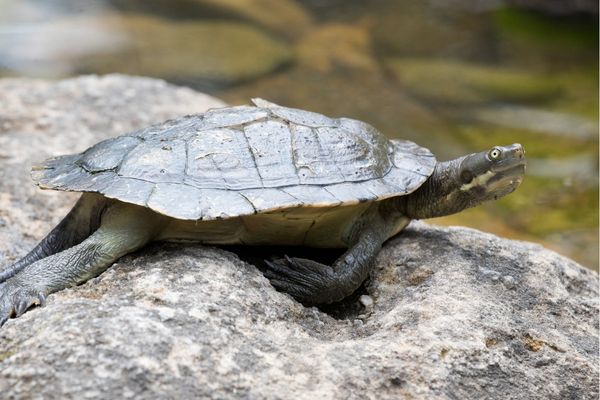
Short-Neck Turtle

Emydura macquarii

Murray River Turtle (E. macquarii): Murray Short-Neck Turtle
Macleay's Short-Neck Turtle (E. m. Krefftii/dharra): Krefft's River Turtle

Short-neck Turtle Care Guide
Lifespan
30-50+ years
Adult Size
20-30cm
Care Level
Medium
Diet

Omnivorous diet of aquatic invertebrates, feeder fish, leafy greens and aquatic plants

Enclosure

Large aquarium or outdoor pond (minimum 300 litres) with powerful external filtration, a dry basking platform, heat lamp and T5 UVB lighting

Temperament

Active, curious and generally handleable with regular gentle interaction, but more of an observation pet

Where they come from

Natural History & Origin

The Murray Short-Neck Turtle (Emydura macquarii) is one of Australia's most abundant and widely distributed freshwater turtles, native to the Murray-Darling Basin across New South Wales, Victoria, South Australia and southern Queensland. It inhabits slow-moving rivers, lakes, billabongs, backwaters and farm dams, feeding opportunistically on aquatic invertebrates, algae, aquatic plants and carrion.

Macleay's Short-Neck Turtle (variously treated as Emydura macquarii dharra or Emydura macquarii krefftii) is found in coastal river systems of eastern Queensland and northern New South Wales, occupying similar habitats to the Murray Short-Neck but adapted to warmer, more tropical waterways.

Both species are named for their notably shorter, more rounded necks compared to Chelodina long-neck species — they retract the head straight back into the shell rather than folding it sideways. Short-neck turtles are among the hardiest and most adaptable of Australia's freshwater turtles, and their general robustness and willingness to accept a varied diet make them among the most accessible turtle species for beginner aquatic keepers.

Get it right early

Tips for First-Time Owners

  1. 1 Murray Short-Neck Turtles are one of the most forgiving turtle species for new aquatic keepers — invest in the correct setup from the beginning and their care is rewarding and manageable.
  2. 2 Never underestimate the importance of filtration — water quality is the single most influential factor in turtle health and longevity, and a poor or undersized filter creates problems that cannot be solved by any other means.
  3. 3 Replace your UVB lamp on schedule every twelve months — UVB output degrades well before the bulb visibly fails, and shell and bone problems caused by UVB deficiency are irreversible once established.
  4. 4 Housing short-neck turtles individually is strongly recommended — cohabitation commonly leads to stress, competition and aggression even in larger setups.
  5. 5 Obtain the appropriate fauna keeper licence for your state before purchasing and source animals only from a licensed, reputable captive breeder.
Setting up the habitat

Enclosure & Husbandry

Care requirements are broadly similar to those of long-neck turtles. A single adult Murray or Macleay's Short-Neck requires a minimum aquarium of 180 cm L × 50 cm W × 50 cm H, with a water depth of 30–40 cm (approximately 350 litres).

A dry basking platform accessible via a ramp and occupying approximately 25% of the surface area is essential — turtles must be able to fully emerge and dry out completely under a basking heat lamp. The basking spot should reach 30–34 °C. A T5 10% UVB lamp positioned to illuminate the basking area is non-negotiable for shell and bone health; replace the bulb annually regardless of whether it still emits visible light.

Water temperature should be maintained at 20–26 °C using a submersible aquarium heater with a protective guard. A powerful external canister filter rated to at least double the tank volume is essential. Perform 25–30% water changes weekly and test water parameters regularly. Substrate can be fine river sand or a bare-bottom setup for ease of cleaning. Add submerged hides, smooth rocks and aquatic or artificial plants. An outdoor pond in a temperate to warm climate is an excellent long-term option and provides the greatest environmental enrichment.

What to feed

Dietary Management

Short-neck turtles are omnivores and are generally less selective feeders than long-neck species, which makes dietary management more straightforward. Supplement pellets with live or frozen bloodworms, aquatic snails, earthworms, yabbies, shrimp, small feeder fish and leafy green vegetables such as kale, spinach and water plants. High-quality commercial aquatic turtle pellets may be accepted and can be offered occasionally as dietary variation.

Macleay's Short-Necks tend toward greater carnivory than Murray Short-Necks and should receive proportionally more animal protein in the diet. Feed juveniles daily; adults three to five times per week. All feeding takes place in the water. Remove uneaten food promptly to maintain water quality. Live insects can be dusted with a calcium powder to supplement their nutritional intake. Fresh, dechlorinated water must be maintained at all times.

Day-to-day interaction

Handling & Socialisation

Both species are calmer and more tolerant of human presence than Eastern Long-Neck Turtles. They are not aggressive and rarely bite in normal circumstances. Murray Short-Necks in particular are known to become quite interactive over time, readily approaching the front of their enclosure at feeding time and showing visible recognition of their keeper. Unlike Eastern Long-Necks, short-neck turtles do not produce the strong musk associated with Chelodina species.

Short-neck turtles are more tolerant of handling than long-neck species, but handling should still be limited to health checks, transport and brief, purposeful interaction. Support the shell from both sides when handling. Always wash hands thoroughly with soap and water after any contact with the animal, its enclosure or the water — turtles can carry Salmonella bacteria without showing signs of illness. Children must be supervised during handling and instructed to wash hands immediately afterwards.

Did you know

Fun Facts

Unlike Eastern Long-Neck Turtles, short-neck turtles retract their heads straight back into their shells — a fundamentally different anatomy that places them in a separate suborder (Cryptodira vs. Pleurodira).

Murray Short-Neck Turtles can remain submerged for extended periods by absorbing dissolved oxygen through specialised vascular membranes around the cloaca — a process called cloacal bursae breathing — allowing them to survive in low-oxygen conditions or buried in mud during drought.

Short-neck turtles are omnivores with a notable ecological role — Murray Short-Necks are important scavengers in river ecosystems, consuming carrion and helping to recycle nutrients within aquatic food webs.

Keep them stimulated

Enrichment

A stimulating aquatic environment is the most meaningful form of enrichment for short-neck turtles. Submerged hides — PVC pipe elbows, flat smooth rocks or purpose-made cave ornaments — encourage natural shelter-seeking behaviour. Live or artificial aquatic plants add visual complexity and provide cover for a turtle that feels exposed. Varying food types — offering live snails, bloodworms, yabbies and vegetables on a rotating basis — encourages natural foraging and hunting behaviour.

A ramp to the basking platform and a choice of multiple basking surfaces allow the turtle to thermoregulate at its own discretion. Floating cork bark or other safe objects at the water surface provide additional sensory variety. Outdoor pond housing, where the weather and season allow, provides the greatest enrichment through natural light, temperature variation and the opportunistic presence of aquatic invertebrates and insects.

What to watch for

Common Health Issues

Shell rot (ulcerative shell disease) presents as soft, pitted or discoloured areas on the carapace or plastron and is most commonly caused by poor water quality or physical injury. Maintain excellent filtration and water quality; seek veterinary treatment if signs are detected. Respiratory infections are caused by cold water temperatures or draughts, and present as asymmetric floating, tilting or laboured breathing — verify water temperature immediately and consult a veterinarian.

Metabolic Bone Disease (MBD) results from a lack of dietary calcium, insufficient UVB lighting, or poor calcium-to-phosphorus balance. Signs in turtles include shell softening, abnormal shell growth, limb weakness and reduced activity. Consistent UVB provision, a nutritionally varied diet and routine calcium supplementation are the primary preventative measures.

Eye infections and swelling, often linked to vitamin A deficiency or poor water quality, should be assessed by a reptile vet. Ensuring dietary variety — particularly dark leafy greens and varied protein sources — helps prevent nutritional deficiencies. Internal parasites are common in newly acquired animals; a faecal test at the first veterinary visit is recommended. Salmonella can be carried by turtles without visible symptoms — strict and consistent hand hygiene after all contact is essential, particularly in households with young children or immunocompromised individuals.

Everything you need

Essentials Shopping List

Setup checklist

  • Large aquarium — minimum 350 litres / 180 × 50 × 50 cm for one adult
  • External canister filter (rated to minimum 2× tank volume)
  • Submersible aquarium heater with protective guard
  • Thermometer (water temperature)
  • Dry basking platform with access ramp
  • Basking heat lamp and dome fitting
  • Surface thermometer or temperature gun (basking spot)
  • T5 10% UVB lamp and fitting
  • Lighting timer
  • Water quality test kit (ammonia, nitrite, nitrate, pH)
  • Water conditioner/dechlorinator
  • Siphon or gravel vacuum (for water changes)
  • Fine river sand or bare-bottom setup
  • Submerged hides (PVC elbows, flat rocks or cave ornaments)
  • Aquatic plants (live or artificial)
  • Leafy greens (kale, spinach, water plants)
  • Feeder insects or fish
  • Reptile-safe aquarium disinfectant
  • Fauna keeper licence (state-specific)
FAQ

Commonly Asked Questions

  • What is the difference between a Murray Short-Neck and a Macleay's Short-Neck Turtle in care?

    Care requirements are very similar. Macleay's Short-Necks are slightly more carnivorous in diet preference and naturally occur in warmer water — water temperature at the higher end of the 20–26 °C range suits them better. Murray Short-Necks are hardier and more tolerant of temperature variation.

  • Can I keep short-neck turtles in an outdoor pond?

    Yes — an outdoor pond in a temperate to subtropical Australian climate is an excellent option. Ensure adequate depth, a safe basking area, protection from predators, and the ability to prevent escape.

  • How do I tell a male from a female short-neck turtle?

    Males typically have a longer, thicker tail and a slightly concave plastron (underside) compared to females. Sexing is unreliable in juveniles and is best confirmed by a reptile vet.

  • Do short-neck turtles carry diseases that can affect people?

    Yes — like all turtles, short-neck turtles can carry Salmonella without visible signs. Wash hands thoroughly with soap and water after every interaction with the turtle or its enclosure.

  • Is a licence required to keep a short-neck turtle in Australia?

    Yes. A fauna keeper licence is required in all states and territories. Contact your state wildlife authority for current requirements.

Need help?

Our specialists are in-store every day to help with setup, licensing and feeding.

Visit Kellyville Pets →