Care Guide6 min read

Ferret

Mustela putorius furo

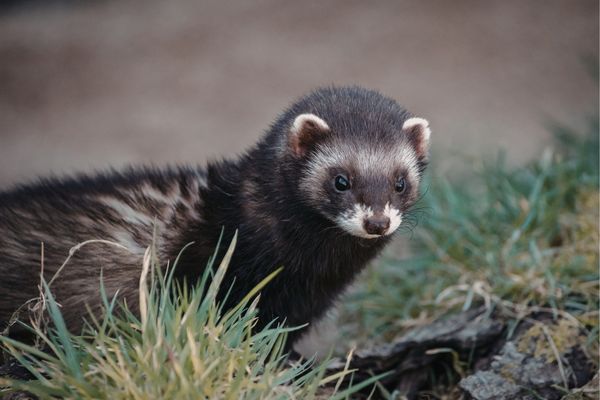
Domestic Ferret · Fitch

Ferret Care Guide
Lifespan
6-9 years
Adult Size
30-60cm; Males are significantly larger than females
Care Level
Medium to High
Diet

High-quality, high-protein ferret pellets or premium grain-free kitten kibble as the dietary foundation; raw chicken necks or wings 1–2 times per week; water always available

Enclosure

Multi-level, small-gauge wire enclosure (minimum 90 cm W x 60 cm D x 120 cm H) with hammocks, bedding, litter tray and toys; several hours/day of free-roaming

Temperament

Playful, mischievous and bold. Highly social; bonds closely with owners. Kits can nip but mellow with consistent handling.

Where they come from

Natural History & Origin

The domestic ferret is a domesticated form of the European Polecat (Mustela putorius) and has been kept by humans for at least 2,500 years, primarily as a working animal used for hunting rabbits and controlling rodent populations — a practice known as ferreting. They are not found in the wild as a true species; feral populations do exist in some countries, including New Zealand, where escaped ferrets have had a significant impact on native wildlife.

In Australia, ferrets have been kept as companion animals for many decades and are legal to own as pets in all states and territories except Queensland and the Northern Territory, where they are prohibited due to biosecurity concerns about the potential for feral establishment. In all other states, no specific permit is required to keep a domestic ferret as a pet.

Ferrets are highly social, playful and interactive animals with a remarkably engaging personality. They are often described as a cross between a cat and a dog in their behaviour — independent enough to amuse themselves when their owner is occupied, yet sociable and affectionate enough to seek out and enjoy human company. They sleep for very long periods — up to 18 hours a day — but when awake, they are intensely active, curious and mischievous.

Get it right early

Tips for First-Time Owners

  1. 1 Ferrets are illegal in Queensland and the Northern Territory — confirm that your state permits ferret ownership before purchasing.
  2. 2 Desexing your ferret is strongly recommended: entire females that come into heat without being mated are at serious risk of fatal aplastic anaemia from prolonged elevated oestrogen levels.
  3. 3 Ferret-proof any free-roaming area thoroughly before allowing unsupervised access — ferrets will chew and swallow rubber, foam and soft plastic items, causing potentially fatal intestinal blockages.
  4. 4 Never house a ferret in temperatures above 26°C without air conditioning or cooling — heat stress can become fatal rapidly.
  5. 5 Vaccinate against Distemper and Hepatitis from 6–8 weeks old and annually thereafter — Distemper is fatal in ferrets and vaccination is the only reliable protection.
Setting up the habitat

Enclosure & Husbandry

Ferrets are active, curious animals and require a spacious, well-appointed enclosure. A minimum cage size for a pair is 90cm W x 60cm D x 120cm H; larger is always better. Multi-level cages with ramps and platforms make excellent use of vertical space and provide physical activity within the enclosure. Wire gauge must be small enough (no larger than 2.5cm x 2.5cm) to prevent escape — ferrets are accomplished escapologists. All cage doors must have secure latches.

Essential cage fittings include at minimum one ferret hammock or cosy sleeping hide per ferret (ferrets sleep up to 18 hours a day and need a comfortable, enclosed sleeping space), a litter tray positioned away from food and bedding (ferrets instinctively prefer to toilet in corners), a ceramic food bowl, a water bowl or bottle, and a selection of toys. The litter tray should be filled with a dust-free litter — recycled paper pellets or wood-based litters are appropriate; clumping cat litter and clay litters must be avoided as they can cause respiratory and digestive problems.

Temperature regulation is critical: ferrets are extremely susceptible to heat stress and should never be housed in temperatures above 26°C. In warm weather, frozen water bottles placed in the cage provide effective cooling. In hot Australian summers, ferrets should be kept indoors in air conditioning during the hottest parts of the day.

Out-of-cage time of at least three to four hours per day in a ferret-proofed space is essential — ferrets cannot receive adequate exercise or mental stimulation from cage life alone. Ferret-proofing a room means blocking all gaps, securing wiring, removing hazardous items, and ensuring no escape routes exist.

What to feed

Dietary Management

Ferrets are obligate carnivores — they must eat meat and cannot thrive on any plant-based food. They have a very short digestive tract (intestinal transit takes only 3–4 hours) and a high metabolic rate, meaning they need to eat frequently — every 3–4 hours when awake — and should have dry food available at all times.

The dietary foundation should be a quality ferret-specific pellet (such as a quality ferret-specific pellet or comparable grain-free, high-meat-content formulation) or a premium grain-free kitten kibble that is high in animal protein (minimum 30–40%) and fat (minimum 15–20%), and very low in fibre. Grains, corn, and plant-based fillers are not appropriate for ferrets and should be avoided. Dry food should be available at all times in a ceramic bowl.

Raw chicken necks or wings offered one to two times per week are excellent for dental health and provide enrichment through natural gnawing behaviour. Raw minced meat can also be offered as a supplement. Some experienced ferret keepers feed a primarily raw diet of whole prey or ground meaty bones — this closely mirrors the ferret's natural diet and is considered by many specialists to be ideal. If transitioning to raw, do so gradually and seek veterinary guidance.

Never feed dairy products, chocolate, sweet biscuits, cooked bones, sugary treats, grapes, raisins, onion, or any hard vegetable that could cause a digestive blockage. Fresh, clean water must be available at all times — a heavy ceramic bowl is preferable to a water bottle as ferrets drink deeply and frequently.

Day-to-day interaction

Handling & Socialisation

Ferrets have a distinctive personality that endears them enormously to their owners — they are bold, comedically curious, and seemingly without fear. They play enthusiastically, hoard objects, perform the characteristic 'weasel war dance' (a frenzied bouncing and leaping display of excitement), and actively seek out interaction with their people. They can be nippy as kits but typically mellow considerably with consistent, calm handling.

Ferret kits should be handled gently but confidently and frequently from a young age to establish trust and reduce nipping behaviour. Scruffing — grasping the loose skin at the back of the neck — causes most ferrets to go limp and is a safe technique for health checks or nail trimming. Never grab a ferret by the tail.

Ferrets are highly social and are best kept in same-sex pairs or small groups where possible — a single ferret that does not receive sufficient daily human interaction can develop signs of boredom and stress. Introductions between ferrets should be supervised and done gradually. Ferrets can generally live safely with cats and dogs that are calm and non-predatory, but should always be supervised during any cross-species interaction.

Did you know

Fun Facts

The ferret's characteristic excited play display — bounding, leaping, sideways jumping and bumping into objects — is called the 'weasel war dance' and is a reliable indicator of a happy, healthy, well-socialised animal. It is completely normal and not a sign of distress.

Ferrets sleep so deeply that they can appear completely unresponsive — new owners sometimes mistake this 'dead sleep' for illness or death. A ferret that is warm, breathing and has pink gums is simply in deep sleep, which can be difficult to rouse from.

Domestic ferrets have been used as working animals for over 2,000 years. They were famously used to lay cables through conduit pipes in complex structures — including during the preparation for Woodstock festival in 1969, where ferrets were reported to have been used to run wiring through underground pipes.

Keep them stimulated

Enrichment

Ferrets are highly intelligent and need active daily enrichment to stay mentally and physically healthy. Out-of-cage exploration in a ferret-proofed room or play area is the single most important form of enrichment — the opportunity to run, investigate, climb and play in a novel environment is irreplaceable. Scatter small pieces of food or treats around the play area to encourage natural foraging and searching behaviour.

Provide a varied selection of ferret-safe toys — crinkle tunnels, soft plush toys, rubber balls, and puzzle feeders. Rotate toys regularly to maintain novelty; ferrets habituate quickly to the same objects. Digging boxes filled with rice, dry beans, shredded paper or clean potting mix provide sensory enrichment and satisfy natural digging instincts. Many ferrets enjoy playing in shallow water — a large, shallow container of water on warm days provides both enrichment and cooling.

What to watch for

Common Health Issues

Adrenal gland disease: One of the most common serious conditions in older ferrets, causing hair loss (particularly on the tail and rump), weight loss, and in females, vulval swelling. More prevalent in desexed ferrets; annual vet checks allow early detection.

Insulinoma: A tumour of the pancreas causing low blood sugar, with symptoms including weakness, drooling, pawing at the mouth and collapse. Requires veterinary management.

Distemper: A serious, usually fatal viral disease — vaccination is essential and non-negotiable.

Aleutian Disease (ADV): A parvovirus causing progressive wasting; no cure.

Intestinal blockage: Ferrets will eat rubber, foam, sponge, eraser-like materials and soft plastics readily, causing potentially fatal blockages. Ferret-proof the environment thoroughly and remove all soft, ingestible items.

Heatstroke: Ferrets overheat rapidly — never leave them in a car, in direct sun, or in a room above 26°C without cooling.

Everything you need

Essentials Shopping List

Setup checklist

  • Multi-level wire cage — minimum 90 x 60 x 120cm; larger strongly preferred
  • Small-gauge wire (max 2.5 x 2.5 cm) with secure latch
  • Ferret hammocks (minimum one per ferret)
  • Ferret sleeping bag or hide
  • Litter tray with dust-free litter (recycled paper pellets or wood-based)
  • Heavy ceramic food bowl
  • Heavy ceramic water bowl (or water bottle)
  • Quality ferret pellets
  • Premium grain-free kitten kibble (alternative dietary base)
  • Raw chicken necks or wings (dental treat, 1-2x per week)
  • A veterinarian-recommended monthly parasite prevention treatment (monthly)
  • Broad-spectrum cat all-wormer paste (every 3 months)
  • Ferret-safe disinfectant
  • Ferret play tunnel(s)
  • Assorted ferret-safe toys (crinkle, plush, rubber ball)
  • Harness and lead (for supervised outdoor time)
  • Travel carrier
  • Nail clippers (ferret or cat size)
  • Annual vet check and Distemper/Hepatitis vaccination
FAQ

Commonly Asked Questions

  • Are ferrets legal in Australia?

    Ferrets are legal as pets in NSW, VIC, SA, WA, ACT and Tasmania. They are prohibited in Queensland and the Northern Territory due to biosecurity legislation. No specific permit is required in the states where they are legal.

  • Do ferrets smell?

    All ferrets have a natural musky odour produced by skin glands — this is normal and cannot be eliminated. Descenting (removing the anal glands) reduces but does not eliminate the smell. Regular cage cleaning, washing hammocks and bedding weekly, and bathing the ferret no more than once every two weeks significantly reduces household odour.

  • Can a ferret live alone?

    A ferret can live alone if it receives a minimum of three to four hours of daily human interaction, but is generally happier with a ferret companion. A lonely, understimulated ferret is more likely to develop behavioural problems and signs of depression.

  • Do ferrets bite?

    Ferret kits are nippy — this is normal during play and exploration and is usually resolved through consistent, calm handling and teaching the kit that biting leads to the end of playtime. Well-handled adult ferrets very rarely bite without provocation.

  • How often should I clean the ferret's cage?

    Spot-clean the litter tray daily, wash hammocks and soft bedding weekly, and fully disinfect the cage with a small animal-safe cleaner once a week. Ferrets will avoid using a dirty litter tray.

Need help?

Our specialists are in-store every day to help with setup, licensing and feeding.

Visit Kellyville Pets →