


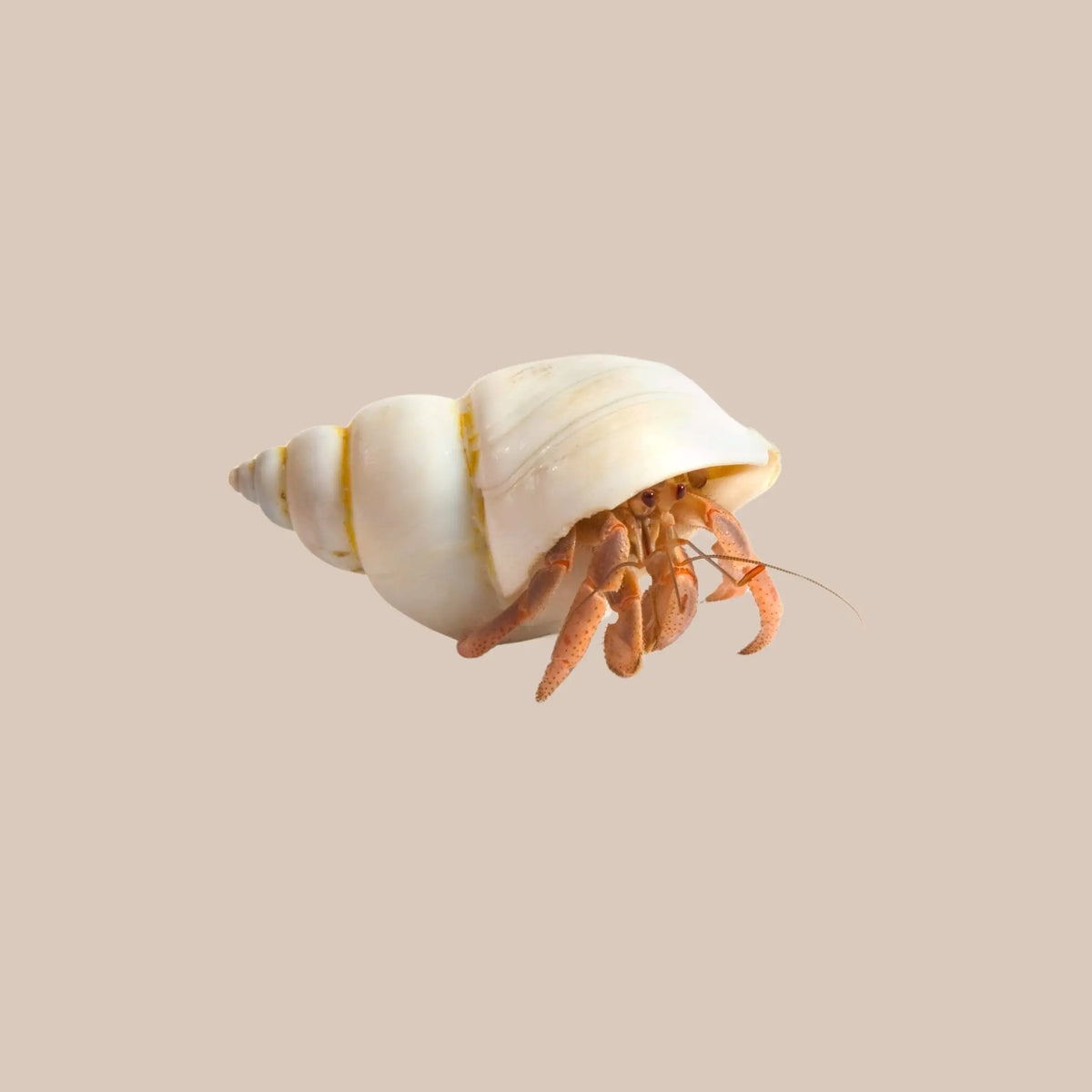
Hermit Crab
Coenobita variabilis
Download the full care guide (PDF)
Free & Print-ready

10-20+ years

1-4cm body size

Low to Medium


Where they come from
Natural History & Origin


Get it right early
Tips for First-Time Owners
- 1 Substrate depth is not optional: a minimum of three times the height of the largest crab of moistened coconut peat is required for safe moulting. More is better.
- 2 Both fresh and saltwater must be deep enough for full submersion and available at all times. Use dechlorinated fresh water and properly mixed marine saltwater, never table salt.
- 3 Never disturb or dig up a buried crab: this is almost always fatal. Crabs can remain underground for weeks to months during a moult.
- 4 Always keep at least three spare shells per crab: shell availability is directly linked to crab welfare.
- 5 Humidity must be 75-90%: the most common cause of death in captive hermit crabs is chronic low humidity causing irreversible gill damage.
Setting up the habitat
Enclosure & Husbandry
What to feed
Dietary Management
Day-to-day interaction
Handling & Socialisation
Find your next best friend
Browse all Aquatic Pets
Our Available Aquatic Pets


Did you know
Fun Facts
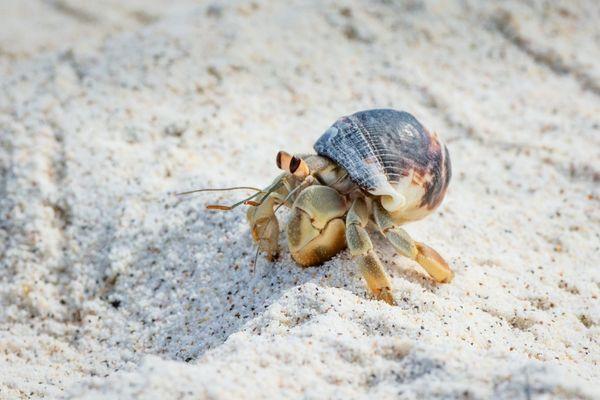
Hermit crabs do not grow their own shells: they find and adopt discarded mollusc shells and upgrade to progressively larger ones as they grow. In the wild, crabs form vacancy chains where multiple crabs line up and synchronously exchange shells in a cascading sequence.
Coenobita variabilis can live over 25 years in the wild: one of the longest lifespans of any land crustacean.
Hermit crabs have two distinct water requirements reflecting their coastal habitat: freshwater for drinking and rehydrating their gill chamber, and saltwater to maintain the chemistry of their modified gills.
Keep them stimulated
Enrichment
What to watch for
Common Health Issues
Everything you need
Essentials Shopping List
Setup checklist
- Glass aquarium or secure terrarium (min. 30 x 30 x 30 cm for 2 small crabs)
- Coconut peat substrate (15-20 cm depth minimum)
- Heat mat or ceramic heat emitter on thermostat
- Hygrometer and thermometer
- Automatic mister or hand spray bottle
- Two deep water dishes (fresh and saltwater; must allow full submersion)
- Water conditioner / dechlorinator
- Marine aquarium salt
- Hydrometer or refractometer
- Spare shells (at least 3 per crab, slightly larger than current shells)
- Cork bark and climbing structures
- Multiple hides
- Crushed cuttlebone or calcium supplement
- Quality hermit crab food
- Fresh fruit and vegetables (daily varied selection)
- Dried shrimp and dried mealworms
READY TO SET UP
Browse all
Shop the Essentials

Reptile One Dome Reflector
from$35.49
View →

Critter's Comfort Fine 20L - Previously Kritter's Crumble
$29.99
View →

Critter's Comfort Coarse 20L - Previously Kritter's Crumble
$29.99
View →

Get Your Pet Right Heat Mat With Controller
from$26.99
View →

Reptile One 90x45x60cm Glass Terrarium Hinged Door RTF-900HT
$339.00
View →

Reptile One Heat Mat
from$20.99
View →

Exo Terra Hiding Cave
from$12.99
View →

Reptile One 120x45x60cm Glass Terrarium Hinged Door RTF-1200HT
$469.00
View →
FAQ
Commonly Asked Questions
-
Why does my hermit crab need both fresh and saltwater?
-
My hermit crab has been buried for weeks: is it dead?
-
Why did my hermit crab change shells?
-
Can I keep just one hermit crab?
-
Do I need a licence?
Learn more
See more care guides Read about other species
No articles match that search. Try a different word.


Need help?Our specialists are in-store every day to help with set up, licensing and feeding.
Visit Kellyville Pets