


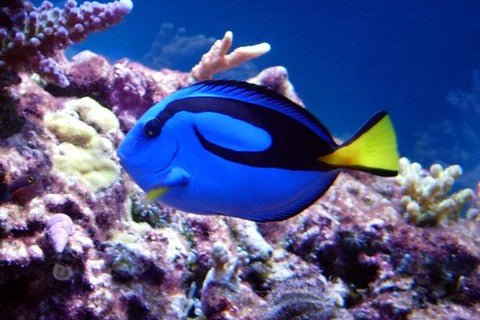
If you've ever watched Finding Nemo, chances are you've fallen in love with Dory, the cheerful Blue Tang with the unforgettable personality. It's easy to see why Blue Tangs are one of the most sought-after marine fish in the aquarium hobby.
However, before bringing one home, it's important to understand that Blue Tangs are not beginner fish. While they can make incredible additions to large, well-established marine aquariums, they require significant space, specialised care, and a long-term commitment.
Meet the Blue Tang
The Blue Tang (Paracanthurus hepatus) is a stunning reef fish found throughout the Indo-Pacific region. In the wild, they spend their days swimming across large reef systems, grazing on algae and exploring vast areas of ocean.
Their vibrant blue colouration, active behaviour, and outgoing nature make them a favourite among marine fish keepers.
How Big Do Blue Tangs Get?
One of the biggest surprises for new owners is just how large Blue Tangs can grow.
A juvenile may only be a few centimetres long when purchased, but adults can reach around 25-30cm in length. They are also highly active swimmers that require plenty of open space.
For this reason, Blue Tangs are generally best suited to aquariums of at least 500 litres, with larger systems providing a much better long-term environment.
Why Blue Tangs Are Not Ideal for Small Marine Tanks
Many marine hobbyists start with nano or smaller reef aquariums. Unfortunately, Blue Tangs are not suitable for these setups.
Keeping a Blue Tang in an undersized aquarium can lead to:
-
Chronic stress
-
Increased aggression
-
Poor growth
-
Weakened immune function
-
Greater susceptibility to diseases such as marine white spot
These fish thrive when they have room to swim naturally and establish their place within the aquarium.
Blue Tang Diet and Feeding
Blue Tangs are primarily herbivores and require a diet rich in plant matter.
A healthy feeding routine may include:
-
Marine algae sheets (nori)
-
Spirulina-based foods
-
High-quality marine pellets
-
Frozen marine foods
-
Occasional meaty foods as a supplement
Providing regular access to algae helps support digestion, colouration, and overall health.
Water Quality Matters
Blue Tangs are sensitive to poor water conditions.
Successful long-term care requires:
-
Stable salinity
-
Consistent temperature
-
Excellent filtration
-
Strong water movement
-
Regular water testing
-
Low nitrate and phosphate levels
Because of these requirements, Blue Tangs are usually recommended for hobbyists with some experience maintaining marine aquariums.
Blue Tangs and Marine White Spot
Blue Tangs are well known for being prone to marine ich (white spot disease).
Stress, poor water quality, sudden environmental changes, or inadequate quarantine procedures can all increase the risk of outbreaks.
To help keep your fish healthy:
-
Quarantine new fish before introduction
-
Maintain excellent water quality
-
Avoid overcrowding
-
Provide a nutritious diet
-
Minimise sudden changes in tank conditions
Prevention is always easier than treatment.
Are Blue Tangs Reef Safe?
In most reef aquariums, Blue Tangs are considered reef safe.
They generally coexist well with corals and spend much of their time grazing on algae. This can actually be beneficial in helping control nuisance algae growth within the aquarium.
As with any marine fish, individual behaviour can vary, but they are typically excellent residents in appropriately sized reef systems.
Is a Blue Tang Right for You?
A Blue Tang can be an incredible centrepiece fish, but it's important to be realistic about the commitment involved.
A Blue Tang may be suitable if you:
-
Have a large marine aquarium
-
Understand marine water chemistry
-
Can provide a varied herbivorous diet
-
Are prepared for long-term care
-
Have experience maintaining stable water quality
If you're just starting your marine aquarium journey, there are many smaller and more forgiving species that can help you build experience before taking on a Blue Tang.
Final Thoughts
Blue Tangs are beautiful, intelligent, and highly active fish that deserve an environment suited to their needs. While they are often purchased because of their popularity in movies, successful Blue Tang ownership requires more than admiration - it requires planning, space, and proper marine aquarium knowledge.
For experienced marine hobbyists with a suitably sized aquarium, a healthy Blue Tang can become one of the most rewarding fish to keep.


