


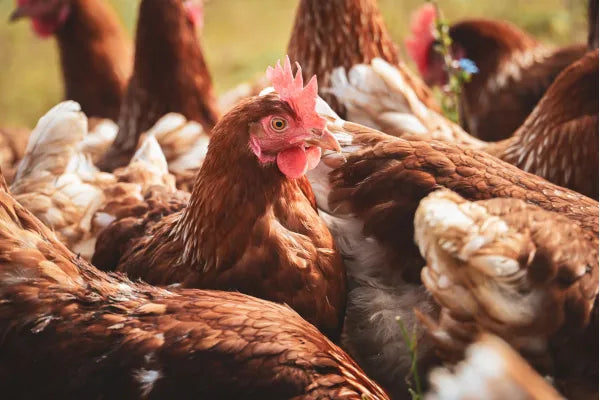
Eggs got expensive, backyard space is precious, and half of Sydney seems to be talking about keeping chooks again. Before you build a coop or bring home your first hens, there's one thing that matters more than breed or feed: your local council's rules. They're not the same everywhere, and getting it wrong can mean a fine or an order to rehome your flock.
The rule that's the same everywhere in NSW
No matter which council area you're in, poultry keeping sits under the Local Government (General) Regulation 2005, Schedule 2, Part 5, Division 2. This sets the baseline standards for how poultry must be housed and managed: clean, vermin-controlled, free of offensive odour, and kept in a way that doesn't create a nuisance for neighbours.
On licensing, NSW DPI is clear cut: if you're not selling eggs or meat and you're keeping fewer than 100 birds, you don't need a Property Identification Code. Once you hit 100 birds, or you're keeping poultry commercially, a PIC becomes compulsory.
There's also a state-level default worth knowing, because it explains why you'll see "5 hens" on some council pages and "10 hens" on others. The State Environmental Planning Policy (Exempt and Complying Development Codes) 2008, Subdivision 21, sets the standard exempt development threshold at no more than 5 fowl or poultry and no roosters, meaning you can build a coop without needing a development application at all. Some councils, like Camden and Lithgow, apply that 5-bird default as is. Others, like North Sydney and Parramatta, have adopted a locally set allowance of up to 10. That's the source of the split you'll see quoted online, and it's exactly why the number for your specific address depends on your specific council.
What actually changes from council to council
Councils layer their own policy on top of that state baseline, usually through a Local Orders Policy or a Keeping of Animals and Birds Policy. The parts that differ most:
- How many hens you can keep. Often tied to lot size or set as a locally adopted number rather than a flat figure across the whole LGA.
- Roosters. Almost universally discouraged or banned in residential zones because of crowing and noise complaints, though rural-residential blocks are sometimes more relaxed.
- Coop setback distances. How far the coop needs to sit from a dwelling, school, childcare centre, or any premises handling food.
- Heritage and foreshore exemptions. Some councils won't approve a coop at all on heritage-listed land or in foreshore areas.
A snapshot by area
| Area type | Hens allowed | Roosters | Coop setback | Council website |
|---|---|---|---|---|
| The Hills Shire | Set by lot size under the Local Orders Policy - Keeping of Animals | Regulated case by case | Poultry house floors must be concrete or mineral asphalt | The Hills Shire Council |
| North Sydney | Up to 10 chickens | Not permitted in residential areas | At least 4.5m from any dwelling, hall, school or food premises | North Sydney Council |
| Parramatta | Recommended maximum of 10 (Gallus Gallus/guinea fowl) | Not to be kept on residential premises | 4.5m from any dwelling, school, childcare centre or boundary; concrete or mineral asphalt paving under roosts | City of Parramatta Council |
| Hawkesbury | No fixed cap; council recommends weighing property size and neighbour impact | Discouraged, not formally banned | Fowls at least 4.5m from a dwelling, hall, school or food premises; concrete or asphalt floor under roosts unless 15.2m+ away or on clean sand | Hawkesbury City Council |
| Blacktown | Not published in a form we could verify online | Not confirmed | Not confirmed | Blacktown City Council |
| Typical Sydney metro council | Commonly 5 to 10 hens | Discouraged or banned residentially | Commonly 3 to 4.5m from dwellings | Search "[your council] keeping of animals" |
| Rural-residential or acreage blocks | Often 10 to 20+, sometimes uncapped | More often permitted with adequate distance from neighbours | Larger setbacks typically required | Varies by council, check your specific LGA |
A note on Blacktown Council: we couldn't track down a published fowl number on their website to confirm one way or the other, so we suggest to call council directly. The council does actively field poultry noise complaints, so a policy exists, it's just not one we could verify in writing.
How to check your own council's rules in five minutes
- Search "[your council name] keeping of animals" or "[your council name] backyard poultry."
- Look for a Local Orders Policy, a Keeping of Animals and Birds Policy, or a dedicated "keeping chickens" page.
- Check your specific lot size against any tiered allowance table, since several policies scale hen numbers to land area rather than giving one number for the whole LGA.
- If it's still unclear, ring council directly. It's a five-minute call and the only way to get a definite answer for your address.
- Check whether your property is heritage-listed or in a flood or foreshore area, since these can override the standard rules entirely.
Once you know you're covered
With the legal side sorted, the practical questions are more fun. Hens are social, so keep at least two, and you don't need a rooster for eggs. A well-ventilated coop with a dry, easy-to-clean floor and predator-proofing will save you more headaches than almost anything else, especially through a humid Sydney summer when damp bedding turns into an odour and fly problem fast. If you're planning your first coop, it's worth having a chat with our bird team in-store about coop size, breed suitability for beginners, and feed, before you bring any chickens home.
Backyard chickens are legal pretty much everywhere in Sydney. The real work is just making sure your setup matches what your specific council allows, so you can enjoy the eggs without the paperwork catching up with you later.


