


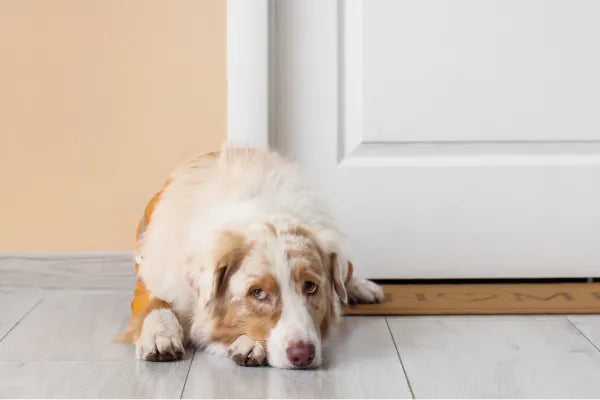
If you've ever come home to a chewed-up cushion or a dug-up garden bed, you already know the problem. It's not that your dog missed you (well, they did) - it's that they've spent the whole day with nothing to do.
Physical exercise gets a lot of attention in dog care, and rightly so. But mental stimulation matters just as much, and it's the piece most owners forget. A dog left alone all day with no outlet for their brain will find their own entertainment, and it's rarely the kind you want. Barking, digging, chewing and general house-wrecking are usually boredom talking, not bad behaviour.
The good news is you don't need to quit your job to fix this. A few changes to how your dog spends their day at home can make a real difference.
Give Their Brain a Job
Dogs are problem-solvers by nature, and a bit of mental effort tires them out faster than a lap around the block. If your dog already knows sit, stay and come, that's a good foundation, but it's not much of a workout for their brain anymore.
Teaching new tricks, even ones that seem a bit pointless, gives them something to think about. Spin, roll over, "find it," touch, weaving between your legs - none of it needs to be practical to be valuable. The training session itself is the enrichment, not necessarily the trick they end up with.
Short sessions before you leave for work or after you get home, five to ten minutes at a time, are plenty. Little and often beats one long session on the weekend.
Make Feeding Time Do Double Duty
Most dogs eat their meal in under two minutes flat from a regular bowl, which is a wasted opportunity. Puzzle feeders and treat-dispensing toys turn eating into a task, slowing dogs down and giving them something to focus on while you're out the door.
There's a wide range of these available, so it's worth having a chat with staff in-store about what suits your dog's size and how food-motivated they are. A dog who demolishes every challenge in thirty seconds needs a tougher option than one who's still getting the hang of it.
Match Exercise to the Dog, Not the Trend
Not every dog needs the same kind of physical outlet. A working breed like a kelpie or border collie bred for hours of activity is going to struggle on the same walk that satisfies a French bulldog. Think about what your dog was bred to do and try to give them a version of it.
| Dog type | What they're often bred for | Good outlets |
|---|---|---|
| Retrievers (Labradors, golden retrievers) | Retrieving game | Fetch, water play, carrying toys |
| Herding breeds (kelpies, border collies) | Mustering livestock | Agility-style games, structured training, running |
| Terriers | Hunting vermin | Sniffing games, digging pits, "find the treat" |
| Scent hounds (beagles, bassets) | Tracking by smell | Scent trails, snuffle-style feeding, nose work |
| Companion/toy breeds | Companionship | Short bursts of play, puzzle toys, lap time balanced with movement |
Running errands together, where practical and safe, is another easy win. A trip to a pet-friendly shop or a walk to the local park gives your dog a change of scenery without extra effort on your part.
Keep the Aussie climate in mind here too. Through summer, exercise your dog in the early morning or evening rather than the middle of the day, and always have water on hand - pavement and sand can get hot enough to burn paw pads well before the air feels unbearable to us.
Get Them Out Into the World
Dogs left home alone all week can start to feel a bit disconnected from anything new. Puppy school, a grooming appointment, or a supervised session at a dog park all expose your dog to different sights, sounds and smells in a way a familiar backyard just can't match.
If your dog isn't confident around other dogs or people yet, start small. A quiet park at a quiet time is a better first step than a busy dog beach on a Saturday morning, and it's worth asking a trainer at your local pet school for guidance rather than guessing.
Rotate What They've Already Got
You don't need to buy a new toy every fortnight to keep things interesting. Dogs get bored of novelty the same way we do, and the fix isn't more stuff - it's smarter use of what's already in the toy basket.
Try packing away half your dog's toys and swapping them out every week or two. A toy that's been out of sight for a while gets rediscovered like it's brand new, and your dog gets the enrichment of "something different" without you spending a cent.
The Bottom Line
A bored dog isn't a naughty dog, they're an under-stimulated one. A bit of daily brain work, feeding that takes effort, exercise suited to your dog's breed, some exposure to the wider world, and toy rotation instead of toy accumulation - most boredom-driven behaviour improves within a couple of weeks of this.
If you've tried all of this and you're still dealing with serious destructive behaviour or signs of anxiety when you leave, have a chat with your vet or a qualified dog trainer. Sometimes what looks like boredom is actually separation anxiety, and that needs a different approach entirely.


