Breed Guide6 min read

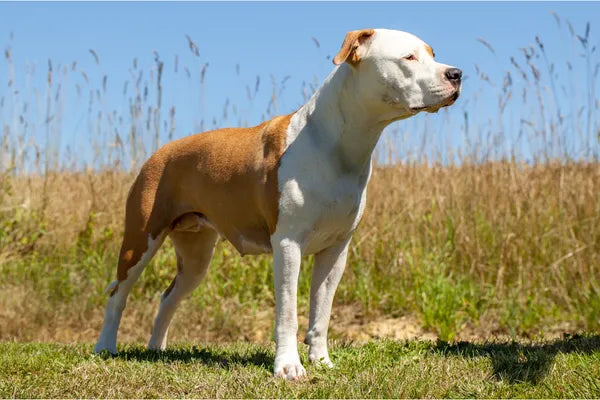
American Staffordshire Terrier (AmStaff)

AmStaff · American Staff · Am Staff

  • Good with children
  • Easy to train
  • Low grooming commitment
American Staffordshire Terrier (AmStaff) Breed Guide
Temperament

Loyal, confident and deeply people-oriented. AmStaffs are affectionate, playful and devoted to their family with a courage and boldness that is characteristic of their terrier heritage. Generally good with children when well socialised. Can be dog-selective — early and ongoing socialisation with other dogs is important. Rarely aggressive toward people when responsibly bred and socialised.

Lifespan
12–16 years — one of the longer-lived medium-to-large breeds
Adult Size
Males 25–35kg, 46–48cm; females 18–25kg, 43–46cm.
Care Level
Medium
Coat Type

Short, stiff, smooth, close-lying single coat. No undercoat. Moderate shedder year-round. Very low grooming demand. Not hypoallergenic.

Energy Level

Medium to High. Requires at least 60 minutes of vigorous exercise daily.

is this the right breed for you?

Owner Suitability

Intermediate. Best suited to experienced dog owners or committed first-time owners willing to invest in training and socialisation. One of the most people-oriented and family-devoted breeds available. The breed's size, strength and terrier determination require confident, consistent handling from day one.

Where the breed comes from

Origin & History

The American Staffordshire Terrier (AmStaff) originated in the United States in the 19th century, developed from early Bulldog and Terrier breeds brought from England by immigrants. Originally used for farm work and, regrettably, dogfighting before such practices were banned, the breed was refined for companionship and show following the ban on dogfighting in the United States in 1900. The American Kennel Club recognised the American Staffordshire Terrier in 1936, distinguishing it from its English cousin the Staffordshire Bull Terrier as a larger, heavier and more powerfully built dog. In Australia, the AmStaff gained ANKC recognition in 1987 and has grown steadily in popularity. Under the Australian National Kennel Council (ANKC), the American Staffordshire Terrier is classified in Group 2 (Terriers). It is important to distinguish the AmStaff from the American Pit Bull Terrier — a separate breed that is prohibited in Australia.

Get it right early

Tips for First-Time Owners

  1. 1 Socialise intensively from 8–16 weeks and continue throughout the first year — a well-socialised AmStaff is a stable, reliable companion; the outcome of under-socialisation is very difficult to remediate in adulthood.
  2. 2 Source from a reputable breeder who health-screens for cerebellar ataxia, hip dysplasia and cardiac conditions — all are hereditary and some are fully testable.
  3. 3 Train lead manners from day one using a front-clip harness — the AmStaff's strength and enthusiasm make early lead training essential before the dog reaches its full 25–35 kg.
  4. 4 Be clear on the distinction between the American Staffordshire Terrier (a legal, ANKC-recognised breed) and the American Pit Bull Terrier (which is prohibited in Australia) — many people and some councils confuse them.
  5. 5 Invest in pet insurance from day one — skin allergy management and potential orthopaedic or neurological conditions can generate significant veterinary costs.
Daily Routine

Care & Exercise

The American Staffordshire Terrier requires at least 60 minutes of vigorous daily exercise — walks, fetch, tug and structured play. They are strong and enthusiastic, making lead manners training from puppyhood essential before the dog reaches full size. Training should begin from day one using positive, reward-based methods. The AmStaff is intelligent and learns quickly but can be strong-willed and requires confident, consistent guidance. Early and extensive socialisation is critical — well-socialised AmStaffs are stable and reliable; under-socialised individuals can develop anxiety or reactivity. Feed a quality, large-breed diet in measured portions twice daily. Annual vet checks, dental care and parasite prevention are essential.

Coat Care Routine

Grooming

The AmStaff is one of the lowest-maintenance grooming breeds available. The short, stiff coat requires only a weekly wipe-down with a rubber grooming mitt or damp cloth to remove loose hair. Bathe every six to eight weeks or as needed. Check and clean ears weekly — ear infections can occur in this breed. Brush teeth regularly. Trim nails every three to four weeks. The breed can be prone to skin allergies — use a hypoallergenic, soap-free shampoo and monitor for itching, redness or recurring skin infections. Regular grooming sessions double as a health check for skin irritations, lumps and paw condition.

Did you know

Fun Facts

The American Staffordshire Terrier is one of the few breeds whose official ANKC breed standard explicitly describes 'courage is proverbial' — a phrase that encapsulates both the breed's historical origin and its contemporary reputation for boldness combined with a deep, demonstrative affection for its family.

The AmStaff is legally and registrationally distinct from the American Pit Bull Terrier in Australia — the APBT is prohibited in Australia under dangerous dog legislation in all states and territories, while the AmStaff is an ANKC-registered breed. The visual similarity between the two breeds has created significant public confusion that responsible AmStaff owners frequently navigate.

Despite the breed's muscular, formidable appearance, American Staffordshire Terriers consistently score among the most human-friendly breeds in temperament testing conducted by organisations including the American Temperament Test Society, where the breed historically passes at a rate comparable to Golden Retrievers.

Day-to-day interaction

Handling & Socialisation

Extensive socialisation from puppyhood is the most important investment in an AmStaff's long-term behaviour. Puppy school followed by ongoing training classes provides essential foundations and continued engagement. The breed's strength and enthusiasm on the lead requires consistent lead manners training — a front-clip harness is recommended. Positive reinforcement training works excellently; harsh methods create anxiety and unpredictability. The breed is emotionally sensitive despite its robust appearance and responds to calm, confident leadership.

Keep them stimulated

Enrichment

AmStaffs are active, intelligent dogs that need both physical exercise and mental stimulation. Fetch, tug, agility, weight pulling and obedience trials are all appropriate activities that channel their energy and strength productively. Puzzle feeders, training sessions and interactive play with their family provide daily cognitive enrichment. The breed is people-centred and thrives on involvement in family activities. Provide durable, appropriately-sized chew toys — AmStaffs are powerful chewers and need safe outlets.

What to watch for

Common Health Issues

Skin Allergies and Atopic Dermatitis: One of the most common health concerns in the breed. Environmental allergens, food sensitivities and contact reactions can all cause itching, redness and secondary skin infections. Investigation with a veterinarian is important for persistent skin issues.

Hip Dysplasia: Common in medium-to-large breeds; source from hip-scored parents and maintain healthy body weight.

Cerebellar Ataxia: A hereditary neurological condition causing progressive coordination problems, loss of balance and tremors. DNA testing is available. Source from breeders who screen for this condition.

Heart Disease (Congenital): Some cardiac conditions have been reported; cardiac assessment of breeding dogs is recommended.

Bloat (GDV): Muscular, deep-chested individuals are at moderate risk. Feed two smaller meals and avoid exercise immediately around mealtimes.

Dental Disease: All breeds benefit from regular brushing; the AmStaff's strong jaw makes dental care important.

Everything you need

Essentials Shopping List

Setup checklist

  • Quality medium-to-large breed dog food (age-appropriate)
  • Stainless steel food and water bowls
  • Collar with ID tag
  • Front-clip harness (essential for lead manners training)
  • Standard lead and long training lead
  • Crate
  • Dog bed
  • Rubber grooming mitt
  • Hypoallergenic dog-safe shampoo
  • Ear cleaning solution
  • Dog toothbrush and dog-safe toothpaste
  • Nail clippers
  • High-value training treats
  • Durable rubber chew toy (heavy-duty — AmStaffs chew powerfully)
  • Durable tug toy
  • Fetch toy
  • Puzzle feeders
  • Poo bags
  • Flea, tick and worming prevention (vet recommended)
  • Pet insurance (from day one)
FAQ

Commonly Asked Questions

  • Is the American Staffordshire Terrier a banned breed in Australia?

    No. The American Staffordshire Terrier is a legal, ANKC-registered breed in Australia. It is important to distinguish it from the American Pit Bull Terrier, which is prohibited in all Australian states and territories. Confirm with your local council if there is any uncertainty, as some councils may have local requirements.

  • Are AmStaffs good with children?

    Generally yes when well socialised from puppyhood. They are affectionate, playful and tolerant. The breed's size and exuberance requires supervision with young children, and children should be taught appropriate interaction.

  • Do AmStaffs need a lot of exercise?

    Yes — at least 60 minutes of vigorous daily exercise. They are muscular, athletic dogs that become bored, vocal and potentially destructive without adequate physical and mental stimulation.

  • What is cerebellar ataxia?

    A hereditary neurological condition causing progressive coordination problems. DNA testing is available. Always ask breeders for ataxia testing status of both parents.

  • What health tests should I ask a breeder for?

    Cerebellar ataxia DNA test; hip scores; cardiac assessment; skin and allergy history in the breeding lines.

Need help?Our specialists are in-store every day to help with sourcing, training and supplies.

Visit Kellyville Pets