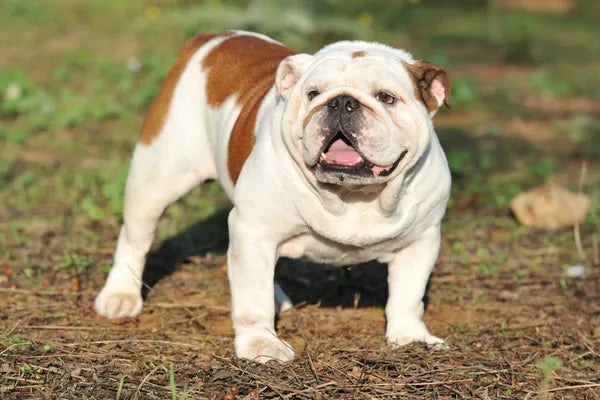
Breed Guide6 min read

Australian Bulldog

Aussie Bulldog · Aussie Bull

  • Apartment-friendly
  • Low exercise needs
  • Low grooming commitment
  • Good with children
  • Calm temperament
  • Good with other pets
  • Suitable for first-time owners
Australian Bulldog Breed Guide
Temperament

Affectionate, loyal and good-natured. The Australian Bulldog combines the Bulldog's devoted, easygoing character with more athleticism and energy than the English Bulldog. Generally good with children and other pets when well socialised. A reliable watchdog without being aggressive. Can be stubborn — responds well to consistent, positive training. Craves human companionship and does not tolerate extended alone time well.

Lifespan
10–12 years with good care
Adult Size
Males 28–35kg, 46–51cm; females 22–30kg, 43–48cm
Care Level
Low to Medium
Coat Type

Short, smooth, fine coat. Moderate shedder year-round. Low grooming demand for the coat itself, but daily facial fold cleaning is required. Not hypoallergenic.

Energy Level

Low to Medium. 30–45 minutes of moderate daily exercise; avoid exercise in heat.

is this the right breed for you?

Owner Suitability

Good for families, first-time owners, apartment dwellers and active singles. More adaptable and heat-tolerant than the English Bulldog but still requires careful management in Australian summers due to brachycephalic facial structure. Daily facial fold cleaning is non-negotiable.

Where the breed comes from

Origin & History

The Australian Bulldog (also known as the Aussie Bulldog) is a domestic breed developed in Australia in the 1990s with a specific goal: to create a Bulldog-type dog better suited to the Australian climate and more structurally sound than the English Bulldog. Two independent breeding programmes contributed to the foundation stock: one by Noel and Tina Green (the JAG line) and one by Pip Nobes (the Nobes/Wingara lines), later joined by the Cauchi lines. Foundation breeds used in the cross included British Bulldogs, Bullmastiffs, Boxers and a small percentage of Staffordshire Bull Terrier. The result is a more athletic, longer-nosed, more heat-tolerant bulldog type. The Australian Bulldog is not yet formally recognised by Dogs Australia (ANKC) as a pedigree breed. It is registered with the Australian Bulldog Society (ABS), which is working toward formal ANKC recognition.

Get it right early

Tips for First-Time Owners

  1. 1 Have a BOAS assessment performed by a specialist vet before 12 months of age — early surgical correction of narrow nostrils and elongated soft palate significantly improves breathing and quality of life for the majority of individuals.
  2. 2 Clean facial folds and any tail pocket daily without exception — skin fold dermatitis is entirely preventable with a consistent routine and causes genuine pain if neglected.
  3. 3 Source from an ABS-registered breeder who prioritises health screening — look for longer noses, wider nostrils and narrower chests in breeding dogs rather than extreme Bulldog conformation.
  4. 4 Never exercise in hot or humid weather — the brachycephalic airway severely limits heat dissipation. Mandatory indoor air conditioning during Australian summers.
  5. 5 Invest in pet insurance from day one — BOAS surgery, eye conditions and skin management can generate significant veterinary costs.
Daily Routine

Care & Exercise

The Australian Bulldog is a moderate-exercise breed — 30 to 45 minutes of daily walking is appropriate, split into shorter sessions in warm weather. Despite their more open airway compared to the English Bulldog, they remain a brachycephalic breed and must never be exercised in hot or humid conditions. In Australian summers, exercise in the early morning or late evening only and provide indoor air conditioning. Daily facial fold and ear care, weight management and regular veterinary monitoring are the primary care commitments. BOAS assessment before 12 months of age is recommended — specialist surgeons agree most individuals benefit from corrective nostril and soft palate surgery at a young age. Source from ABS-registered breeders who prioritise health over show conformation.

Coat Care Routine

Grooming

The short coat requires only a weekly brush with a firm bristle brush or grooming glove to manage shedding. Bathe every six to eight weeks. However, the most critical grooming task is daily cleaning and drying of the facial folds and any tail pocket. Moisture, food debris and bacteria accumulate in the skin wrinkles around the nose and mouth, causing skin fold dermatitis if not cleaned and thoroughly dried every single day. Use a soft dry cloth or unscented wipe to clean between each fold and dry completely. Bathe every six to eight weeks. Check and clean ears weekly. Brush teeth regularly. Trim nails every three to four weeks.

Did you know

Fun Facts

The Australian Bulldog is one of the very few dog breeds to have been deliberately developed in response to the welfare concerns of an existing breed — its foundation breeders explicitly aimed to create a Bulldog-type with better breathing, greater athleticism and improved heat tolerance specifically suited to the Australian climate, making it unusual in being conceived as a welfare improvement on its predecessors.

The Australian Bulldog enjoys water and swimming — a trait that distinguishes it from the English Bulldog (which typically cannot swim safely due to its head-heavy conformation and restricted airway). The Australian Bulldog's more balanced body proportions allow it to enjoy swimming as genuine physical enrichment.

As of 2024, the Australian Bulldog Society is actively working toward formal ANKC registration, which would make the Australian Bulldog the first domestically developed breed to achieve full ANKC recognition in the modern era of Australian dog breeding.

Day-to-day interaction

Handling & Socialisation

Socialisation from puppyhood is important. Australian Bulldogs are generally friendly but benefit from early exposure to other dogs, people and environments. Puppy school is recommended. Training requires patience — the breed is intelligent but can be stubborn. Positive reinforcement with food rewards works well. Teach children to avoid disturbing the dog while it is eating or sleeping, and to avoid rough handling of the face and folds. Never allow the dog to exercise in heat.

Keep them stimulated

Enrichment

Australian Bulldogs enjoy moderate play and benefit from mental stimulation beyond physical exercise. Short training sessions, puzzle feeders, gentle fetch and indoor interactive play suit this breed well. Avoid high-intensity activities that cause overexertion or overheating. Keep all enrichment sessions cool, calm and manageable. The breed is happiest as an involved family companion — being included in daily household activity is their preferred enrichment.

What to watch for

Common Health Issues

Brachycephalic Obstructive Airway Syndrome (BOAS): The most significant health concern. The Australian Bulldog's shorter muzzle and compressed airway causes breathing difficulty that ranges from mild snoring to severe exercise intolerance. All Australian Bulldogs should be assessed for BOAS before 12 months of age — early corrective surgery (widening nostrils, shortening soft palate) significantly improves quality of life and is recommended for most individuals. Heat stroke risk is directly linked to BOAS.

Skin Fold Dermatitis: Entirely preventable with daily cleaning and drying of all skin folds and any tail pocket.

Hip and Elbow Dysplasia: Common in bulldog types due to body structure; source from health-screened parents.

Vert ebral Anomalies (Hemivertebrae): Malformed vertebrae common in screw-tailed breeds; can cause spinal instability.

Eye Conditions: Including cherry eye (prolapsed third eyelid gland), entropion (inward-turning eyelid) and keratoconjunctivitis sicca (dry eye). Regular eye checks are important.

Obesity: Prone to weight gain; measure all meals and monitor body condition.

Everything you need

Essentials Shopping List

Setup checklist

  • Quality medium-breed dog food (age-appropriate; weight-controlled)
  • Stainless steel food and water bowls (slow feeder)
  • Collar with ID tag
  • Harness (recommended; use instead of collar for exercise if breathing is reduced)
  • Short lead
  • Crate
  • Orthopaedic dog bed
  • Firm bristle brush or grooming glove
  • Unscented dog-safe wipes or soft cloths (daily fold cleaning)
  • Dog-safe shampoo
  • Ear cleaning solution
  • Dog toothbrush and dog-safe toothpaste
  • Nail clippers
  • Training treats (low-fat)
  • Fillable rubber chew toy
  • Puzzle feeder
  • Cooling mat (essential for Australian summers)
  • Poo bags
  • Flea, tick and worming prevention (vet recommended)
  • Pet insurance (from day one — BOAS surgery and eye conditions make this essential)
FAQ

Commonly Asked Questions

  • Is the Australian Bulldog the same as an English Bulldog?

    No. The Australian Bulldog was specifically developed in Australia in the 1990s to create a healthier, more heat-tolerant Bulldog type. It is taller, more athletic, has a longer muzzle and fewer extreme brachycephalic features than the English Bulldog.

  • Is the Australian Bulldog ANKC registered?

    Not yet. The Australian Bulldog is registered with the Australian Bulldog Society (ABS) and is working toward formal ANKC recognition. Source dogs from ABS-registered breeders.

  • Does my Australian Bulldog need BOAS surgery?

    Most individuals benefit from early corrective surgery (widening nostrils and shortening the soft palate). Have a specialist assessment done before 12 months of age — early intervention gives the best outcomes.

  • Can the Australian Bulldog handle Australian summers?

    Better than the English Bulldog, but still requires careful heat management. Never exercise in hot weather; provide air conditioning; avoid sun exposure during the hottest part of the day.

  • What health tests should I ask a breeder for?

    BOAS assessment of parents; hip and elbow scores; eye examination (cherry eye, entropion, dry eye); vertebral scoring.

Need help?Our specialists are in-store every day to help with sourcing, training and supplies.

Visit Kellyville Pets