


Intermediate to Advanced. Best suited to active owners, families with older children, or those with a genuine commitment to training and enrichment. Not recommended for first-time dog owners or those with a sedentary lifestyle. Needs a job or structured activity.
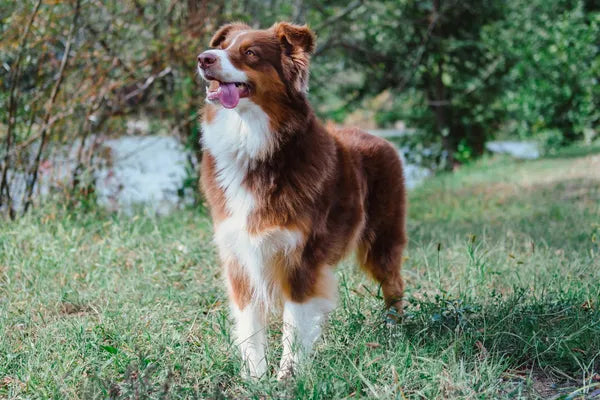
Australian Shepherd
- Easy to train
- Good with other pets
- Good with children


12–15 years

Males 20–32 kg; females 15–25 kg. 46–58 cm tall at the shoulder.

Medium to High


High. Requires 1.5–2 hours of vigorous daily exercise plus mental stimulation.
is this the right breed for you?
Owner Suitability
Where the breed comes from
Origin & History


Get it right early
Tips for First-Time Owners
- 1 Be honest about your lifestyle before purchasing — an Australian Shepherd in an under-stimulated environment becomes destructive, anxious and difficult. Only acquire this breed if you can genuinely commit to 1.5–2 hours of daily physical exercise plus meaningful mental enrichment.
- 2 DNA-test your dog for the MDR1 gene mutation and carry a medication sensitivity card — certain commonly prescribed drugs are dangerous for dogs carrying this mutation.
- 3 Begin training and socialisation from day one and never stop — this breed requires ongoing engagement and structured training throughout its life.
- 4 Source from an ANKC-registered breeder who health-screens for hip/elbow dysplasia, hereditary eye conditions and MDR1, and never purchase from a merle × merle pairing.
- 5 Enrol in a dog sport or structured activity — agility, obedience trials, herding or scent work — to provide an outlet for this breed's extraordinary intelligence and working drive.
Daily Routine
Care & Exercise
Coat Care Routine
Grooming
Did you know
Fun Facts
Despite being called the Australian Shepherd, the breed has no Australian origin — it was developed entirely in the United States. The name is believed to derive from the Basque sheepherders who brought their European herding dogs to America via Australia in the 1800s, and whose dogs became the foundation stock of the breed.
The Australian Shepherd was popularised in the United States in the 1950s and 60s through rodeo performances, where dogs like Jay Sisler's famous trio — Queenie, Stubby and Shorty — performed extraordinary freestyle tricks that captivated audiences across America and brought the breed to national attention.
Australian Shepherds frequently have heterochromia — two eyes of different colours — or marbled, multi-coloured irises within a single eye. This trait is particularly common in merle-coloured individuals and is caused by differential distribution of melanin pigment during development, not a defect or health issue.
Day-to-day interaction
Handling & Socialisation
Keep them stimulated
Enrichment
What to watch for
Common Health Issues
find your next best friend
Browse all Puppies
Our Available Puppies


Everything you need
Essentials Shopping List
Setup checklist
- Quality active-breed or medium-large-breed dog food (age-appropriate)
- Stainless steel food and water bowls
- Collar with ID tag and medical alert tag (MDR1)
- Harness
- Standard lead and long training lead
- Crate
- Dog bed or crate mat
- Slicker brush
- Underbody rake or deshedding brush
- Wide-tooth comb
- Dog-safe shampoo
- Ear cleaning solution
- Dog toothbrush and dog-safe toothpaste
- Nail clippers
- Training treats
- Fillable rubber chew toy
- Puzzle feeders (multiple; high-difficulty)
- Tug toy
- Fetch toy (ball launcher recommended)
- Agility equipment or sport enrolment
- Poo bags and dispenser
- Flea, tick and worming prevention (vet recommended — check MDR1 sensitivity)
- Pet insurance (from day one)
READY TO SET UP
See all items
Shop the Essentials

Save 25%
Simparica Trio for Small Dogs 5.1-10kg Orange

Save 22%
Hill's Science Diet Dog Food Puppy Large Breed

Save 22%
Hill's Science Diet Dog Food Puppy

Save 22%
Black Hawk Dog Food Puppy Medium Breed Chicken & Rice

Save 22%
Black Hawk Dog Food Puppy Medium Breed Lamb & Rice

Save 15%
Milbemax for Dogs Over 5kg - 2 Pack

Save 15%
Taste of the Wild Dog Food Puppy Pacific Stream Salmon

Save 15%
Black Hawk Grain Free Dog Food Puppy Ocean Fish
FAQ
Commonly Asked Questions
-
Does the Australian Shepherd actually come from Australia?
-
Is an Australian Shepherd suitable for an apartment?
-
What is the MDR1 gene mutation?
-
Do Australian Shepherds herd children?
-
What health tests should I ask for from a breeder?
Learn more
See all breed guides Read about other breeds
No articles match that search. Try a different word.


Need help?Our specialists are in-store every day to help with sourcing, training and supplies.
Visit Kellyville Pets