Breed Guide6 min read

Greyhound

Grey (informal) · Racing Greyhound · GAP dog (adoption context) · English Greyhound (to distinguish from Italian Greyhound, which is a separate breed)

  • Apartment-friendly
  • Easy to train
  • Calm temperament
  • Good with children
  • Low exercise needs
  • Suitable for first-time owners
  • Low grooming commitment
  • Good with other pets
Greyhound Breed Guide
Temperament

Gentle, calm and affectionate — the world's fastest dog is also one of its most relaxed companions. Devoted to family, good with children and dogs. Non-aggressive and rarely barks. Strong prey drive toward small animals requires management, not training.

Lifespan
12–15 years with good care
Adult Size
Males 27–40 kg, 71–76 cm; females 25–34 kg, 68–71 cm.
Care Level
Low to Medium
Coat Type

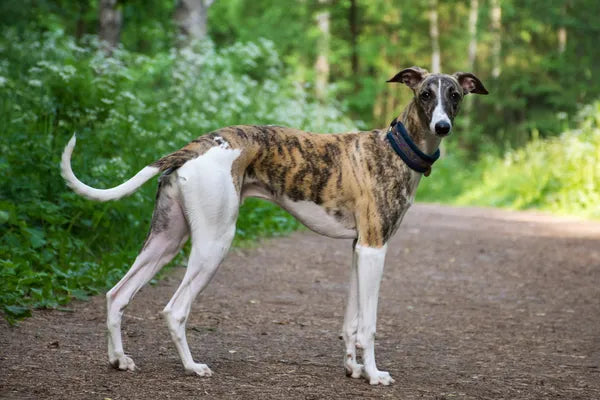
Short, fine, single-layer coat. Light to moderate shedder. Very low grooming demand. Minimal body odour. Not hypoallergenic.

Energy Level

Low to Medium. Short daily walks plus secure off-lead sprints.

is this the right breed for you?

Owner Suitability

Excellent for first-time owners, apartment dwellers, retirees, families and active singles. Remarkably adaptable and low-maintenance for their size. Prospective owners should understand the need for a securely fenced yard, the prey drive toward small animals, and anaesthesia sensitivity. GAP adoption is strongly recommended.

Where the breed comes from

Origin & History

The Greyhound is one of the oldest purebred dog breeds in existence, with a documented history spanning at least 4,000 years. Depictions of slender, long-legged coursing dogs appear in ancient Egyptian tomb paintings, Sumerian carvings and ancient Greek pottery. Revered by Egyptian pharaohs, Greek philosophers and Roman emperors, the Greyhound was among the first dog breeds described by name in written historical records. In medieval England, ownership was restricted to the nobility by law. Modern Greyhound racing began in Australia in the early 20th century. Under the Australian National Kennel Council (ANKC), the Greyhound is classified in Group 4 (Hounds). The Greyhound Adoption Program (GAP), operating in every Australian state, is the primary pathway through which retired racing Greyhounds enter family homes.

Get it right early

Tips for First-Time Owners

  1. 1 Always carry a Greyhound anaesthesia alert card or tag and inform every veterinarian before any procedure — including routine dental cleans under sedation. This single step can save your dog's life.
  2. 2 A fully enclosed, secure fence of at least 1.8 m is the most important safety requirement. Greyhounds can reach 60+ km/h within seconds of sighting prey — no amount of recall training reliably overrides this instinct in an open space.
  3. 3 Provide a thick orthopaedic or memory foam bed and ensure the dog always has a padded surface to rest on. Pressure sores develop rapidly on bony prominent joints on hard surfaces.
  4. 4 Have a full parasite and dental assessment done by a Greyhound-experienced vet immediately on adoption. Both dental disease and drug-resistant hookworm are common in retired racers and require targeted management.
  5. 5 Consider adopting through GAP rather than purchasing a puppy — GAP dogs arrive assessed, desexed, vaccinated and with a known temperament profile. Most retired Greyhounds settle into family life within weeks and the adoption process is supported throughout.
Daily Routine

Care & Exercise

The Greyhound is one of the most pleasantly surprising breeds to own — despite their athletic build and racing heritage, they are gentle, quiet and low-maintenance companions who spend up to 18 hours per day sleeping. Two moderate daily walks plus occasional off-lead sprints in a securely fenced area is ideal. Greyhounds are indoor dogs and must not be kennelled outside due to thin skin and cold sensitivity. A fully enclosed secure fence (minimum 1.8 m) is non-negotiable — they can reach 60+ km/h and the sight of a small animal can trigger an immediate, irresistible chase. Always inform every veterinarian that your dog is a Greyhound before any procedure requiring sedation or anaesthesia. Feed a quality large-breed diet twice daily. Provide a thick, padded orthopaedic bed.

Coat Care Routine

Grooming

The Greyhound is one of the lowest-maintenance grooming breeds available. The fine, short single coat requires only a weekly wipe-down with a soft rubber grooming mitt or damp cloth to remove loose hair. Greyhounds have minimal body odour and rarely need bathing more than monthly. They are light shedders. The thin skin requires awareness — check regularly for nicks, cuts or pressure sores, as minimal body fat makes the skin fragile and slow to heal. Dental hygiene is one of the most important ongoing commitments; retired racers frequently have significant dental disease requiring veterinary treatment on adoption. Brush teeth two to three times per week. Trim nails every three to four weeks. Check ears regularly.

Did you know

Fun Facts

The Greyhound is the second fastest land animal on Earth after the cheetah, reaching speeds of up to 72 km/h. Unlike the cheetah, which overheats after a few seconds at top speed, a Greyhound can sustain speeds of 60+ km/h for distances up to 800 metres — a combination of explosive acceleration and sustained sprint capacity unique among land animals.

The Greyhound is the only dog breed mentioned by name in the Bible — a reference in Proverbs 30:29-31 (King James Version) lists 'a greyhound' among creatures of stately bearing alongside a lion, making it the only domestic dog to appear by name in canonical scripture. Despite being built for explosive speed,

Greyhounds are known as '45-mile-per-hour couch potatoes' — spending up to 18 hours per day sleeping contentedly on soft surfaces. This paradox makes them one of the most unexpectedly suitable large breeds for apartment living, and one of the most common surprises for first-time Greyhound owners.

Day-to-day interaction

Handling & Socialisation

Retired racing Greyhounds typically require a structured transition period on adoption — learning household routines, navigating stairs, understanding glass doors and adjusting to the pace of family life. Most settle within weeks with patient, calm guidance. GAP-assessed dogs arrive with a completed temperament profile. Lead manners require establishment as most retired racers have never walked on a lead for leisure. A front-clip harness is recommended. Introductions to cats and small dogs must be carefully managed and assessed on an individual basis — always ask GAP specifically about the individual dog's small animal assessment.

Keep them stimulated

Enrichment

Greyhounds are sprinters, not endurance athletes — their enrichment reflects this. Short, explosive off-lead runs in a fully fenced secure area provide the physical outlet they clearly enjoy and need. Lure coursing and oval track activities are purpose-designed enrichment allowing full expression of natural sprint behaviour in a safe environment — many GAP programs and Greyhound clubs offer these activities. Sniff walks at a gentle pace provide significant mental stimulation without cardiovascular strain. Puzzle feeders, calm interactive play and short training sessions provide indoor cognitive enrichment. Greyhounds are highly social and value time with their family above all — quiet companionship is the most natural and appreciated enrichment available.

What to watch for

Common Health Issues

Anaesthesia Sensitivity: The most critical health fact. Greyhounds have very low body fat and a unique liver metabolism making them dangerously sensitive to many standard anaesthetic agents. Always inform every vet before any procedure and carry a medical alert tag.

Osteosarcoma: Greyhounds have the highest incidence of bone cancer of any breed. Promptly investigate any unexplained lameness or bony swelling.

Dental Disease: Very common in retired racers; full dental assessment on adoption and regular brushing are essential.

Hookworm: Drug-resistant hookworm infections are documented in retired racers; standard worming may be insufficient — seek veterinary guidance on adoption.

Bloat (GDV): Deep chest creates moderate risk; feed two smaller meals and avoid exercise immediately around mealtimes.

Pressure Sores: Develop rapidly without padded bedding; an orthopaedic bed is essential.

Cold Sensitivity: A dog coat is necessary in cool weather.

Find your next best friend

Our Available Puppies

Browse all Puppies →
Everything you need

Essentials Shopping List

Setup checklist

  • Quality large-breed dog food (age-appropriate; twice daily)
  • Stainless steel food and water bowls
  • Wide padded Greyhound-specific martingale collar
  • Front-clip harness
  • Standard lead
  • Greyhound anaesthesia alert medical tag or card (essential)
  • Thick orthopaedic or memory foam bed (essential)
  • Dog coat or jacket (essential in cool weather)
  • Soft rubber grooming mitt or hound glove
  • Dog-safe sensitive-skin shampoo
  • Dog toothbrush and dog-safe toothpaste
  • Nail clippers
  • Training treats (small, low-calorie)
  • Fillable rubber chew toy
  • Puzzle feeder
  • Poo bags
  • Securely fenced yard or regular access to fenced off-lead area (essential)
  • Flea, tick and worming prevention (vet-guided — standard hookworm protocols may be insufficient for
  • etired racers)
  • Pet insurance (from day one)
FAQ

Commonly Asked Questions

  • Do Greyhounds need a lot of exercise?

    Less than most people expect. Two moderate daily walks plus occasional off-lead sprints in a secure fenced area is sufficient. They are sprinters by design, not endurance dogs, and spend most of the day sleeping.

  • Is a Greyhound suitable for an apartment?

    Yes — widely regarded as one of the best large breeds for apartment living. They are quiet, calm, low-odour, light shedders and sleep most of the day. A securely fenced area for off-lead runs is the primary requirement.

  • Can a Greyhound live with cats or small dogs?

    Depends on the individual. Prey drive toward small animals is a strong instinct. Many Greyhounds live happily with cats and small dogs after careful introduction. Always ask GAP specifically about each dog's assessed small animal tolerance before adopting.

  • Why is anaesthesia sensitivity so important?

    Greyhounds have very low body fat and a liver metabolism that processes certain anaesthetic agents differently. Standard doses safe in other breeds can cause prolonged anaesthesia or death in a Greyhound. Always ensure every vet is informed before any procedure.

  • Should I adopt or buy a Greyhound puppy?

    For most families, adoption through GAP is strongly recommended. GAP dogs arrive assessed, desexed, vaccinated and ready for family life. GAP programs operate in every Australian state and the adoption fee is a fraction of a puppy purchase price.

Need help?

Our specialists are in-store every day to help with sourcing, training and supplies.

Visit Kellyville Pets →