


Excellent for families, first-time owners, active households and those seeking a sociable companion. Adapts well to a range of living situations provided exercise needs are met. Prone to separation anxiety; best suited to households with regular company.
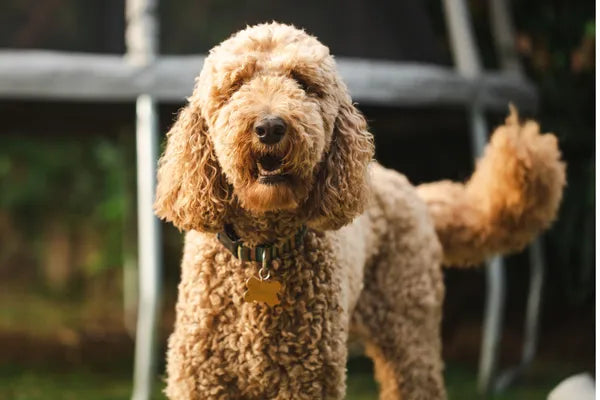
Groodle
- Good with children
- Easy to train
- Suitable for first-time owners
- Low-shedding
- Good with other pets


Standard: 10–15 years. Miniature: 12–15 years.

Standard: 20–35 kg, 50–65 cm. Miniature: 7–15 kg, 35–45 cm.

Medium


Medium to High. Requires 45–90 minutes of exercise daily depending on size.
is this the right breed for you?
Owner Suitability
Where the breed comes from
Origin & History


Get it right early
Tips for First-Time Owners
- 1 Commit to the grooming routine before purchasing — the Groodle coat is beautiful but requires consistent professional grooming every six to ten weeks and regular brushing at home. Neglected coats mat severely and painfully.
- 2 Source from a breeder who health-screens both parent breeds for hip/elbow dysplasia and PRA eye conditions.
- 3 Measure every meal — the Golden Retriever parent's love of food combined with the Poodle's appetite can make Groodles prone to obesity; never free-feed.
- 4 Build separation tolerance gradually from puppyhood — Groodles are people-oriented and prone to separation anxiety.
- 5 Invest in pet insurance from day one — joint conditions and the Golden Retriever's elevated cancer predisposition can result in significant veterinary costs over a 12–15 year lifespan.
Daily Routine
Care & Exercise
Coat Care Routine
Grooming
Did you know
Fun Facts
The Groodle (or Goldendoodle) has become one of the most popular therapy dog breeds internationally — the combination of the Golden Retriever's intuitive emotional sensitivity and the Poodle's trainability and hypoallergenic coat makes it exceptionally well suited for therapy, hospital and school visitation work.
Golden Retrievers — one of the Groodle's parent breeds — have one of the highest cancer predisposition rates of any dog breed, with studies suggesting up to 60% of Golden Retrievers develop cancer during their lifetime. The Poodle cross substantially mitigates but does not eliminate this risk in Groodles.
The term 'Groodle' is uniquely Australian — internationally the same cross is called a Goldendoodle. The Australian name is so widely established domestically that many Australians are unaware the international name exists.
Day-to-day interaction
Handling & Socialisation
Keep them stimulated
Enrichment
What to watch for
Common Health Issues
find your next best friend
Browse all Puppies
Our Available Puppies


Everything you need
Essentials Shopping List
Setup checklist
- Quality medium-to-large breed dog food (size-appropriate)
- Stainless steel food and water bowls
- Collar with ID tag
- Harness
- Standard lead and long training lead
- Crate
- Dog bed
- Slicker brush and steel comb
- Undercoat rake (for heavier coats)
- Dog-safe shampoo
- Ear cleaning solution
- Dog toothbrush and dog-safe toothpaste
- Nail clippers
- Training treats
- Fillable rubber chew toy
- Puzzle feeders
- Fetch toy (ball launcher)
- Tug toy
- Poo bags
- Flea, tick and worming prevention (vet recommended)
- Pet insurance (from day one)
READY TO SET UP
See all items
Shop the Essentials

Save 25%
Simparica Trio for Small Dogs 5.1-10kg Orange

Save 22%
Hill's Science Diet Dog Food Puppy Large Breed

Save 22%
Hill's Science Diet Dog Food Puppy

Save 22%
Black Hawk Dog Food Puppy Medium Breed Chicken & Rice

Save 22%
Black Hawk Dog Food Puppy Medium Breed Lamb & Rice

Save 15%
Milbemax for Dogs Over 5kg - 2 Pack

Save 15%
Taste of the Wild Dog Food Puppy Pacific Stream Salmon

Save 15%
Black Hawk Grain Free Dog Food Puppy Ocean Fish
FAQ
Commonly Asked Questions
-
Is a Groodle easy to train?
-
Do Groodles shed?
-
Are Groodles good with children?
-
How much does a Groodle cost to groom?
-
What health tests should I ask a breeder for?
Learn more
See all breed guides Read about other breeds
No articles match that search. Try a different word.


Need help?Our specialists are in-store every day to help with sourcing, training and supplies.
Visit Kellyville Pets