Breed Guide6 min read

Old English Sheepdog

OES · Bobtail (most common nickname — refers to traditionally docked tail) · Dulux Dog (popular culture name from UK advertising)

  • Easy to train
  • Good with children
  • Good with other pets
  • Calm temperament
Old English Sheepdog Breed Guide
Temperament

Good-natured, loyal, playful and affectionate — the OES is often described as 'a clown at heart'. Devoted to family and generally excellent with children, with the patience and size tolerance to handle the enthusiasm of young children well. Intelligent and responsive when engaged, but can be stubborn and independent. The herding instinct is present and may be directed at children or other animals without management.

Lifespan
10-12 years
Adult Size
Males 32–45kg, 61cm+; females 27–36kg, 56cm+
Care Level
High
Coat Type

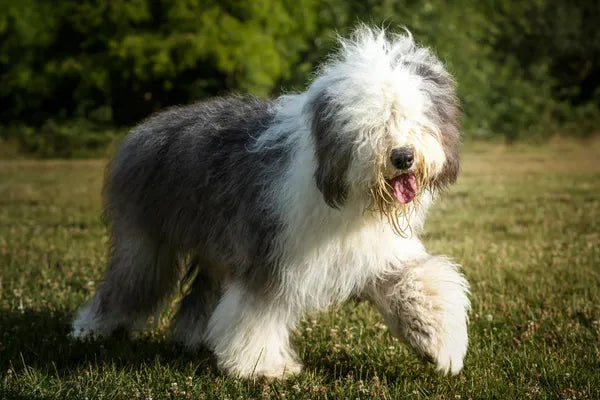
Thick, profuse double coat — long, hard-textured outer coat and dense, waterproof undercoat. Heavy shedder. Extremely high grooming commitment — requires daily brushing and regular professional attention. Not hypoallergenic.

Energy Level

Medium to High. Requires at least 60–90 minutes of active daily exercise.

is this the right breed for you?

Owner Suitability

The Old English Sheepdog is a large, active, intelligent working breed that requires daily exercise, consistent training and an extraordinary grooming commitment. Best suited to active families with space and time to invest. The grooming requirement alone makes this breed unsuitable for those unwilling to commit three to four hours per week minimum to coat maintenance.

Where the breed comes from

Origin & History

The Old English Sheepdog (OES) emerged in England in the early 19th century, developed as a working droving dog to move cattle and sheep to market across open country. The breed's exact ancestry is debated — the Bearded Collie, Russian Owtchar (Ovcharka) and other working herding breeds have been proposed as foundation stock. The OES was first exhibited at Birmingham in 1873 and the Old English Sheepdog Club was founded in 1888. The distinctively docked tail — traditionally the marker of a working dog exempt from dog tax in England — became the breed's signature, giving rise to the common nickname 'Bobtail'. Under the Australian National Kennel Council (ANKC), the Old English Sheepdog is classified in Group 5 (Working Dogs).

Get it right early

Tips for First-Time Owners

  1. 1 Commit honestly to the grooming requirement before purchasing — three to four hours per week minimum, every week, for the life of the dog. The OES coat requires daily attention and professional grooming regularly. Underestimating this commitment leads to a suffering dog requiring veterinary-assisted full-body shaving.
  2. 2 Begin grooming conditioning from the very first week — a puppy that learns to accept full-body grooming becomes a manageable adult; an adult not conditioned to grooming is extremely difficult to work with at 35+ kg.
  3. 3 Source from a reputable breeder who hip-scores, elbow-scores, eye-tests (CAER) and hearing-tests breeding dogs.
  4. 4 Know the signs of bloat — emergency surgery within hours is the only effective treatment. Feed two smaller meals, avoid exercise immediately around mealtimes and act immediately on symptoms.
  5. 5 Accept that this dog's size and working-breed temperament requires consistent training and exercise commitment. An under-exercised, under-trained OES will entertain itself through destructive behaviour.
Daily Routine

Care & Exercise

The Old English Sheepdog requires at least 60–90 minutes of vigorous daily exercise and is poorly suited to inactivity. This is a working breed that needs both physical exercise and mental engagement. Training should begin from puppyhood using positive, consistent reward-based methods; the OES is intelligent but independent and can be strong-willed. Puppy school followed by ongoing training is strongly recommended. The herding instinct may manifest as circling or pushing behaviour toward children or other animals — proactive management from puppyhood is important. For large individuals, bloat (GDV) is a genuine risk — feed two smaller meals daily and avoid exercise immediately around mealtimes. Annual vet checks, ear care, dental care and parasite prevention are essential.

Coat Care Routine

Grooming

The OES coat is one of the most demanding of any companion breed. Minimum three to four hours of grooming per week is required to maintain the coat mat-free. Daily brushing from skin to tip is the only effective approach — brushing only the surface of the coat allows mats to form invisibly underneath and eventually requires full shaving to correct. A pin brush, slicker brush and long-toothed metal comb are essential tools. Professional grooming every six to eight weeks is required. Many pet owners clip the coat short twice yearly — an 'all-over clip' — and maintain a shorter presentation that is significantly easier to manage between professional appointments. The dog's eyes are often obscured by the coat fall; trim or clip this back to allow clear forward vision. Bathe every four to six weeks. Check and clean ears weekly. Brush teeth regularly. Trim nails every three to four weeks. This breed's grooming must begin from the first week of ownership while the puppy is young and tractable — an adult OES that has not been conditioned to grooming is extremely difficult to manage.

Did you know

Fun Facts

The Old English Sheepdog gained global cultural recognition through the 1950s–1970s advertising campaigns for Dulux paint in the United Kingdom, which used a series of large, fluffy OES as brand icons. The Dulux Dog became one of the most recognised advertising animals in British advertising history, and the association remains so strong that the OES is still sometimes called the 'Dulux Dog' in popular culture.

The traditional docked tail of the OES — which gave rise to the nickname 'Bobtail' — was historically the legal marker of a working dog in England, exempting its owner from a dog tax levied on non-working animals. Farmers would dock the tails of their OES to display their working status. While tail docking is now banned or restricted in many countries including Australia, the Bobtail nickname persists.

The OES was once a much rarer breed in Australia than it is today, but enjoyed a significant surge in popularity in the 1970s and 1980s partly driven by the Dulux advertising campaigns and several prominent appearances in film and television — a case of popular culture directly influencing breed registration numbers.

Day-to-day interaction

Handling & Socialisation

Extensive socialisation from puppyhood is important — the OES can be reserved or reactive toward strangers without adequate early exposure. Puppy school followed by ongoing training classes is strongly recommended given the breed's size and working instinct. Positive, reward-based training works well; the OES responds to engagement and variety rather than repetitive drills. The breed's size and exuberance requires consistent training — an untrained adult OES is physically challenging to manage. Teach the herding instinct management from day one.

Keep them stimulated

Enrichment

The OES needs both physical and mental enrichment. Long, varied walks in different environments; off-lead running in secure areas; fetch and interactive play are all ideal. Herding trials and dog sports that channel the working instinct are excellent enrichment for more active owners. Puzzle feeders and training sessions provide cognitive stimulation. This is a social breed that thrives on family involvement and should not be left alone for extended periods.

What to watch for

Common Health Issues

Hip and Elbow Dysplasia: Common in large breeds; source from hip- and elbow-scored parents.

Bloat (GDV): Deep-chested large breeds are at meaningful risk. Feed two smaller meals daily; avoid vigorous exercise immediately before and after eating; know the emergency signs (distended abdomen, unproductive retching, restlessness) and seek emergency veterinary care immediately.

Hereditary Cataracts: A hereditary eye condition documented in the breed; CAER eye testing of breeding dogs is recommended.

Hypothyroidism: Reduced thyroid function; causes weight gain, lethargy and coat changes.

Deafness: Reported in some OES lines; hearing testing of breeding dogs is beneficial.

Ear Infections: The heavy, pendulous ears trap moisture; weekly cleaning is important.

Obesity: Easy-keeping breed prone to weight gain; measure meals and monitor body condition.

Everything you need

Essentials Shopping List

Setup checklist

  • Quality large-breed dog food (age-appropriate)
  • Stainless steel food and water bowls (slow feeder; no elevated feeder — increases GDV risk)
  • Collar with ID tag
  • Harness (front-clip for lead training)
  • Standard lead and long training lead
  • Crate (large)
  • Orthopaedic dog bed
  • Pin brush (daily use)
  • Slicker brush
  • Long-toothed metal comb
  • Undercoat rake (seasonal)
  • Dog-safe shampoo
  • Ear cleaning solution
  • Dog toothbrush and dog-safe toothpaste
  • Nail clippers
  • Training treats
  • Fillable rubber chew toy
  • Puzzle feeders
  • Fetch toy and tug toy
  • Poo bags
  • Flea, tick and worming prevention (vet recommended)
  • Pet insurance (from day one)
FAQ

Commonly Asked Questions

  • How much grooming does an Old English Sheepdog really need?

    Three to four hours per week minimum, every week. Daily brushing to the skin is required to prevent invisible under-mat formation. Professional grooming every six to eight weeks, or a twice-yearly full clip for pet dogs. This is the highest grooming commitment of almost any companion breed.

  • Is the OES suitable for apartment living?

    Generally not — this is a large, active working breed requiring significant daily exercise and space. A home with a secure yard is strongly recommended.

  • How does the herding instinct manifest at home?

    As circling, pushing or nipping at children, cyclists and other animals. Early training to redirect this behaviour is important.

  • What is bloat and is it a risk in the OES?

    Bloat (Gastric Dilatation-Volvulus/GDV) is a life-threatening condition where the stomach fills with gas and twists. It occurs in deep-chested large breeds. Know the signs and seek emergency care immediately.

  • What health tests should I ask a breeder for?

    Hip and elbow scores; CAER eye test; hearing test (BAER); thyroid function history in lines.

Need help?Our specialists are in-store every day to help with sourcing, training and supplies.

Visit Kellyville Pets