Breed Guide6 min read

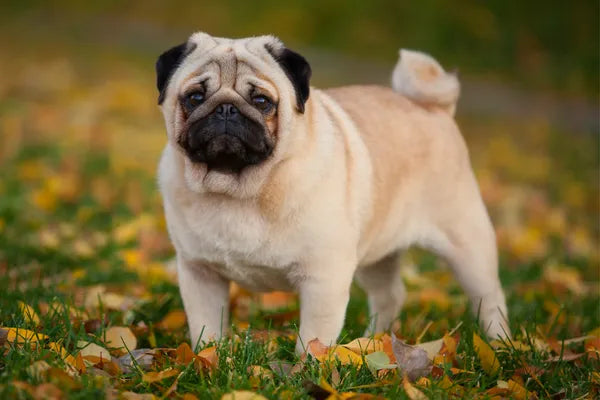
Pug

Mops (German/Dutch) · Carlino (Italian) · Dutch Mastiff (historical) · Lo-sze (historical Chinese name)

  • Calm temperament
  • Apartment-friendly
  • Good with children
  • Low exercise needs
  • Good with other pets
  • Suitable for first-time owners
  • Low grooming commitment
Pug Breed Guide
Temperament

Affectionate, charming and entertaining — Pugs are devoted companions with a strong sense of humour and a natural talent for human interaction. Playful, sociable and people-centred. Generally good with children and other dogs. Relatively laid-back and adaptable. Can be stubborn. Known for snoring, snuffling and a range of endearing respiratory noises.

Lifespan
12–15 years with good care, though BOAS may significantly impact quality of life in some individuals
Adult Size
6–9kg; 25–35cm tall at the shoulder
Care Level
Low to Medium
Coat Type

Short, smooth, fine double coat. Moderate to heavy shedder — surprisingly high shedding for a smooth-coated breed. Not hypoallergenic.

Energy Level

Low. Short, gentle walks in cool conditions. Never exercise in heat.

is this the right breed for you?

Owner Suitability

Suitable for apartment dwellers, first-time owners, seniors and those seeking a low-exercise companion — but only for owners who fully research and accept the breed's significant health considerations. The Pug's welfare is directly linked to an owner's commitment to managing BOAS, facial fold hygiene, weight and heat exposure.

Where the breed comes from

Origin & History

The Pug is one of the oldest known companion dog breeds, with origins in imperial China during the Han Dynasty (206 BC–200 AD), where flat-faced dogs were kept as luxury companions by emperors and lived with bodyguards. Chinese traders introduced the breed to Europe in the 16th century, where it became particularly fashionable in Dutch and later British royal courts. A Pug famously saved the life of William, Prince of Orange, by alerting him to the approach of Spanish enemies in 1572, after which the breed was designated the official dog of the House of Orange. The breed arrived in Australia where it remains a recognisable companion. Under the Australian National Kennel Council (ANKC), the Pug is classified in Group 7 (Non-Sporting).

Get it right early

Tips for First-Time Owners

  1. 1 Understand BOAS before purchasing — breathing difficulty affects the majority of Pugs to some degree. View the parents breathing in person, ask for a BOAS grade and budget for possible corrective surgery.
  2. 2 Clean facial folds daily without exception — moisture and debris trapped in skin folds causes painful, recurring infections that are entirely preventable with a 2-minute daily routine.
  3. 3 Never exercise a Pug in hot or humid weather — they cannot pant effectively and can develop fatal heat stroke within minutes. Mandatory indoor air conditioning during Australian summers is essential for this breed.
  4. 4 Manage weight carefully — obesity directly worsens breathing difficulty and reduces quality of life. Measure every meal, use a slow feeder and resist the food-begging.
  5. 5 Take out pet insurance from day one — BOAS surgery, eye conditions and ongoing skin management can generate significant veterinary costs over the dog's lifetime.
Daily Routine

Care & Exercise

Pugs are low-exercise dogs — short, gentle daily walks in cool conditions are appropriate. Exercise must never occur in hot or humid weather; their compromised airways make effective panting impossible, creating rapid and potentially fatal heat stroke risk. In Australian summers, exercise must be limited to early morning or evening in cooler conditions and the dog must have access to air conditioning indoors. Daily cleaning of facial folds and prominent eyes is non-negotiable. Weight management is essential — obesity significantly worsens BOAS and increases breathing difficulty. BOAS assessment and corrective surgery (widening nostrils and shortening the soft palate) is an important veterinary discussion for many individuals.

Coat Care Routine

Grooming

The short coat requires only weekly brushing with a rubber grooming glove to remove loose hair — the coat itself is low-maintenance. However, the Pug's most critical and often underestimated grooming task is daily cleaning and drying of the facial folds. Moisture, food debris and bacteria accumulate in the skin wrinkles around the nose, mouth and brow, causing painful skin fold dermatitis if not cleaned and dried thoroughly every day. Use a soft dry cloth or unscented dog-safe wipe and dry between every fold completely. Any Pug with a tail pocket (a skin fold at the tail base) requires the same daily attention. Bathe every three to four weeks. The prominent eyes are vulnerable and should be wiped clean daily. Check and clean ears weekly. Brush teeth regularly. Trim nails every three to four weeks.

Did you know

Fun Facts

The Pug was the official dog of the House of Orange following the famous incident in 1572 when a Pug reportedly saved the life of William, Prince of Orange, by waking him to warn of approaching Spanish soldiers. This status made the Pug fashionable across European royal courts and is partly responsible for the breed's subsequent spread beyond China.

Pugs are the only breed in the world known to be affected by Pug Dog Encephalitis (PDE) — an inflammatory brain disease entirely exclusive to the breed that causes seizures, blindness and behavioural changes. DNA testing for the condition is available and is one of the health screens recommended for responsible breeders.

The Pug's Latin motto, historically associated with the breed in European royal households, is 'multum in parvo' — meaning 'much in little' — a phrase that perfectly captures the breed's defining characteristic of maximum personality in minimum body size.

Day-to-day interaction

Handling & Socialisation

Socialisation from puppyhood is straightforward given the breed's naturally sociable temperament. Puppy school provides foundational obedience — Pugs are responsive to positive, food-based training but can be stubborn. Keep sessions short, positive and engaging. Their prominent eyes are vulnerable to scratching from rough handling; teach children to interact calmly and gently. Build heat awareness from day one — never allow the dog to become overheated during play or outdoor activity.

Keep them stimulated

Enrichment

Pugs are low-energy but enjoy mental stimulation and gentle interactive enrichment. Short trick-training sessions, puzzle feeders and interactive play with the family provide cognitive engagement. Sniff walks (at a slow pace allowing full olfactory exploration) suit the breed's energy level and instincts well. Rotate appropriately-sized toys to maintain novelty. Keep all enrichment gentle and avoid activities that cause overexertion or overheating. The breed's entertainment value comes as much from its personality and social interaction as from structured enrichment.

What to watch for

Common Health Issues

Brachycephalic Obstructive Airway Syndrome (BOAS): The defining and most significant health challenge of the breed. BOAS results from the flat facial structure — narrowed nostrils, elongated soft palate and compressed airway. It causes breathing difficulty ranging from mild (snuffling, snoring) to severe (laboured breathing at rest, exercise intolerance). Heat stroke risk is directly linked to BOAS — the inability to pant effectively makes the Pug acutely vulnerable to fatal overheating. Corrective surgery significantly improves quality of life in affected dogs. BOAS assessment before and after purchase is strongly recommended. Dogs Australia supports the Cambridge Respiratory Function Grading Scheme for brachycephalic breeds.

Skin Fold Dermatitis: Bacterial and yeast infections in facial folds and tail pockets; entirely preventable with daily cleaning and drying.

Eye Conditions: Prominent eyes are vulnerable to corneal ulcers, scratches and dry eye (keratoconjunctivitis sicca). Any cloudiness, redness or squinting requires prompt veterinary attention.

Pug Dog Encephalitis (PDE): A rare but serious hereditary inflammatory brain disease unique to the breed, causing seizures, blindness and behavioural changes. DNA testing is available.

Obesity: Directly worsens BOAS and all other health conditions; weight management is essential.

Hip Dysplasia and Patella Luxation: Joint conditions; source from health-screened breeders.

Everything you need

Essentials Shopping List

Setup checklist

  • Quality small-breed dog food (age-appropriate; weight-controlled)
  • Stainless steel food and water bowls (slow feeder strongly recommended)
  • Small harness (never a collar — tracheal pressure worsens BOAS)
  • Short lead
  • Crate
  • Orthopaedic dog bed
  • Rubber grooming glove or soft-bristle brush
  • Unscented dog-safe wipes or soft cloths (daily fold cleaning)
  • Dog-safe shampoo
  • Dog-safe eye wipes (daily)
  • Ear cleaning solution
  • Dog toothbrush and dog-safe toothpaste
  • Nail clippers
  • Small training treats (low-calorie)
  • Fillable rubber chew toy
  • Puzzle feeder (small)
  • Small appropriately-sized toys
  • Cooling mat (essential for Australian summers)
  • Poo bags
  • Flea, tick and worming prevention (vet recommended)
  • Pet insurance (from day one — BOAS surgery and eye conditions make this essential)
FAQ

Commonly Asked Questions

  • Does every Pug have breathing problems?

    Most Pugs have some degree of BOAS-related airway compromise — from mild snuffling to significant breathing difficulty. The severity varies. Corrective surgery is available and significantly improves quality of life in affected dogs.

  • Can a Pug live in a hot climate like Australia?

    Only with careful management — indoor air conditioning during summer, no exercise in warm weather and daily monitoring are non-negotiable for this breed in Australian conditions.

  • Are Pugs easy to train?

    They are responsive to positive, food-based training but can be stubborn. Short, engaging sessions work better than repetitive drills.

  • Do Pugs shed?

    Yes — surprisingly heavily for a short-coated breed. Regular weekly brushing manages this.

  • What is Pug Dog Encephalitis?

    A rare but serious brain inflammatory disease unique to the Pug breed. DNA testing is available; ask your breeder about the PDE status of their breeding dogs.

Need help?Our specialists are in-store every day to help with sourcing, training and supplies.

Visit Kellyville Pets