


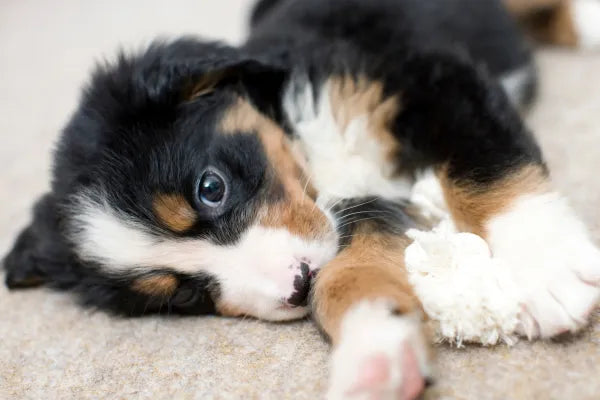
Most people picture the same thing when they imagine getting a puppy: a tiny eight-week-old that fits in two hands. It's a lovely image, and it's also the hardest version of puppy ownership. Ask anyone who works with puppies every day which ones settle into a household fastest, and the answer is usually the ones that are a bit further along.
If you've been holding out for the youngest pup available, here's what you might be trading away.
What counts as a slightly older puppy
Anything from roughly 12 weeks to six months. Still very much a puppy, still in the thick of training, chewing and growth spurts, but past the stage where every single thing is a first.
The first month at home is genuinely easier
Toilet training is the thing new owners underestimate most, and it comes down to physical capacity rather than intelligence. A rough guide many trainers use is about one hour of bladder control per month of age during the day. An eight-week-old is working with two hours at best, which means overnight alarms and mopping up regardless of how well you're doing everything else. A sixteen-week-old can usually manage four or five hours and often sleeps through.
That difference compounds. Fewer accidents means faster learning, less frustration on both sides, and a puppy who isn't being interrupted and corrected all day long.
Vaccinations open the world up sooner
Most Australian puppies get their core vaccinations across three rounds between roughly six and sixteen weeks, with full protection about a fortnight after the final one. Bring home an eight-week-old and you're facing two months of carefully managed outings before the local park is fair game.
An older puppy may already be through the schedule, which means group training classes, cafe visits and early morning beach walks can start almost straight away. Check the vaccination card and confirm the timing with your vet before you head out anywhere public.
You can see more of the dog you're actually getting
At eight weeks a lot is still guesswork. By four months you get a much clearer read on energy level, confidence around noise and strangers, how the pup copes with being alone for a bit, and roughly what size they're heading for. Coat is a big one for oodle breeds, where the puppy coat can change substantially by six months.
If you're matching a dog to a specific household, a small courtyard, young kids, an older dog already at home, that visibility is worth a lot.
Age by age, what actually changes
| Age | Daytime bladder | Overnight | Where they can go | What you can read |
|---|---|---|---|---|
| 8 to 10 weeks | About 2 hours | Broken, one or two wake-ups | Home and secure yard only | Very little yet |
| 12 to 16 weeks | 3 to 4 hours | Usually settled | Limited until vaccinations finish | Personality emerging |
| 4 to 6 months | 4 to 6 hours | Through the night | Anywhere, once vet cleared | Energy, size, coat, temperament |
The one trade-off worth asking about
The main socialisation window closes at around sixteen weeks. Puppies who spend that window somewhere quiet and uneventful can be more cautious later, and that's harder to work through than a toilet training habit.
This isn't an argument against older puppies. It's an argument for asking one specific question: what has this puppy actually been exposed to? Different people, different floor surfaces, car travel, the vacuum, kids, other dogs, being handled all over by a vet. A well-raised older puppy comes with a long list. If nobody can answer the question, that tells you something useful.
The paperwork arrives faster
Bring home a five-month-old, and your registration should already be paid by the breeder. In NSW, dogs need to be microchipped and then registered with your local council, with lifetime registration due by 12 weeks of age, and the fee is considerably lower for a desexed dog. Worth budgeting for up front rather than being caught out. Council fees change, so check the current amount with yours.
So which one suits you?
If your heart is set on the tiny puppy weeks and you've got the flexibility to be home almost constantly, take the eight-week-old with your eyes open. If you work, have school-aged kids, or simply want the first few months to be less exhausting, a three to five month old puppy is often the better fit, and gets passed over purely for no longer being the smallest one in the room.
Come in and talk to our puppy team about who's currently available and what would suit your household. Bring the whole family along. Watching how a puppy responds to your kids in person beats any amount of guessing from photos.


