


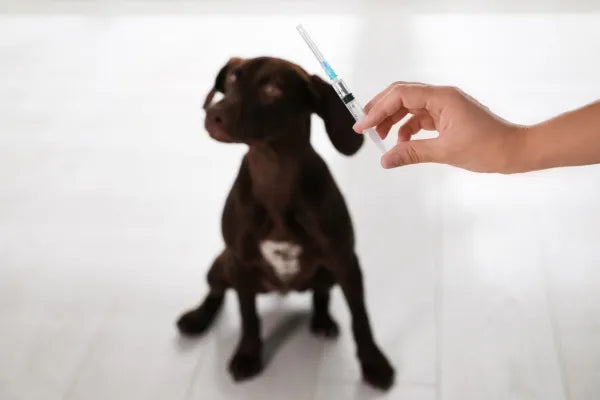
Bringing a new puppy home is one of the best feelings in the world, but it comes with a responsibility that catches a lot of new owners off guard: getting the vaccination schedule right while still giving your pup the social experiences they need to grow into a confident adult dog. Get the timing wrong and you're either exposing an unprotected puppy to serious disease, or keeping them so isolated that they miss the socialisation window that shapes their behaviour for life.
Here's how to navigate both at once.
Why puppy vaccinations matter
Puppies are born with some immunity passed on from their mother, but it fades fast, usually somewhere between six and sixteen weeks of age, and it's unpredictable exactly when. That's why vaccinations are given as a series rather than a single shot: it's about closing the gap before your puppy's own immune system has caught up.
Core vaccinations protect against diseases that are common, highly contagious or potentially fatal, so every puppy needs them regardless of lifestyle. Additional vaccines are added on top based on your puppy's specific risk factors, such as whether they'll be going to daycare, boarding kennels or dog parks later on. Chat to your vet about which additional vaccines make sense for your pup's lifestyle.
The puppy vaccination schedule
Most Australian vets follow a schedule along these lines, though your vet may adjust timing based on your puppy's individual health, breed or vaccine brand:
| Age | What's typically covered | Notes |
|---|---|---|
| 6-8 weeks | Distemper, hepatitis, parvovirus and parainfluenza (often given as a C3 or C4 vaccine) | First vaccination, usually given before you take your puppy home |
| 10-12 weeks | Second round, may include canine cough and leptospirosis protection | Exact timing depends on your vet's protocol and local disease risk |
| 14-16 weeks | Final round of core vaccinations | This is generally when full protection kicks in |
| Annually | Booster vaccinations | Keeps protection topped up throughout adulthood |
Your puppy isn't considered fully protected until roughly one to two weeks after that final 14-16 week vaccination, so it's worth marking that date on your calendar.
What these vaccinations protect against
- Parvovirus - a severe and often fatal gut infection, especially dangerous in young pups
- Distemper - a serious viral disease affecting the nervous, respiratory and digestive systems
- Canine hepatitis - damages the liver and other organs and spreads easily between dogs
- Parainfluenza - one of the viruses behind canine cough (kennel cough)
Socialising your puppy before they're fully vaccinated
This is where owners often overcorrect in one direction or the other: either the puppy is kept home until 16 weeks and misses the critical socialisation window (roughly 3 to 17 weeks of age), or an unprotected pup ends up at the dog park far too soon. Neither is the goal. Aim for controlled, low-risk exposure instead:
- Host playdates at home with dogs you know are fully vaccinated and healthy
- Enrol in a reputable puppy preschool that requires proof of vaccination from every attendee - Kellyville Pets' Pet School is a good example of this kind of controlled environment
- Carry your puppy rather than letting their paws touch the ground on outings to cafes, hardware stores or busy footpaths, so they can see, hear and smell the world without direct contact with unknown dogs or their waste
- Hold off on dog parks, pet-friendly public spaces with heavy dog traffic, and contact with unvaccinated or unknown dogs until your vet confirms your puppy is fully covered
This kind of exposure teaches your puppy that new people, sounds, surfaces and situations are nothing to worry about, without putting them at unnecessary risk.
When to check in with your vet
Every puppy is different, and factors like breed, health history and local disease activity can all affect the right schedule for your pup. If you're ever unsure whether your puppy is ready for a particular social situation, or you notice anything unusual in the day or two after a vaccination, your vet is the best person to ask.
Once your puppy's initial course is done, the job isn't over. Annual boosters keep that protection going for the rest of their life, and the options for adult dogs (C3, C5 and C7 vaccines) are worth understanding in their own right.
If you're after gear to keep a young, curious puppy safe and entertained at home while they wait out those final few weeks, drop into Kellyville Pets in Beaumont Hills or browse our Dogs range in store.


