Care Guide

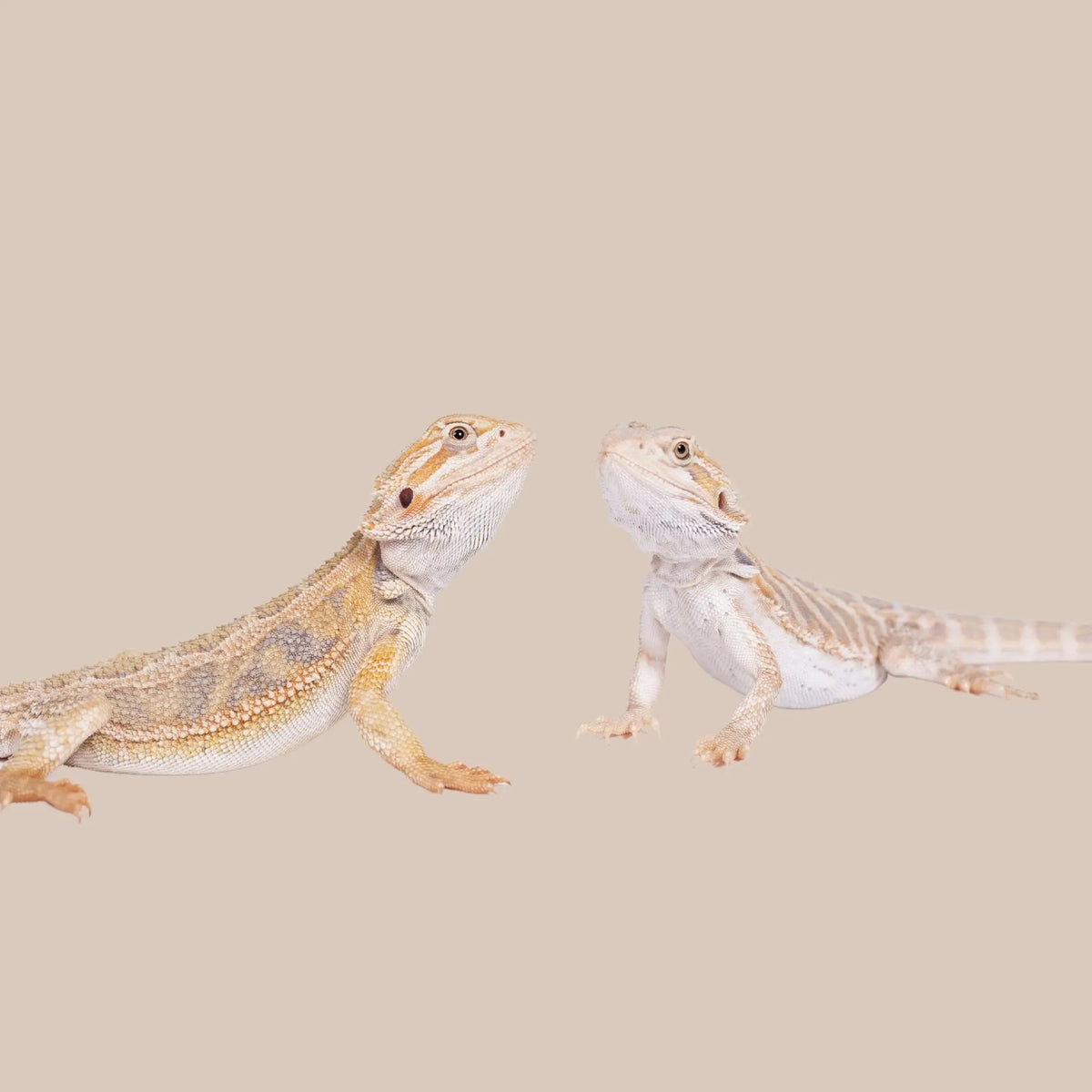
Central Bearded Dragon

Pogona vitticeps
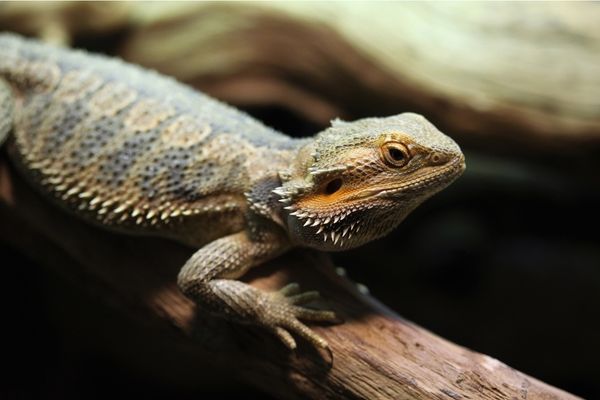
Inland Bearded Dragon

Central Bearded Dragon Care Guide
Lifespan
10-15 years
Adult Size
45-60cm
Care Level
Low to Medium
Diet

Omnivorous diet of live insects and fresh leafy vegetables, proportioned according to age

Enclosure

Large, well-lit terrestrial enclosure (minimum 120 × 60 × 60 cm) with a hot basking spot, high-output UVB lighting and a clear temperature gradient

Temperament

One of the most personable and interactive reptile species available

Where they come from

Natural History & Origin

The Central Bearded Dragon is native to the arid and semi-arid interior of Australia — primarily the interior of Queensland, New South Wales, Victoria, South Australia and the Northern Territory. They inhabit dry open woodlands, mulga scrublands, spinifex grasslands and rocky desert environments characterised by intense UV radiation, very high daytime temperatures and markedly cool nights.

They are diurnal and heliothermic, relying heavily on direct sunlight and contact with warm surfaces to regulate body temperature, digestion and activity. Despite being primarily ground-dwelling, they readily climb rocks, fallen timber and fence posts — particularly for basking and territory display. In the wild, they are opportunistic omnivores, consuming a wide variety of insects, small lizards, flowers, fruits, seeds and plant material.

Central Bearded Dragons have become one of the most popular pet reptile species in the world and are almost exclusively available as captive-bred animals in Australia, with decades of selective breeding producing an extraordinary diversity of colour forms and scale types.

Get it right early

Tips for First-Time Owners

  1. 1 Invest in a high-output T5 HO 10–12% UVB lamp and replace it on the manufacturer's recommended schedule — correct UVB is the single most important factor in preventing metabolic bone disease, and no supplement fully compensates for inadequate lighting.
  2. 2 Establish the correct temperature gradient from the outset — a basking spot of 40–45 °C, a warm ambient of 30–35 °C and a cool end of 22–28 °C allows your dragon to self-regulate its body temperature naturally, which underpins digestion, immunity and overall health.
  3. 3 Vary the diet significantly and adjust insect-to-plant ratios as the animal matures — a bearded dragon fed on a narrow diet will develop nutritional deficiencies over time, regardless of supplementation.
  4. 4 Handle your dragon daily from a young age — consistent, calm interaction builds trust, maintains tameness and is one of the most meaningful contributions you can make to your animal's wellbeing.
  5. 5 Obtain a valid fauna keeper licence before purchasing and source animals only from a licensed, reputable captive breeder.
Setting up the habitat

Enclosure & Husbandry

Central Bearded Dragons are active, thermoregulatory animals that require spacious enclosures with a strong temperature gradient and intense UVB exposure. The minimum recommended enclosure for a single adult is 120 cm L × 60 cm W × 60 cm H; 150 cm or larger is strongly preferred and allows for a more effective thermal gradient and greater environmental complexity.

The basking zone must reach 40–45 °C directly beneath the heat source, using a halogen or incandescent basking globe regulated by a quality thermostat. The warm ambient zone should sit at 30–35 °C, with the cool end maintained at 22–28 °C. Night-time temperatures may drop to 18–22 °C. All heat sources must be thermostat-controlled.

UVB lighting is non-negotiable. A high-output T5 HO 10–12% UVB tube should span at least two-thirds of the enclosure length and overlap the basking area to allow effective vitamin D₃ synthesis. The basking globe and UVB tube should operate on a 12–14-hour cycle in summer and 10–12 hours in winter to reflect seasonal variation. All UVB globes must be replaced on schedule according to manufacturer guidelines.

Suitable substrates include a reptile-safe sand and soil mix for both juveniles and adults — impaction risk with sand is primarily associated with incorrect heating rather than substrate type itself, and is not a significant concern when a proper thermal gradient is maintained. Furnish the enclosure with a flat rock or cork log beneath the basking spot, two hides, climbing branches, artificial or drought-tolerant plants, and a food and water dish.

What to feed

Dietary Management

Diet proportions should shift significantly with age. Juveniles under six months require approximately 70% protein (live insects) and 30% plant matter, to support rapid growth. Sub-adults (six to twelve months) benefit from a roughly equal 50/50 split. Adults over twelve months should transition to approximately 30% insects and 70% plant matter, reflecting their reduced growth rate and risk of obesity.

Suitable insects include crickets, dubia roaches, black soldier fly larvae and silkworms. Waxworms and mealworms are high in fat and should be offered sparingly as treats only. All feeder insects must be gut-loaded for 24–48 hours before offering. Dust insects with calcium at every feeding, and with a combined calcium, vitamin D₃ and multivitamin supplement two to three times per week.

Fresh plant matter should be varied and rotated, including collard greens, dandelion, endive, kale, bok choy, butternut squash and capsicum. Avoid spinach and beet greens as a staple — high oxalate content can interfere with calcium absorption. Fruit should be offered only occasionally. Fresh water must be available at all times; lightly misting vegetables provides additional hydration.

Day-to-day interaction

Handling & Socialisation

Central Bearded Dragons generally tolerate handling from a young age. New animals should be allowed at least one week to settle before handling begins. Start with short sessions of ten to fifteen minutes and gradually extend as the animal becomes more comfortable. Support the full body, including the tail, at all times.

Daily handling sessions are beneficial for most individuals. Avoid handling during shed, in the 24–48 hours after feeding, or during periods of illness. Watch for signs of stress — persistent beard darkening, body flattening or repeated attempts to escape — and return the animal to its enclosure if these are present. Children should always be supervised and taught to handle calmly and respectfully.

Central Bearded Dragon - Kellyville Pets
AVAILABLE IN-STORE

Central Bearded Dragon

Did you know

Fun Facts

The iconic 'beard' is formed by a gular pouch that the dragon inflates with air, darkening it dramatically via chromatophore changes — used for territorial display, courtship and threat response without producing any sound.

Bearded dragons possess a parietal eye — a photosensitive structure on the crown of the head, sometimes called the 'third eye' — that cannot form images but plays a role in detecting changes in light intensity, regulating circadian rhythms and coordinating hormone production.

A female Bearded Dragon that has mated once can store viable sperm and produce a second or even third fertile clutch months later without further contact with a male — a phenomenon that has occasionally caught unsuspecting keepers by surprise.

Keep them stimulated

Enrichment

Central Bearded Dragons are inquisitive, active animals that benefit greatly from environmental enrichment and regular interaction. Allow supervised out-of-enclosure exploration in a warm, secure room — bearded dragons are confident explorers and most thoroughly enjoy the novel environment. Introduce new hides, branches or décor items periodically to encourage investigation.

Offer a variety of feeder insect species and hide food items in different locations to encourage natural foraging behaviour. Light water misting may be offered while they are shedding. Introducing safe live plants — such as small succulent offcuts or edible herbs — adds both environmental complexity and a foraging opportunity. Social interaction with their human keeper is itself one of the most meaningful forms of enrichment for this species.

What to watch for

Common Health Issues

Metabolic Bone Disease (MBD) is the most serious and common husbandry-related illness in captive bearded dragons, resulting from insufficient UVB, inadequate calcium intake or vitamin D₃ deficiency. It causes progressive bone softening, limb deformities, muscle weakness and, in severe cases, death. It is entirely preventable with correct UVB lighting, consistent calcium supplementation and a nutritionally varied diet.

Adenovirus (Atadenovirus, ADV) is widespread in captive Bearded Dragon populations and a significant proportion of adult animals carry the virus without displaying any symptoms. In animals that do present clinically, ADV can affect the nervous and digestive systems, causing neurological signs, poor growth and digestive dysfunction — often fatal in juveniles.

Impaction can result from ingesting inappropriate substrate, incorrect thermal gradients, large feeder insects or inadequate hydration; use safe substrate choices and appropriately sized prey. Internal parasites are common and should be screened with a faecal test at the first veterinary visit. Respiratory infections may develop if enclosure temperatures are too low — maintain the correct gradient at all times.

Everything you need

Essentials Shopping List

Setup checklist

  • Timber or glass enclosure — minimum 120 × 60 × 60 cm; 150 × 60 × 60 cm or larger strongly recommended
  • Halogen or incandescent basking globe (50–100W)
  • Quality thermostat
  • High-output T5 HO 10–12% UVB tube and deep reflector fitting
  • Lighting timer
  • Digital dual-probe thermometer and infrared temperature gun
  • Flat basking rock or slate tile
  • Two hides (warm and cool end)
  • Climbing branch or cork log
  • Reptile-safe sand ubstrate
  • Food dish and water dish
  • Calcium supplement powder (without D₃ — for regular use)
  • Combined calcium, D₃ and multivitamin supplement (2–3× per week)
  • Live feeder insects (crickets, woodies, black soldier fly larvae)
  • Feeder insect gut-load food
  • Fresh leafy vegetables and appropriate salad vegetables (ongoing)
  • Reptile-safe disinfectant
  • Fauna keeper licence (state-specific)
FAQ

Commonly Asked Questions

  • How often should I feed my Central Bearded Dragon?

    Juveniles should be offered live insects twice daily with plant matter available throughout the day. Sub-adults can be fed insects once daily. Adults benefit from insects three to five times per week with fresh plant matter offered daily. Adjust based on body condition and life stage.

  • My bearded dragon is glass surfing and scratching at the walls — what does this mean?

    This behaviour typically indicates that temperatures are incorrect, the enclosure is too small, the animal wants out to explore, or it is responding to a reflection or perceived threat. Check temperatures and enclosure size first, and provide supervised out-of-enclosure time regularly.

  • My dragon has gone very dark and barely moved in several days — is it sick?

    Brumation — a period of reduced activity analogous to hibernation — is normal in some bearded dragons during cooler months. However, darkening combined with weight loss, soft limbs, or persistent lethargy outside of winter may indicate illness. If in doubt, consult a reptile vet.

  • Do bearded dragons need a companion?

    No. Bearded dragons are solitary animals and cohabitation typically results in stress, competition for resources and potential injury. They are best housed individually.

  • Is a licence required to keep a Central Bearded Dragon in NSW?

    Yes. An annual reptile keeper licence is required in New South Wales. Requirements vary between states and territories — contact your local wildlife authority for current details.

Need help?

Our specialists are in-store every day to help with setup, licensing and feeding.

Visit Kellyville Pets →