


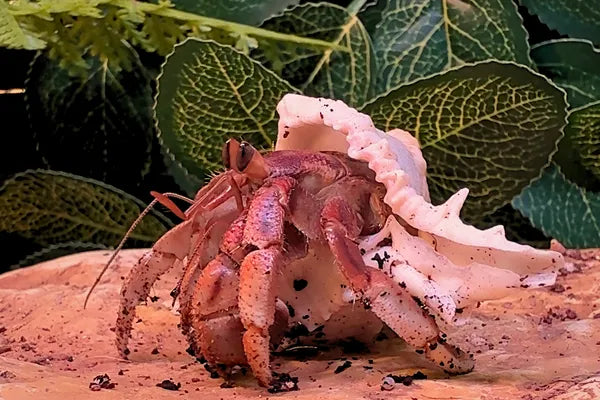
Why hermit crabs are one of the best pets for kids and what you need to know before you bring one home.
School holidays are almost here, and if your kids have been campaigning for a pet, now might actually be the perfect time to listen. Not for a puppy (we know, we know, they're hard to resist, and we have some gorgeous ones). But for something smaller, quieter, and genuinely fascinating: a hermit crab.
Here's the thing. Hermit crabs have a reputation problem. They're often picked up on impulse, kept in a tiny plastic container, and gone within months. But that's not a hermit crab's natural lifespan. It's usually because nobody told the owner what they actually needed and how to properly care for them.
We're giving you the right information so that if you take on the joy of hermit crabs, you get it right the first time, and teach the kids about responsibility and the importance of being prepared and educated before taking something on. And these little cuties are an ideal, low-maintenance starter pet to do just that.

They can actually live for 10 to 20 years
No, that's not a typo. With the right setup and care, hermit crabs regularly live many years in captivity. The oldest known pet hermit crab, a Caribbean purple pincher named Jonathon Livingston Crab, lived to 45 years old! Wild hermit crabs can live even longer than that.
The reason most pet hermit crabs die young is almost entirely down to improper care: a tank that's too dry, substrate too shallow to burrow into, tap water that hasn't been treated, or simply being kept alone when they're naturally social creatures.
The good news is that getting it right isn't hard.

Why hermit crabs are genuinely great for kids
They're endlessly interesting. Hermit crabs are active, inquisitive animals. They climb, forage, dig, and, this is the bit kids love, swap shells as they grow. Setting up a few extra shells in the enclosure and watching your crab try them on is genuinely entertaining. And, at stores like Kellyville Pets, that specialise in aqua-marine animals, when you come in each time to buy food etc, you can check in with the team for advice on if your hermit crab is ready for a new shell or not. And if so, we will have the perfect upgrade waiting for them.
They teach real responsibility. A hermit crab gives kids a daily routine that matters, including responsibilities like feeding, misting, checking water levels and monitoring the temperature.
They don't bark, bite, or need walking. For families in smaller homes, apartments, or with allergies, hermit crabs tick a lot of boxes.
They're social animals. Hermit crabs are colony creatures and should actually be kept in groups. They will get stressed when housed alone so two or three crabs is ideal - perfect for each sibling to name one!
They're a long-term companion. Done right, a hermit crab can be with your family for the duration of primary school and well beyond. That kind of bond teaches kids about commitment, care, and what it means to be responsible for another living creature.

What they actually need
Hermit crabs come from warm, humid tropical environments. They have gills, not lungs, which means they need moisture in the air to breathe. Get that right and the rest is straightforward.
The enclosure. A glass terrarium with a mesh lid is ideal. It needs to be big enough for a small colony. At least 37 litres for a pair of small crabs, and larger as they grow. We stock two great ready-to-go options:
1. The EcoTech Hermit Crab Starter Kit ($159) is an excellent entry point. It includes everything you need to get started - a 37.8L glass terrarium, food dish, water dish, hydration sponge, shelter, misting bottle, and more.
2. For those wanting to step up, the Get Your Pet Right Hermit Crab Kit ($279) includes a 45 x 29 x 35cm terrarium with a mini halogen heating lamp, dual water dishes, thermo-hygrometer, stump ornament, coco peat substrate, water conditioner, and hermit crab salt. It's the more complete setup for families who want to invest properly from day one.
Substrate. For hermit crabs to grow, they need to burrow deep to moult (shed their exoskeleton). The substrate needs to be at least 15cm deep to allow them to bury completely. A mix of play sand and coconut fibre works well. We carry Zoo Med Hermit Crab Sand and Aqua Natural Hermit Aragonite 4.5kg, which provides that ideal texture and moisture retention.
Humidity and temperature. Aim for 70–80% humidity and a temperature of around 23–28°C. A quality thermometer and hygrometer (included in the Get Your Pet Right kit, or available separately) make monitoring easy. The Get Your Pet Right Tropical Humidifier ($109) is a great addition for maintaining consistent humidity without daily misting.
Water. Hermit crabs need two water dishes, one with fresh dechlorinated water, one with saltwater. Tap water contains chlorine and can be toxic to them. Krabooz Saltz Crystalz makes mixing up a safe saltwater supply simple, and Hermit Clean 100ml handles water conditioner duties.
Food. Hermit crabs are natural scavengers and actually thrive on variety. They need calcium, protein, healthy fats, and fresh plant matter. Krabooz Munchiez Hermit Crab Food is a great staple, and Zoo Med Hermit Crab Fruit Salad makes a brilliant treat. Aqua One Hermit Crab Food Flakes are ideal as a daily base. Supplement with fresh fruit, veggies, and leafy greens from your own kitchen.
Enrichment. Hermit crabs love to climb, explore, and hide. A well-decorated tank keeps them active and happy, and great for the kids too - decorating the tank is all part of the fun, and can make a great feature piece in your home! The Exo Terra Jungle Vine, Exo Terra Moss Vine, and Reptile One Plant on Wood all add texture and climbing opportunities. The Reptile One Dyno Hammock is a favourite and the crabs really do use them. For hiding (which is important for their sense of security), the Get Your Pet Right Forest Hiding Cave and Reptile One Limestone Cave are solid options.
Spare shells. Always have a variety of empty shells available in slightly different sizes as this is how your hermit crabs grow and stay comfortable. Natural, unpainted shells only.
What's the cost?
To set up properly from scratch, here's a realistic picture:
A starter setup with the EcoTech kit ($159) plus substrate, food, water supplies, a couple of enrichment pieces, and two or three crabs will put you in the ballpark of $250–$350 all up. The GYPR kit ($279) as a base brings you slightly more complete from the start.
Ongoing costs are low. You'll need to cover food, occasional substrate refresh, and spare shells. There's no vet registration, no food by the kilogram, no grooming bills.
For a genuinely fascinating, long-lived pet that teaches kids responsibility and is easy to care for, we think it's exceptional value.
One last thing to remember
We sell hermit crabs because we believe in them as pets. But we only want them going to families who are ready to do right by them.
The most common cause of a hermit crab dying young isn't bad luck. It's a setup that wasn't right. Our team in store at Kellyville Pets are here to walk you through everything.
If you're going to bring one home, we always suggest getting the setup right first, and then getting the hermit crabs once their home is ready.
If you decide the take on hermit crabs as pets, you'll find our full Hermit Crab Care Guide very useful.
Come in and see them
Our hermit crabs are in store and ready to meet you and our team is ready to answer questions and show you what a properly set up crab enclosure looks like in person.
Shop our full hermit crab range here →


