


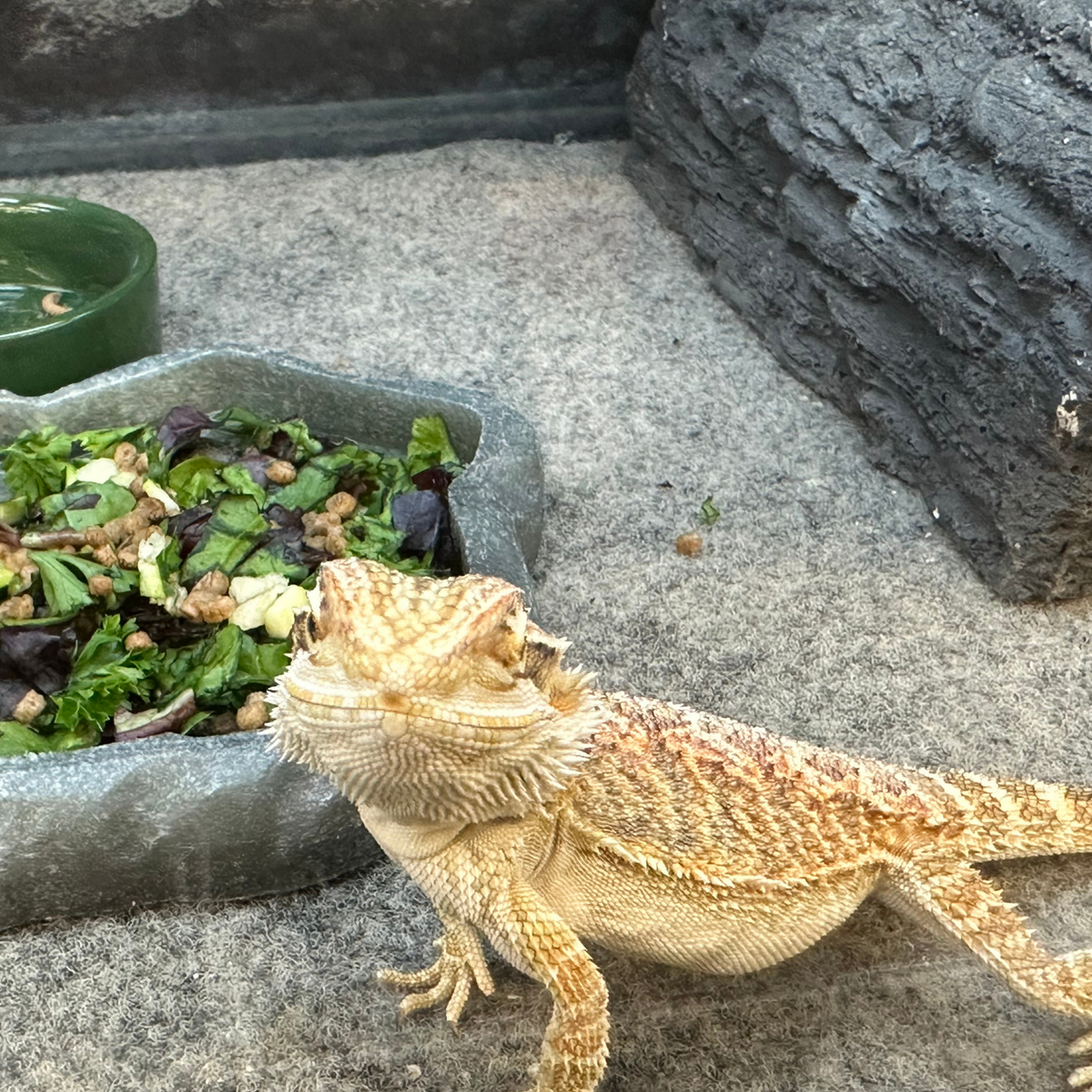
It's one of the most common questions our Reptile Department at Kellyville Pets gets every winter.
A customer walks into the reptile department looking a little concerned and says something like:
"My bearded dragon hasn't eaten for two weeks. Should I be worried?"
Or:
"My blue tongue is sleeping all day and refusing food. Do I need to force-feed him?"
Or:
"How do I know if my bearded dragon is in brumation and not sick?"
If you've found yourself wondering the same thing, you're definitely not alone.
As the weather cools across Sydney many reptiles naturally begin to slow down. They sleep more, spend longer in their hides, become less active and often lose interest in food altogether.
This process is called brumation, and while it can be a little alarming the first time you experience it, it's completely normal for many healthy reptiles.
So, should you keep feeding them?
The answer is: sometimes, but not in the way most people think.
First, What Actually Is Brumation?
Brumation is a natural seasonal slowdown that occurs in many reptiles during cooler months.
Unlike mammals that hibernate, reptiles don't enter a deep sleep. Instead, they become less active and their metabolism slows significantly.
Think of it as switching from "summer mode" to "winter mode."
Here in Sydney, we often start seeing signs of brumation around May and June, particularly after a few colder nights and shorter daylight hours.
At Kellyville Pets, it's something our reptile team sees every year.
"The biggest mistake people make is assuming something is wrong because their reptile suddenly isn't behaving like it did in summer," says Emma, our Reptile Department Manager.
"In many cases, they're simply doing exactly what nature programmed them to do."
So... Should I Offer Food?
Yes.
Should you panic if they don't eat it?
No.
Most reptiles will tell you what they need during brumation.
If your reptile is healthy, maintaining weight and showing typical brumation behaviours, it's generally fine to continue offering food periodically.
If they aren't interested, simply remove the food and try again another time.
What you don't want is food sitting in the enclosure spoiling or attracting insects.
Why You Shouldn't Force Feed
This is where many new reptile owners get into trouble.
Seeing your reptile refuse food can be stressful. Your instinct is to help.
But forcing food into a reptile whose metabolism has slowed down can create more problems than it solves.
During brumation, digestion slows dramatically.
If temperatures are not high enough for proper digestion, food can remain in the digestive tract longer than normal, potentially leading to health issues.
That's why maintaining appropriate heating remains incredibly important, even if your reptile isn't spending much time basking.
If you haven't checked your setup recently, winter is a great time to inspect your heating and lighting equipment. We often find that globes, thermostats or UVB bulbs that were performing perfectly in summer aren't quite keeping up once overnight temperatures begin to drop.
Helpful categories to check:
Water Is Still Important
One thing that surprises many owners is that while reptiles often stop eating, they still need access to fresh water.
Even a reptile spending most of its time hidden away can become dehydrated.
Continue providing fresh water and checking it regularly throughout winter.
The Bigger Question Isn't Food
In our experience, the real question most reptile owners should be asking isn't:
"Should I feed my reptile?"
It's:
"Is this actually brumation?"
A healthy reptile in brumation will usually:
✔ Sleep more than usual
✔ Spend longer periods hiding
✔ Eat less or stop eating altogether
✔ Become less active
✔ Still appear alert when handled or disturbed
However, if you notice:
✖ Significant weight loss
✖ Wheezing or respiratory symptoms
✖ Sunken eyes
✖ Difficulty moving
✖ Weakness or inability to respond normally
Then it's time to seek veterinary advice.
Brumation and illness can sometimes look similar at first glance.
Before You Blame Brumation, Check These Three Things
Before You Blame Brumation, Check These Three Things
Every winter we find that many "brumation problems" actually turn out to be setup problems.
Before assuming your reptile is brumating, check:
1. Temperatures
Has your basking temperature dropped below what's appropriate for your species?
Cooler room temperatures can impact enclosure temperatures more than many owners realise.
A globe that was achieving perfect basking temperatures in January may not be producing the same result during a cold Sydney winter morning.
Products to check:
2. UVB
When was your UVB bulb last replaced?
Many bulbs continue producing visible light long after their UV output has declined.
If you can't remember when yours was last changed, it might be time for a replacement.
Products to check:
3. Thermostats & Hides
Is your heating equipment being regulated correctly?
Winter is when thermostats earn their keep.
It's also worth checking that your reptile has access to secure hides. During brumation, many reptiles actively seek sheltered spaces where they feel safe and undisturbed.
Emma, our Reptile Department Manager, often recommends providing multiple hide options so reptiles can choose where they feel most comfortable while they slow down for winter.
Products to check:
The Bottom Line
If you're unsure whether what you're seeing is normal, pop into Kellyville Pets and chat with our reptile team. Bring a photo of your setup, tell us what's changed and we'll help you work through it.
We also recommend reading our guide "Brumation Or Something More Serious? How To Tell The Difference" if you're concerned that your reptile's behaviour may be something more than a normal winter slowdown.
And if your winter setup needs a refresh, now is the perfect time to check your heating, lighting, thermostats, hides and habitat décor to make sure your reptile stays comfortable throughout the cooler months.


