


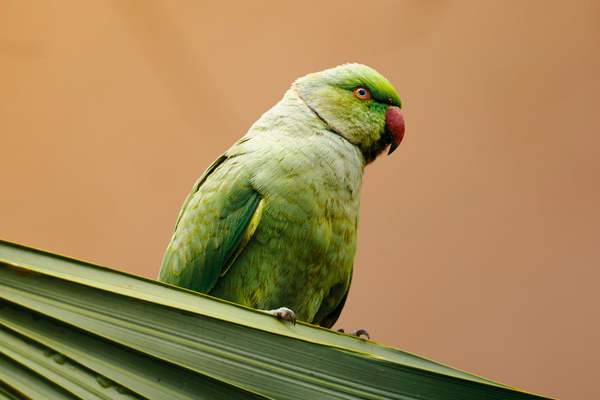
Indian Ringneck Parrots are among the longest-established pet parrot species in history — they are described in Sanskrit texts from approximately 200 BCE and were kept by Indian royalty for centuries before their export to Europe.
Indian Ringneck
Psittacula krameri manillensis

20-30+ years

40-43cm; 115-140g

Medium


Where they come from
Natural History & Origin


Get it right early
Tips for First-Time Owners
- 1 The bluffing phase is real, normal and temporary — do not give up on daily handling during this period. Birds that are handled consistently and calmly through the bluffing phase almost always emerge as excellent, manageable companions.
- 2 Cage height matters for this species — the long tail must hang completely clear of the cage floor and perches at all times, or tail feather damage will be constant.
- 3 DNA sexing is the most reliable way to determine sex before the neck ring develops — if sex is important for your plans, arrange testing before or at the time of purchase.
- 4 Indian Ringnecks can be outstanding talkers — consistent daily talking interaction from a young age encourages speech development, and many individuals develop remarkably clear, contextually appropriate vocabularies.
- 5 Confirm exotic bird requirements in your state before purchasing — no specific licence is required in most states, but a biosecurity obligation applies.
Setting up the habitat
Enclosure & Husbandry
What to feed
Dietary Management
Day-to-day interaction
Handling & Socialisation
Find your next best friend
Browse all Handraised Birds
Our Available Handraised Birds
Did you know
Fun Facts
Sexual dimorphism — the distinctive rose-pink and black neck ring — develops only in males, and only after approximately 18–24 months of age. Young birds of both sexes look identical without DNA testing.
Indian Ringnecks have established the most widespread feral parrot populations in the world outside their natural range — wild populations exist across the United Kingdom (estimated at over 30,000 birds), the Netherlands, Belgium, Germany, Spain, Turkey, the UAE, South Africa and parts of Australia.
Keep them stimulated
Enrichment
What to watch for
Common Health Issues
Everything you need
Essentials Shopping List
Setup checklist
- Large tall powder-coated or stainless steel cage — minimum 90 × 50 × 120 cm; taller strongly preferred Bar spacing 2–2.5 cm
- Multiple natural timber perches of varying diameter and species
- Stainless steel food and water dishes (minimum two sets)
- Quality medium parrot pellets
- Varied fresh fruit and vegetables (daily)
- Small-to-medium parrot seed mix (supplement only)
- Cuttlebone and iodine bell
- Vitamin supplement (a quality bird vitamin supplement)
- Broad-spectrum bird wormer (quarterly)
- Minimum six rotating toys: chew toys, foraging toys, foot toys, bells, swings
- Foraging toys and skewers
- Play gym or play top
- Shallow bathing dish or fine-mist spray bottle
- Cage cover (breathable fabric)
- Avian-safe cage disinfectant
- Annual avian vet check (ongoing)
READY TO SET UP
Browse all
Shop the Essentials

Avigrain Wild Bird Mix 20kg
$28.49
View →

Avigrain Small Parrot Mix 20kg
$36.49
View →

Avigrain Budgie Blue 20kg
$52.99
View →

Budgie Mix
from$15.99
View →

Forage Gourmet Eclectus Food
from$32.99
View →

Forage Pinecone Bird Treat
from$21.49
View →

Save 10%
Vetafarm Parrot Essentials

Forage Gourmet Conure & Quaker Food
from$17.99
View →
FAQ
Commonly Asked Questions
-
When will my male Ringneck develop his ring?
-
What is the bluffing phase?
-
Are Indian Ringnecks good talkers?
-
Can I keep an Indian Ringneck with other birds?
-
Do I need a licence to keep an Indian Ringneck in Australia?
Learn more
See more care guides Read about other species
No articles match that search. Try a different word.


Need help?Our specialists are in-store every day to help with set up, licensing and feeding.
Visit Kellyville Pets