Care Guide6 min read

Amazon Parrot

Amazona species

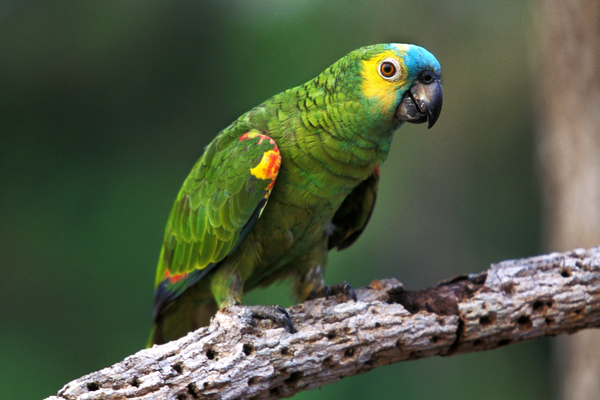
Blue-fronted Amazon (Amazona aestiva)
Yellow-crowned Amazon (Amazona ochrocephala): Yellow-naped Amazon
White-fronted Amazon (Amazona albifrons)
Orange-winged Amazon (Amazona amazonica)

Amazon Parrot Care Guide
Lifespan
40-70+ years
Adult Size
25-45cm; 250-500g
Care Level
Medium to High
Diet

Quality large parrot pellets as the dietary foundation, with abundant daily fresh fruit, vegetables and limited seed

Enclosure

Large, sturdy powder-coated or stainless steel cage (minimum 100cm W × 75cm D × 150cm H) with multiple perches, a play top or gym stand and a robust rotating toy selection

Temperament

Bold, charismatic, confident and highly entertaining. Amazons are known for their theatricality

Where they come from

Natural History & Origin

Amazon Parrots are native to Central and South America, the Caribbean and Mexico, with different species occupying distinct geographic ranges across the region. They inhabit tropical and subtropical forests, forest edges, mangroves, palm groves and woodland from sea level to mid-altitude. All species are highly social, gregarious birds that live in large flocks, roost communally and form strong pair bonds.

Amazons are one of the most characterful and entertaining of all parrot groups — bold, playful, loud and often comically confident. They have outstanding vocal abilities and many species are among the most accomplished talkers in the parrot family, capable of mimicking speech, songs and environmental sounds with impressive clarity. They are also one of the more emotionally complex parrot groups, prone to hormonal mood swings during breeding season and capable of bonding intensely with particular family members.

In Australia, Amazon parrots are exotic (non-native) birds. They must be sourced from legally captive-bred stock. Confirm current licence or permit requirements with your state wildlife authority before purchasing.

Get it right early

Tips for First-Time Owners

  1. 1 Amazons are highly prone to obesity — a pellet-based diet is not optional; birds on predominantly seed diets develop serious preventable disease.
  2. 2 Learn Amazon body language before handling, particularly the meaning of eye pinning, fanned tails and raised neck feathers — these are communicative signals that, when read correctly, prevent most bites.
  3. 3 Multiple family members should handle and interact with the bird regularly — one-person bonding can result in the bird becoming aggressive toward everyone else in the household.
  4. 4 Hormonal season in spring is normal and temporary — maintain a consistent routine and positive handling through this period rather than withdrawing interaction.
  5. 5 Source from a reputable captive breeder, confirm exotic bird requirements in your state, and establish an avian vet relationship before any health issues arise.
Setting up the habitat

Enclosure & Husbandry

Amazons require a large, sturdy cage — they are powerful birds with strong beaks that will quickly destroy any cage of inadequate construction. Minimum dimensions are 100 cm W × 75 cm D × 150 cm H; larger is always preferable. Bar spacing of 2.5–3 cm is appropriate. Powder-coated or stainless steel is safest.

Provide three to four perches of varying diameter and material — natural hardwood or dried native timber perches are ideal and support foot health. Amazons are active and acrobatic, so a cage with multiple levels and horizontal bar surfaces for climbing is beneficial. A play top or separate gym stand allows important out-of-cage territory. Keep the cage in a central, socially active household space — Amazons are gregarious and thrive on participation in family life. Keep away from kitchen fumes, non-stick cookware fumes (highly toxic to birds), direct sunlight and draughts. Cover at night for security. Provide a minimum of six to eight toys in rotation, including chew toys, foraging toys, puzzle feeders, bells and swings. Replace or rotate weekly.

What to feed

Dietary Management

Amazons should be fed a quality large parrot pellet as their primary dietary component — approximately 60–70% of total intake. Supplement daily with a wide variety of fresh fruit and vegetables, including apple, mango, papaya, fig, capsicum, corn, broccoli, sweet potato, carrot, leafy greens and beans. Remove fresh food after two to three hours.

Never feed avocado, chocolate, onion, garlic, caffeine, alcohol, fruit pips, or salted or processed human foods. A small quantity of quality seed mix can be offered as a supplement, but Amazons on seed-heavy diets are highly prone to obesity and associated health problems — pellets must remain the dietary foundation. Nuts — particularly walnuts, almonds and pistachios — can be given sparingly as training rewards due to high fat content. Amazons readily become overweight, so monitor body condition carefully and avoid high-fat foods as dietary staples. Cuttlebone, iodine bells and vitamin supplements (a quality bird vitamin supplement added to water two to three times weekly) complete the supplement programme. Fresh water must be changed daily.

Day-to-day interaction

Handling & Socialisation

Amazons often posture, fan their tails and dilate their pupils (known as 'pinning') when excited or aroused. This pinning behaviour can indicate excitement, playfulness or warning depending on context, and reading Amazon body language is an important skill for owners. They are frequently described as the clowns of the parrot world — playful, vocal and fond of performing.

Amazons respond best to confident, consistent handling with positive reinforcement. Establish step-up and step-down as foundational behaviours from day one. During hormonal periods, read body language carefully — pinning eyes, fanned tail and raised neck feathers are warning signals. Back away calmly rather than pushing through defensive posturing.

Out-of-cage time of one to two hours daily is important for physical health and mental wellbeing. Amazons can be aggressive toward other household pets — never allow unsupervised access to cats, dogs or small animals. Multiple household members should handle the bird regularly to prevent one-person bonding, which can lead to aggression toward other family members.

Did you know

Fun Facts

Amazons are among the most musically responsive of all parrots — many will sing along with music, rhythmically bob their heads, and even appear to prefer certain genres, making musical enrichment a genuinely effective and enjoyable activity.

Some Amazon species have been documented living over 70 years in captivity — one celebrated individual, a Yellow-naped Amazon named 'Poncho', appeared in numerous films and was documented to be over 90 years old at the time of his death.

Wild Amazon parrots use specific contact calls that vary between family groups — a form of social dialect — that is learned rather than innate, demonstrating a capacity for cultural transmission of vocalisations.

Keep them stimulated

Enrichment

Amazons need a rich, stimulating environment with daily variety. Rotate toys weekly — chew toys, puzzle feeders, foraging toys, bells, swings and acrylic toys. Foraging is highly effective: hide food in paper, boxes, foraging wheels or kabob skewers. Amazons love music — many will sing, dance and engage actively with musical stimulation, which is both entertaining and enriching. Teach tricks and words using short, positive reinforcement training sessions. Provide natural chewing opportunities with dried native branches and softwood chew toys. Supervised free-roaming time in a safe room, with a play gym as a home base, provides essential physical exercise.

What to watch for

Common Health Issues

Obesity and associated conditions: Amazons are highly prone to obesity on seed-heavy diets, leading to fatty liver disease, lipomas (fat tumours) and cardiovascular problems. A pellet-based diet is essential.

Psittacosis (Chlamydiosis): A bacterial infection transmissible to humans — annual vet checks and good hygiene are preventative.

Proventricular Dilatation Disease (PDD): A serious viral disease affecting the nervous and digestive system — source birds from healthy, reputable breeders.

Feather Destructive Behaviour: Can occur with chronic boredom or insufficient social engagement.

Aspergillosis: A fungal respiratory infection, often exacerbated by dusty or poorly ventilated environments — maintain good air quality and hygiene.

Psittacine Beak and Feather Disease (PBFD): A viral disease with no cure — source birds from PBFD-tested stock where possible.

Respiratory and bacterial infections are also common in birds with inadequate nutrition.

Everything you need

Essentials Shopping List

Setup checklist

  • Large powder-coated or stainless steel cage — minimum 100 × 75 × 150 cm
  • Play top or separate gym/play stand
  • Multiple natural timber perches of varying diameter
  • Stainless steel food and water dishes (minimum two sets)
  • High-quality large parrot pellets
  • Varied fresh fruit and vegetables (daily)
  • Cuttlebone and iodine bell
  • Vitamin supplement (a quality bird vitamin supplement)
  • Broad-spectrum bird wormer (quarterly)
  • Minimum six to eight rotating toys: chew toys, foraging toys, puzzle feeders, bells, swings
  • Softwood chew blocks and dried native branches
  • Foraging toys and kabob skewers
  • Cage cover
  • Avian-safe cage disinfectant
  • Annual avian vet check (ongoing)
FAQ

Commonly Asked Questions

  • How noisy are Amazons?

    Very — particularly at dawn and dusk. Amazon calls are loud and carry well. This is an important consideration for apartment or close-neighbour living.

  • Do Amazons bite?

    They can, particularly during hormonal periods or if their body language signals are not read and respected. Learning to read Amazon signals — eye pinning, tail fanning, raised neck feathers — dramatically reduces bite incidents.

  • Are Amazons good talkers?

    Many species are exceptionally good talkers, capable of developing large contextually appropriate vocabularies. The Yellow-naped and Blue-fronted Amazon are particularly noted for their talking ability.

  • Can I keep an Amazon with other birds?

    Some Amazons tolerate other birds; others are aggressive. Same-species cohabitation is more likely to succeed than mixed species. Never house with significantly smaller birds.

  • Do I need a licence for an Amazon in Australia?

    Amazon Parrots are exotic birds in Australia. No specific keeper licence is required in most states, but exotic bird general biosecurity obligations apply. Confirm current requirements with your state wildlife authority.

Need help?

Our specialists are in-store every day to help with setup, licensing and feeding.

Visit Kellyville Pets →