


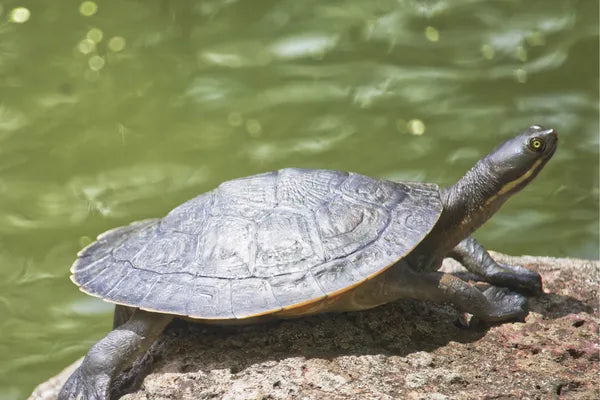
Turtles are fascinating reptiles that have captured the attention of Aussie pet owners for decades. While they may seem calm and low-maintenance, turtles are actually complex animals with unique care needs and some surprising traits.
One of the most common misconceptions we hear at Kellyville Pets is about “penny turtles”. In reality, penny turtles don’t exist - they’re simply baby turtles, usually Murray short-neck turtles or eastern long-neck turtles, that will eventually grow much larger than most people expect.
Before bringing a turtle home, it’s important to understand that they require specialised care, proper lighting, filtration, and a long-term commitment. To help you learn more about these incredible reptiles, here are 10 turtle facts you may not know.
1. Turtles Can Live for Decades
Pet turtles are a serious long-term commitment. Many species commonly kept in Australia can live anywhere from 30 to 60 years when cared for properly.
Owning a turtle is often more like owning a parrot than a small pet - they may be with your family for generations.
2. Their Shells Are Part of Their Skeleton
A turtle’s shell isn’t just an external covering. It’s actually made from modified ribs and spine bones fused together over time.
This means turtles cannot “come out” of their shells, and shell injuries can be very serious.
3. Turtles Can Feel Their Shells
Because the shell contains nerves and blood vessels, turtles can feel pressure, touch, and pain through their shell.
This is why shell health is so important and why proper UVB lighting and nutrition are essential for captive turtles.
4. UVB Lighting Helps Keep Shells Healthy
Indoor turtles require quality UVB lighting to help their bodies process calcium properly.
Without adequate UVB exposure, turtles can develop soft shells, poor growth, and serious health conditions such as metabolic bone disease.
Australian turtle owners should always ensure their enclosure includes:
- Proper UVB lighting
- A basking area
- Correct water temperatures
- Access to dry land
5. Turtles Prefer Clean Water
Turtles are messy animals, and poor water quality is one of the biggest causes of health problems in captive turtles.
A good filtration system is essential for:
- Removing waste
- Reducing harmful bacteria
- Maintaining water clarity
- Supporting overall turtle health
Regular water testing and partial water changes are also important parts of turtle care.
6. Long-Neck Turtles Have an Incredible Reach
Eastern long-neck turtles are known for their surprisingly long necks, which can stretch to around 60% of their shell length.
They use this long neck to quickly catch prey in the water and to investigate their surroundings.
7. Some Turtles Use Smell as Defence
Long-neck turtles have a unique defence mechanism - they can release a strong musky odour when threatened.
This smell helps deter predators in the wild and is one reason they’re sometimes nicknamed “stinkers”.
8. Turtles Often Prefer Their Own Space
While some reptiles tolerate company, turtles are not always social animals.
Housing multiple turtles together can sometimes lead to:
- Bullying
- Food competition
- Stress
- Injury
Careful monitoring and correct enclosure sizing are important if keeping more than one turtle.
9. Turtles Have a Great Sense of Smell
Turtles rely heavily on scent to explore their environment, locate food, and even recognise other turtles.
Their sense of smell is much stronger than many people realise and plays a major role in their behaviour.
10. Baby Turtles Don’t Stay Small
One of the biggest surprises for new turtle owners is how large turtles can eventually become.
Many Australian freshwater turtles grow to around the size of a dinner plate and require:
- Large aquariums or ponds
- Strong filtration
- Ongoing maintenance
- Long-term care planning
They are rewarding pets, but definitely not a “set and forget” animal.
Final Thoughts
Turtles are intelligent, fascinating reptiles that can make amazing pets for committed owners. However, they require specialised care, appropriate housing, and a long-term commitment to stay healthy and thrive.
If you’re considering adding a turtle to your family, make sure you research the species carefully and set up the correct habitat before bringing one home.


