


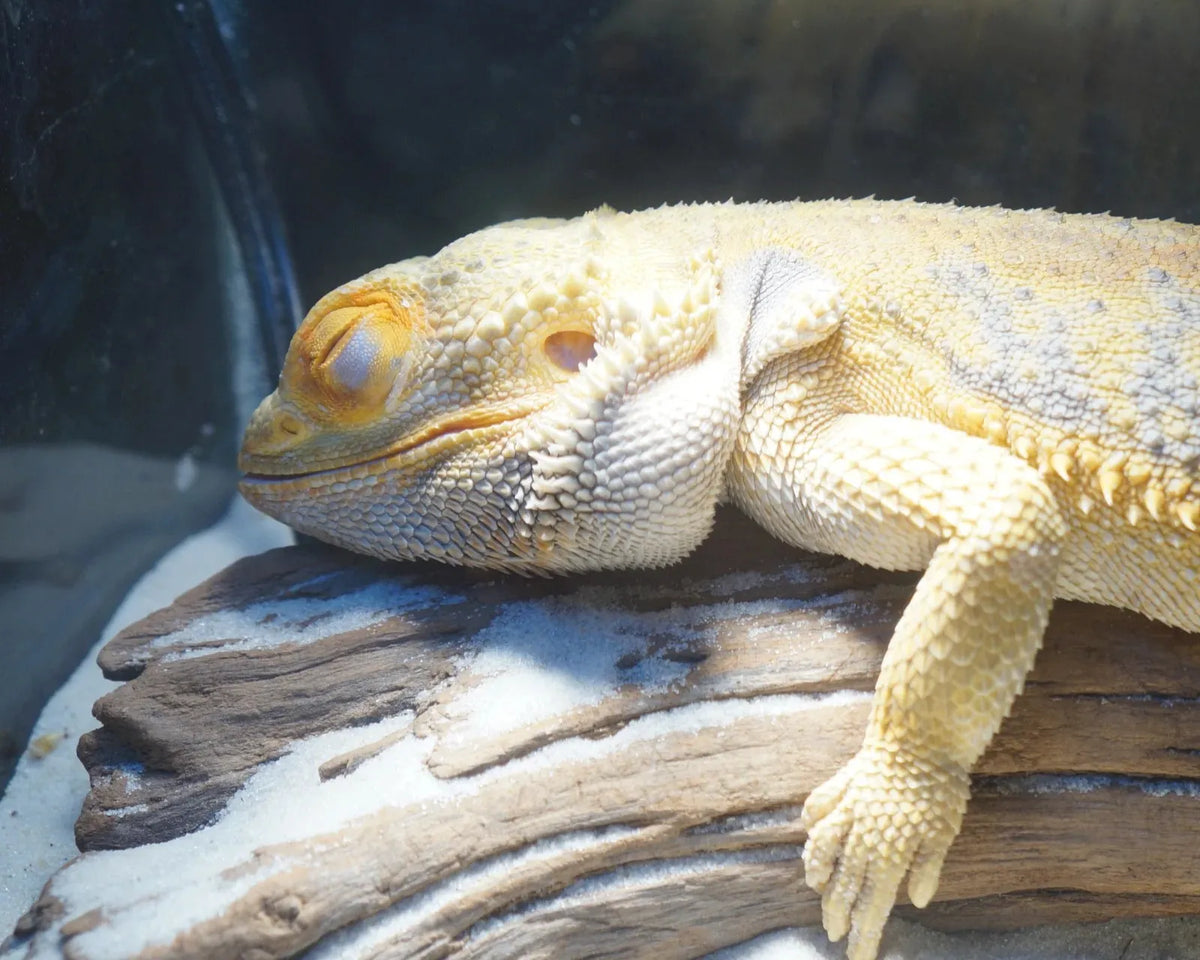
"My bearded dragon hasn't moved much in a week."
"My blue tongue lizard won't eat."
"My python is spending all day in its hide."
Every winter, our reptile team at Kellyville Pets hears versions of these concerns almost daily.
And honestly? We get it.
When you've spent months watching your reptile bask, explore, eat enthusiastically and generally act like themselves, it can be unsettling when they suddenly seem to switch off.
The challenge is that many of the signs of brumation can look a lot like the signs of illness.
So how do you tell the difference?
First, Don't Panic
As temperatures drop across Sydney and the Hills District, many reptiles naturally begin to slow down.
Even though our winters aren't as harsh as other parts of Australia, the combination of cooler nights and shorter daylight hours is often enough to trigger brumation behaviours.
If your reptile is suddenly sleeping more, hiding more often or showing less interest in food, brumation is certainly a possibility.
But before you assume that's what's happening, it's worth taking a closer look.
Signs It's Probably Brumation
Brumation tends to happen gradually rather than overnight.
You might notice your reptile:
✔ Sleeping more than usual
✔ Spending longer periods in hides
✔ Basking less often
✔ Eating less food
✔ Becoming less active overall
✔ Still appearing alert when disturbed
This last point is important.
A reptile in brumation may seem sleepy, but they should still be responsive when handled or gently checked. Many reptiles actively seek out secure caves, hides and sheltered resting spots during brumation. If your reptile suddenly seems attached to a particular hide, that can actually be a normal part of the process.
"One of the biggest differences we see is that a reptile in brumation still generally looks healthy," says Emma, Reptile Department Manager at Kellyville Pets.
"They're slowing down, but they don't usually look unwell."
Signs It Could Be Something More Serious
While reduced activity and appetite are common during brumation, there are some signs that should never be ignored.
These include:
✖ Significant or rapid weight loss
✖ Wheezing, clicking or noisy breathing
✖ Mucus around the nose or mouth
✖ Sunken eyes
✖ Difficulty moving
✖ Tremors or weakness
✖ Swelling or visible injuries
✖ Remaining lethargic despite appropriate temperatures
If you're seeing any of these symptoms, it's important not to simply assume it's brumation.
The Question We Always Ask First
When a customer tells us they think their reptile is brumating, the first thing we usually ask is:
"Have you checked your temperatures?"
You'd be surprised how often a reptile appears to be entering brumation when the real issue is that enclosure temperatures have drifted lower than intended.
As room temperatures drop during winter, enclosure temperatures often follow.
A globe that was achieving the perfect basking temperature in summer may no longer be producing the same results in winter.
That's why regular temperature checks are so important. A quality digital thermometer and thermostat can quickly tell you whether your reptile is slowing down because of the season, or because their environment isn't where it should be.
Three Things To Check Before Assuming It's Brumation
1. Basking Temperatures
Confirm your basking area is reaching the temperatures recommended for your species.
Don't rely on how warm it feels.
Use a thermometer.
If you're unsure, it may be worth checking your basking globe or heating setup. Winter is often when ageing globes and heating equipment start to show their limitations.
2. UVB Lighting
UVB output declines over time, even when bulbs still produce visible light.
If your bulb is overdue for replacement, it may be contributing to health issues that can mimic brumation symptoms.
At Kellyville Pets, winter is one of the busiest times of year for UVB replacements because many owners realise they can't quite remember when they last changed theirs.
3. Thermostats, Heating Equipment & Hides
Winter is when thermostats become especially important.
Stable temperatures help support normal bodily functions, even when reptiles are less active.
It's also worth checking that your reptile has access to secure hides and shelters. During brumation, many reptiles will spend extended periods tucked away, so providing appropriate hiding spots can help them feel secure and reduce stress.
Should They Still Have Access To Water?
Absolutely.
Even reptiles that stop eating during brumation still require access to fresh water.
Hydration remains important year-round.
What About Food?
Many owners worry when their reptile refuses food.
In many cases, reduced appetite is completely normal during brumation.
However, before assuming food refusal is purely seasonal, it's worth checking that temperatures, UVB lighting and heating equipment are all functioning correctly. Reptiles rely on these environmental conditions to properly digest food and maintain normal bodily functions.
We cover feeding in much more detail in our article:
Should I Feed My Reptile During Brumation?
If you're currently staring at an untouched food bowl wondering whether to keep offering meals, that guide walks through exactly what to do, what not to do, and why heating and lighting often play a bigger role than people realise.
Still Unsure?
If you're unsure whether what you're seeing sounds like brumation or something more serious, bring photos of your enclosure into Kellyville Pets. Our reptile team can help you review your temperatures, UVB lighting, heating equipment, hides and overall setup before you jump to conclusions.


