


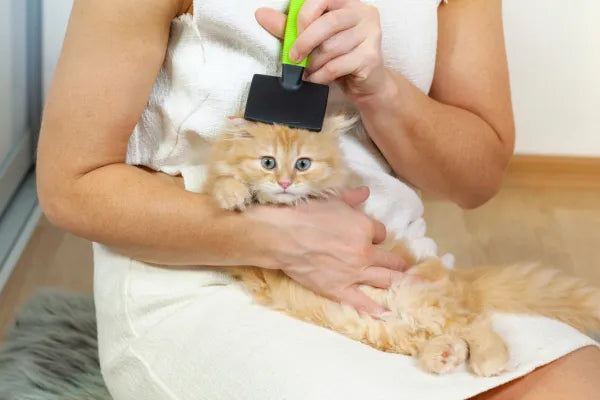
If you've recently welcomed a kitten into your family, grooming may not be high on your list of priorities. After all, cats spend a large part of their day cleaning themselves.
While kittens are naturally clean animals, regular grooming is still an important part of keeping them healthy and comfortable. Starting a grooming routine while they're young helps them become relaxed with handling, making future brushing, nail trimming and vet visits much easier.
The best part? Grooming is also a wonderful way to build trust and strengthen your bond with your new feline friend.
Why Should You Groom Your Kitten?
Although kittens instinctively groom themselves, they still benefit from a little help from their owners.
Regular grooming can:
- Remove loose hair before it's swallowed
- Reduce hairballs
- Prevent knots and matting
- Spread natural skin oils for a healthy, shiny coat
- Reduce shedding around your home
- Help your kitten become comfortable being handled
- Allow you to spot skin problems or parasites early
Making grooming part of your kitten's routine from an early age helps turn it into a positive experience they'll accept throughout their life.
Grooming Helps Build Trust
Many new owners think brushing is simply about keeping their kitten looking neat.
In reality, grooming is one of the easiest ways to strengthen your relationship.
Short, gentle grooming sessions teach your kitten that being touched around their paws, ears, tummy and tail is safe. This makes everyday handling, nail trims and veterinary examinations much less stressful as they grow.
Start with just a few minutes at a time and always finish before your kitten becomes restless. Reward them with praise, gentle pats or a favourite treat.
Reducing Hairballs Before They Become a Problem
As kittens mature, they'll spend more time grooming themselves.
This means they'll naturally swallow loose hair, which can form hairballs.
While the occasional hairball is normal, regular brushing removes loose fur before your kitten can ingest it, helping reduce the likelihood of hairballs and supporting digestive health.
For long-haired breeds, daily brushing can make a significant difference.
Spot Health Problems Early
One of the biggest benefits of grooming is that it gives you the chance to notice changes you might otherwise miss.
While brushing, check for:
- Fleas or flea dirt
- Ticks
- Dry or flaky skin
- Redness or irritation
- Small lumps or bumps
- Cuts or wounds
- Unusual hair loss
If you notice anything concerning, book an appointment with your veterinarian as soon as possible.
Choosing the Right Brush
Different coat types require different grooming tools.
Short-haired kittens
A soft bristle brush, rubber grooming mitt or fine-toothed comb used once or twice a week is usually enough.
Medium and long-haired kittens
Long-haired breeds such as Persians, Maine Coons and Ragdolls benefit from daily brushing with a quality slicker brush or steel comb to help prevent tangles and mats.
If you're unsure which brush is best, our team at Kellyville Pets can help you choose the right grooming tools for your kitten's coat.
Don't Forget Nails and Ears
Grooming isn't just about brushing.
It's also a good opportunity to:
- Check your kitten's ears for dirt or unusual discharge
- Inspect their eyes for excessive tearing
- Trim nails when needed
- Look over their paws and paw pads
Introducing these routines early makes them much easier as your kitten grows into an adult cat.
Do Kittens Need Baths?
Most healthy kittens rarely need bathing because they do an excellent job cleaning themselves.
However, a bath may be necessary if your kitten:
- Gets into something sticky or messy
- Has fleas (following veterinary advice)
- Is unable to groom themselves properly
Always use a shampoo specifically formulated for cats, and ensure your kitten is dried thoroughly afterwards, particularly during cooler Australian months.
How Often Should You Groom Your Kitten?
A simple routine works best.
| Grooming Task | Recommended Frequency |
|---|---|
| Brushing (short coat) | 1-2 times per week |
| Brushing (long coat) | Daily |
| Nail check | Every 2-4 weeks |
| Ear check | Weekly |
| Bathing | Only when necessary |
Remember that every kitten is different. Their breed, coat type and lifestyle will all influence how often they need grooming.
Final Thoughts
Regular grooming is about much more than keeping your kitten looking adorable.
It supports healthy skin and coat condition, reduces hairballs, encourages positive handling and helps you detect potential health problems early. By introducing grooming while your kitten is young, you're setting them up for a lifetime of healthy habits and stress-free care.
Whether you're looking for kitten-safe brushes, combs, shampoos or hairball support products, the team at Kellyville Pets is always happy to help you choose the right products for your new family member.


