Care Guide6 min read

Black-headed Caique

Pionites melanocephalus
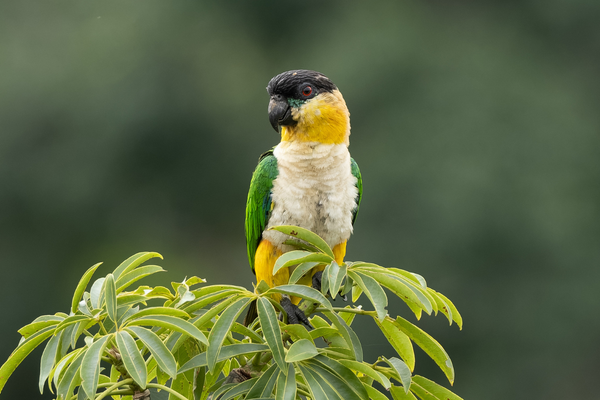
Black-headed Parrot · Black-capped Parrot · Black-crowned Parrot · Pallid Caique (P. m. pallidus subspecies)

Black-headed Caique Care Guide
Lifespan
25-30+ years
Adult Size
23-25cm; 130-170g
Care Level
Medium to High
Diet

High-quality pellets as the dietary foundation; supplemented with fresh fruit, vegetables and limited seed

Enclosure

Largest possible cage; minimum 60×60×90 cm H for a single bird; bar spacing 1.5–2 cm; stainless steel construction preferred

Temperament

Energetic, acrobatic and bold — the clown of the parrot world. Nipping requires consistent management

Where they come from

Natural History & Origin

The Black-headed Caique is native to the northern Amazon Basin in South America, with a range spanning northeastern Brazil, the Guianas (Guyana, Suriname, French Guiana), Venezuela, Colombia, Ecuador and Peru — specifically the regions north of the Amazon River, where it is geographically separated from its sister species the White-bellied Caique by the river itself. It inhabits tropical and subtropical lowland rainforest, forest edges, várzea (seasonally flooded forest) and wooded savannas, typically below 500 m altitude. In the wild it lives in small flocks of 6–30 individuals that forage together in the forest mid-canopy and understorey, feeding on fruit, berries, flowers, seeds and insects, and roosting communally at night.

The Black-headed Caique is listed on CITES Appendix II, meaning international trade is regulated to ensure it does not threaten wild populations. All legally held captive birds in Australia must be descended from birds imported before current trade restrictions or bred from legally imported captive stock. The species is not native to Australia and is classified as an exotic bird. In NSW, no licence is required to keep exotic (non-native) bird species. Western Australia lists the Black-headed Caique under its Restricted Bird licence category — confirm current requirements with your state wildlife authority before purchasing. All birds must be sourced from reputable licensed captive breeders; verify the legal provenance of any bird before purchase.

Get it right early

Tips for First-Time Owners

  1. 1 Research the nipping behaviour thoroughly before purchasing — the Black-headed Caique's tendency to nip is a species characteristic, not a training failure. Consistent target training, reading body language and managing overstimulation are the keys to a bite-free relationship.
  2. 2 Plan for the daily time commitment: a Caique requires at least 2–3 hours of supervised out-of-cage time and social interaction every day. This is not negotiable for a species of this intelligence and energy level.
  3. 3 Ensure 10–12 hours of undisturbed sleep each night — cover the cage in a quiet room and maintain a consistent day/night schedule. A sleep-deprived Caique is irritable, more prone to nipping and at increased risk of feather destructive behaviour.
  4. 4 Remove all non-stick cookware from the household or at minimum never use it — PTFE/Teflon fumes from overheated non-stick coatings are lethal to birds, usually within minutes, with no warning signs.
  5. 5 Source from a reputable captive breeder who can provide documented health history; never purchase a wild-caught or unknown-provenance bird. In NSW no licence is required for this exotic species; confirm requirements in your state before purchasing.
Setting up the habitat

Enclosure & Husbandry

The cage should be the largest practically affordable — Caiques are highly active, acrobatic birds that use every centimetre of their enclosure. A minimum cage size for a single bird is 60cm W × 60cm D × 90cm H; 80cm W × 60cm D × 120cm H or larger is strongly preferred. Bar spacing must be 1.5–2 cm — gaps wider than 2 cm allow the bird to trap its head between bars with potentially fatal results. Stainless steel construction is the most durable and easiest to clean; powder-coated cages are acceptable provided there is no chipping or peeling of the coating. Avoid galvanised cages, which can cause zinc toxicity.

Provide a minimum of 3–4 natural wood perches of varying diameter (1.5–3 cm) to exercise foot muscles and maintain beak condition. Rope perches, swing perches and ladder perches provide additional variety. Position perches at multiple heights but ensure enough clear flight space between them. Natural branch wood (apple, eucalyptus, bottlebrush, willow — avoid toxic species) is ideal as it can be chewed and provides enrichment.

Caiques are active bathers — a shallow dish of clean water or a misting bottle for bathing should be offered daily or every second day. Bathing supports feather condition and is clearly enjoyed by most individuals.

Maintain the cage in a draught-free, well-ventilated location away from the kitchen (cooking fumes, PTFE/non-stick coatings are lethal to all birds). A consistent temperature of 18–28°C is appropriate. A full-spectrum light source on a 10–12 hour cycle supports natural circadian rhythm and Vitamin D3 synthesis. Cover the cage at night to ensure 10–12 hours of undisturbed sleep — Caiques that are sleep-deprived become irritable and more prone to nipping.

What to feed

Dietary Management

Black-headed Caiques require a nutritionally varied diet that reflects the diverse frugivorous and nectarivorous feeding of the wild bird. A quality South American parrot or medium parrot pellet should form the dietary foundation — pellets provide complete balanced nutrition and reduce selective feeding on seed alone. Supplement daily with fresh fruit (mango, papaya, passionfruit, berries, apple, pear, banana, melons) and fresh vegetables (leafy greens, corn, carrot, capsicum, sweet potato, broccoli). Variety is important — rotate offerings daily.

Seed should be offered as a supplement rather than a staple; a small parrot or cockatiel seed mix in limited amounts provides enrichment and satisfies natural foraging behaviour without creating the nutritional imbalances of an all-seed diet. Sprouted seeds and soaked seed are highly nutritious and eagerly accepted. Cooked grains, legumes (cooked chickpeas, lentils) and small amounts of cooked egg can be offered as occasional protein supplements.

Foods to avoid: avocado, chocolate, onion, garlic, fruit seeds and pips (apple, cherry, apricot — these contain cyanogenic compounds), alcohol, caffeine, salt, and any processed human food. Rhubarb, mushrooms and raw legumes should also be avoided. Fresh water must be available at all times and changed daily. Food and water dishes must be cleaned thoroughly every day.

Day-to-day interaction

Handling & Socialisation

The Black-headed Caique is one of the most energetic, entertaining and strong-willed of all companion parrots — widely known in aviculture as the 'clown of the parrot world' for its acrobatic play behaviour, bold confidence and seemingly inexhaustible activity. Caiques are in near-constant motion when awake — hopping, rolling, wrestling with toys, hanging upside down and interacting with everything in reach. They are highly intelligent, form deep bonds with their keepers and can develop genuine individual personalities that are a source of daily entertainment.

However, Caiques have a well-documented tendency to nip that must be managed through consistent, patient training from a young age. Nipping is most often an expression of overstimulation, boundary-setting or frustration rather than aggression — Caiques communicate with their beak as a matter of course and have a lower threshold for biting than many other companion parrots. This is not a disqualifying characteristic but is a feature of the species that prospective owners must research and prepare for before acquiring a bird.

Begin handling from an early age with consistency, patience and positive reinforcement. Caiques respond well to target training and step-up training using a consistent 'step up' command — reward calm, cooperative behaviour immediately with a favoured treat or verbal praise. Never punish a Caique physically or by yelling; this increases fear and aggression rather than reducing them.

Manage overstimulation carefully. Caiques become highly excited during play and can transition from enthusiastic engagement to nipping suddenly when overstimulated. Learn to read the bird's body language — fluffed feathers, rapidly dilating and contracting pupils (flashing or pinning), tail fanning and a tense posture are warning signs that the bird is becoming overstimulated and should be returned to its cage or given space before a nip occurs.

Daily handling and interaction is important for maintaining tameness. A Caique that goes without handling for several days may become more reactive and less cooperative; consistent daily engagement is the most effective way to build and maintain a good relationship. Always wash hands before handling to remove food smells that may trigger beak investigation.

Did you know

Fun Facts

The Black-headed Caique has a unique play behaviour that has been described in peer-reviewed literature: individuals engage in deliberate 'surfing', riding objects across smooth surfaces by lying on their side or back and pushing off with their feet. This self-entertainment behaviour — observed in both wild and captive birds — is one of the most cognitively sophisticated play behaviours documented in any parrot species.

Caiques are the only parrot species known to 'wrestle' with each other as a form of social play — grappling, rolling and mock-fighting in interactions that have no aggressive intent. This wrestling behaviour is also directed at favourite human companions and favoured toys, and is considered a reliable indicator of a highly socially bonded and mentally stimulated bird.

The Black-headed and White-bellied Caique are the only two species in the genus Pionites — a small, distinctive genus separated from all other parrots by the Amazon River, which acts as a distributional boundary: Black-headed Caiques are found only north of the Amazon; White-bellied Caiques only south. The river's width and depth has kept the two species genetically isolated despite occupying nearly identical ecological niches on opposite banks.

Keep them stimulated

Enrichment

Enrichment is non-negotiable for Caiques — a bored Caique is a loud, destructive and potentially feather-damaging Caique. This is one of the highest-energy companion parrots available and its enrichment needs reflect this.

Toys: Provide a wide variety including destructible wooden toys (natural wood blocks, balsa, cork), leather and rope toys, foraging toys (food hidden in containers, wrapped in paper, threaded through objects), puzzle feeders, foot toys and shreddable materials. Rotate toys every few days — a Caique that has exhausted the novelty of its toys will lose interest quickly. Caiques are enthusiastic chewers and will destroy toys rapidly; this is entirely normal and desirable behaviour.

Out-of-cage play: A supervised out-of-cage play area with a bird-safe playstand, foraging opportunities, natural branches for climbing and chewing, and interactive play with the owner is as important as the in-cage environment. Caiques enjoy wrestling, rolling, and being offered objects to manipulate.

Foraging: Wild Caiques spend much of their day searching for food. Mimicking this with foraging feeders, wrapped food items, and scattered fresh food in the cage provides meaningful cognitive stimulation.

Bathing: Caiques love water. Daily or alternate-day bathing opportunity — a shallow dish, gentle mist from a spray bottle or a bird-safe shower perch — provides both physical enrichment and supports feather condition.

What to watch for

Common Health Issues

Feather Destructive Behaviour (FDB): Can develop in Caiques that are insufficiently stimulated, sleep-deprived, or housed in low-social-contact environments. Caiques require a minimum of 10–12 hours undisturbed sleep and substantial daily interaction to prevent FDB. Any bird showing feather destruction should receive a veterinary assessment to rule out medical causes before assuming a behavioural origin.

Psittacosis (Chlamydiosis): A bacterial infection transmissible to humans; many birds carry it without obvious symptoms. Annual chlamydia screening and good hygiene are the primary preventative measures. New birds should be quarantined before introduction to any existing collection.

Proventricular Dilatation Disease (PDD): A viral disease affecting the nerves of the digestive system; progressive weight loss, regurgitation and passage of undigested food are signs. Source from reputable breeders and seek veterinary assessment for any bird showing progressive digestive decline.

Airborne toxins: The avian respiratory system makes all parrots acutely sensitive to airborne contaminants. Non-stick cookware fumes (PTFE/Teflon) are immediately fatal to birds at normal cooking temperatures if overheated. Incense, scented candles, essential oil diffusers, aerosol sprays, perfumes, air fresheners, cigarette smoke, vaping, cleaning chemicals and paint fumes must never be used in a home housing a Caique.

Polyomavirus: Can cause acute death in young birds; source from reputable breeders and ensure birds have received appropriate veterinary care before purchase.

Obesity: An all-seed diet or excessive high-fat foods leads to obesity and fatty liver disease. Maintain a pellet-based diet with fresh food supplementation and limit seed and high-fat treats.

Everything you need

Essentials Shopping List

Setup checklist

    FAQ

    Commonly Asked Questions

    • Are Black-headed Caiques good talkers?

      They are not renowned as talkers in the way of African Greys or Amazons. Some individuals learn a small vocabulary of words and phrases, particularly if trained from a young age, but most Caiques communicate primarily through a range of whistles, trills, contact calls and reedy vocalisations rather than mimicry. Their entertainment value comes from personality and play, not speech.

    • Why does my Caique keep biting?

      Nipping is a characteristic of the species most often triggered by overstimulation, frustration or boundary-setting. Learn to read the warning signs — pinning eyes, fluffed feathers, tail fanning — and redirect or return the bird to its cage before a bite occurs. Consistent target training from a young age significantly reduces nipping.

    • Can I keep two Caiques together?

      Pairs of Caiques can coexist well if carefully introduced as young birds and housed with sufficient space and enrichment. Two Caiques bonded to each other may however become less human-interactive. Do not house Caiques with smaller birds — they can be aggressive toward other species.

    • How noisy are Black-headed Caiques?

      They are vocal but not the loudest of parrots — their calls are reedy and high-pitched rather than the extreme volume of cockatoos or some Amazons. An outdoor aviary in a densely residential area may generate complaints; an indoor cage in a normal household is generally manageable.

    • Do I need a licence to keep a Caique in NSW?

      No. The Black-headed Caique is an exotic (non-native) species and no licence is required in NSW. Western Australia requires a Restricted Bird licence; confirm requirements in your state.

    Need help?

    Our specialists are in-store every day to help with setup, licensing and feeding.

    Visit Kellyville Pets →