Care Guide6 min read

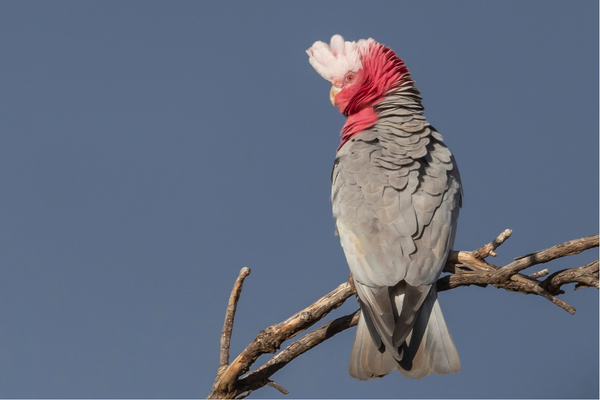
Galah

Eolophus roseicapilla

Rose-breasted Cockatoo · Roseate Cockatoo · Pink and Grey

Galah Care Guide
Lifespan
20-40+ years
Adult Size
35-38cm; 300-425g
Care Level
Medium
Diet

Quality cockatoo pellets as the dietary foundation, with daily fresh fruit and vegetables, and limited low-fat seed — Galahs are very prone to obesity

Enclosure

Large, thick-gauge wire cage (minimum 100cm W × 75cm D × 150cm H) with a play top or gym stand, multiple perches and a comprehensive toy selection

Temperament

Playful, cheeky, highly social and often comically mischievous. Galahs are one of the most entertaining of all Australian parrot species

Where they come from

Natural History & Origin

The Galah is one of Australia's most abundant and widely distributed native birds, found across almost the entire continent except the deepest rainforest and arid desert. They are found in open woodland, grassland, farmland, parkland and suburban environments across New South Wales, Victoria, Queensland, South Australia, Western Australia and the Northern Territory — populations have expanded significantly in coastal areas over the past century, aided by agricultural development and the availability of water and food in suburban gardens.

In the wild, Galahs are highly gregarious and live in large, noisy flocks, roosting communally and foraging on the ground for seeds, roots, bulbs and insects. They are one of the most intelligent, playful and characterful Australian parrots and have been kept as companion birds in Australia for generations. Their energetic personality, affectionate nature and impressive talking ability make them outstanding pets — but they are also demanding animals that require a high level of daily social interaction and mental stimulation.

As a native Australian bird, the Galah requires a fauna keeper licence in some states and territories, but is not required in New South Wales, Queensland or South Australia. Animals must be sourced from licensed, captive-bred stock — wild-caught Galahs cannot be legally kept as pets.

Get it right early

Tips for First-Time Owners

  1. 1 Diet is the most critical health decision for a Galah — Galahs on seed-heavy diets are at serious risk of fatty liver disease and obesity. A pellet-based, low-fat diet is the most important preventative measure you can take.
  2. 2 Galahs need a high level of daily social interaction — they are flock birds by nature and experience genuine distress when isolated for long periods. Plan for a minimum of one to two hours of active daily engagement.
  3. 3 Cover the cage partially at night with a breathable cover — this reduces visual stress, improves sleep quality, and helps prevent night frights.
  4. 4 Ensure all household members interact with the bird regularly — Galahs that bond to only one person can become aggressive or anxious around others.
  5. 5 In NSW, no keeper licence is required for a Galah — but requirements vary in other states. Always confirm with your state wildlife authority and source only from a licensed captive breeder.
Setting up the habitat

Enclosure & Husbandry

Galahs are energetic, boisterous birds and require a cage that can withstand considerable physical activity and beak force. A minimum cage size is 100cm W × 75cm D × 150cm H; larger is strongly preferred. Bar spacing of 2–2.5 cm is appropriate. A thick-gauge powder-coated or stainless steel cage is recommended — Galahs will chew at lightweight or thin-gauge cage bars over time.

Provide three to four sturdy perches of varying diameter — natural timber perches support foot health and satisfy the need to chew. A play top with perching areas is highly recommended as it provides important out-of-cage territory and enrichment. An open-top cage style with a play top area is ideal for hand-raised birds as it allows greater interaction with the family.

Cage placement in a socially active part of the home is important — Galahs are highly social and become distressed and destructive when isolated. Cover at night with a breathable cover to reduce visual stress and improve sleep quality. Provide a minimum of six to eight toys in rotation, including chew toys, foraging toys, bells, swings and puzzle feeders. Galahs are vigorous chewers — toy materials must be bird-safe and appropriately robust.

What to feed

Dietary Management

Galahs should be fed a quality cockatoo or small-to-medium parrot pellet as the primary dietary component — approximately 60–70% of total diet. Supplement daily with fresh fruit and vegetables including apple, pear, carrot, capsicum, corn, broccoli, leafy greens, peas and beans. Never feed avocado, onion, garlic, chocolate, caffeine, fruit seeds or processed and salted human foods.

Galahs are highly prone to obesity and must not be fed seed as a dietary staple. A small amount of a low-fat parrot seed mix can be offered as a supplement or training reward, but seed should constitute no more than 10–15% of the total diet. Sunflower seeds and safflower seeds are particularly high in fat and should be avoided or given only as rare treats. Fatty liver disease is common in Galahs fed predominantly on seed — a pellet-based diet is strongly recommended. Cuttlebone should be available at all times for calcium and beak conditioning. Vitamin supplements such as a quality bird vitamin supplement can be added to water two to three times per week. Fresh water must be changed daily.

Day-to-day interaction

Handling & Socialisation

Galahs are natural clowns, frequently hanging upside down, playing with toys with apparent delight and seeking attention actively from their human family. They are emotionally expressive and form strong bonds, but can also be wilful and naughty. They respond best to consistent, positive handling and a predictable daily routine.

Hand-raised Galahs are generally very comfortable with handling from the outset and are among the most physically affectionate of Australian parrots. Begin with step-up training using positive reinforcement. Keep handling sessions consistent and daily — Galahs that are not handled regularly can quickly become skittish or hormonal.

Galahs can be prone to biting during hormonal periods — typically spring — and during adolescence. Read body language carefully: raised crest, dilated pupils and puffed feathers can indicate excitement, aggression or over-stimulation. When the bird appears over-stimulated, return it to its cage calmly rather than continuing. Handling should be shared among household members to prevent strong one-person bonding.

Did you know

Fun Facts

Despite their association with comedic behaviour, Galahs are highly intelligent — they have been documented solving multi-step puzzles, using objects as tools, and demonstrating numerical understanding in research settings.

Galahs pair for life in the wild and show genuine signs of grief when a long-term partner is lost — a behaviour that reflects the depth of their social and emotional bonds.

The word 'galah' entered Australian English as slang for a foolish or silly person — an unfair characterisation of a species that is genuinely one of Australia's most cognitively impressive birds, likely stemming from their boisterous and playful public behaviour.

Keep them stimulated

Enrichment

Galahs are highly intelligent and need consistent mental and physical stimulation. Provide a minimum of six to eight toys in rotation — including robust chew toys, foraging toys, puzzle feeders, swings, bells and foot toys. Rotate toys every few days to maintain novelty. Foraging enrichment is particularly effective: hide food in foraging toys, wrap in paper, or present in puzzle boxes to encourage problem-solving.

Supervised out-of-cage time in a safe household environment, with access to a play stand, provides important physical exercise and environmental engagement. Trick training using positive reinforcement builds mental engagement and strengthens the human-bird relationship — Galahs learn quickly and enjoy the interaction. Regular bathing — either in a large shallow dish or under a gentle shower — is enjoyed by most Galahs and supports feather health.

What to watch for

Common Health Issues

Fatty Liver Disease: The most prevalent serious health issue in captive Galahs, caused by seed-heavy, high-fat diets. Symptoms include weight gain, lethargy and in severe cases liver failure. Prevention is through a pellet-based, low-fat diet and avoidance of sunflower and safflower seed as dietary staples. Obesity: Closely linked to diet — monitor body condition regularly and adjust feeding accordingly.

Psittacosis (Chlamydiosis): A bacterial infection transmissible to humans — annual vet checks and good hygiene are preventative.

PBFD (Psittacine Beak and Feather Disease): A viral disease causing progressive feather and beak abnormality — source from reputable breeders.

Feather Destructive Behaviour: Can develop with chronic boredom, insufficient social interaction or underlying medical causes.

Respiratory and bacterial infections: Common under poor husbandry conditions, often linked to vitamin A deficiency — a pellet-based diet reduces risk significantly.

Everything you need

Essentials Shopping List

Setup checklist

  • Large thick-gauge wire cage — minimum 100 × 75 × 150 cm; open-top play top style recommended for hand-raised birds
  • Multiple sturdy perches of varying diameter (natural timber)
  • Stainless steel food and water dishes (minimum two sets)
  • Quality cockatoo or medium parrot pellets (low-fat)
  • Varied fresh fruit and vegetables (daily)
  • Small amount of low-fat parrot seed mix (supplement only)
  • Cuttlebone and iodine bell
  • Vitamin supplement (a quality bird vitamin supplement)
  • Broad-spectrum bird wormer (quarterly)
  • Minimum six to eight rotating toys: chew toys, foraging toys, puzzle feeders, swings, bells, foot toys
  • Large shallow bathing dish
  • Cage cover (breathable fabric)
  • Avian-safe cage disinfectant
  • Annual avian vet check (ongoing)
  • Fauna keeper licence (all states and territories)
FAQ

Commonly Asked Questions

  • Do Galahs talk?

    Many do, particularly hand-raised birds socialised to speech from a young age. Their talking ability is good but generally not on par with African Greys or Amazons. They excel at mimicking sounds, whistles and short phrases.

  • Are Galahs noisy?

    They can be vocal, particularly at dawn and dusk. Contact calls are loud and carry well. Boredom or insufficient interaction increases vocalisation significantly.

  • How do I prevent my Galah from becoming obese?

    Feed a pellet-based diet with fresh fruit and vegetables, and limit seed to no more than 10–15% of total diet. Avoid sunflower seeds as a dietary staple. Ensure daily out-of-cage exercise and monitor body condition regularly.

  • Do Galahs need companions?

    Many do well as single birds if they receive sufficient daily human interaction. If the keeper works long hours, a companion bird of the same species can provide company — but birds must be introduced carefully.

  • Do I need a licence to keep a Galah in Australia?

    In NSW, Galahs are one of 41 native species exempt from licensing requirements — no keeper licence is needed. Requirements vary in other states and territories; some require a fauna keeper licence. Always confirm with your state wildlife authority before purchasing.

Need help?Our specialists are in-store every day to help with set up, licensing and feeding.

Visit Kellyville Pets