


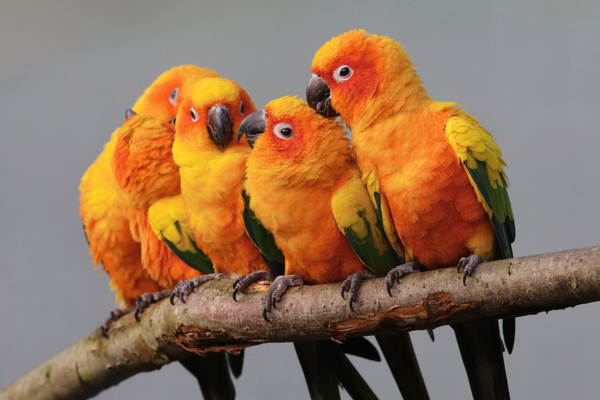
Sun Conures have one of the most vivid plumage progressions of any parrot — juveniles are predominantly green and undergo a gradual moult over their first year that reveals the iconic full golden-yellow and orange adult colouration in stages.
Sun Conure
Aratinga solstitialis

15-20 years

30m; 100-130g

Low to Medium


Where they come from
Natural History & Origin

Get it right early
Tips for First-Time Owners
- 1 The noise level of a Sun Conure is not a training issue — it is a species characteristic. Their contact screech is sharp, high-pitched and very carrying; confirm that your living situation is appropriate for this before committing to this species.
- 2 Like Green Cheek Conures, Sun Conures enjoy enclosed sleeping spaces — provide a sleeping tent or hut in the cage.
- 3 A pellet-based diet is the most important long-term health investment — Sun Conures on seed-heavy diets develop nutritional deficiencies over time.
- 4 Daily out-of-cage time is not optional — active, physically confident birds confined to their cage for extended periods will develop behavioural problems.
- 5 Sun Conures are IUCN-listed as Endangered — source only from reputable captive breeders and never from wild-caught stock.
Setting up the habitat
Enclosure & Husbandry
What to feed
Dietary Management
Day-to-day interaction
Handling & Socialisation
Find your next best friend
Browse all Handraised Birds
Our Available Handraised Birds
Did you know
Fun Facts
Wild Sun Conure populations have declined dramatically due to habitat loss and historical trapping, and the species is now IUCN-listed as Endangered — captive-bred birds are the only appropriate source for the pet trade.
Sun Conures are among the most colour-visually spectacular of all commonly kept small parrots — their colouration has been described as resembling a small, living sunset.
Keep them stimulated
Enrichment
What to watch for
Common Health Issues
Everything you need
Essentials Shopping List
Setup checklist
- Medium-to-large cage — minimum 90 × 50 × 90 cm; larger preferred
- Bar spacing 1.5–2 cm
- Multiple perches: natural timber, textured
- Sleeping hut or tent
- Stainless steel food and water dishes (minimum two sets)
- Quality small-to-medium parrot pellets
- Varied fresh fruit and vegetables (daily)
- Small parrot seed mix (supplement only)
- Cuttlebone
- Vitamin supplement (2–3× per week)
- Broad-spectrum bird wormer (quarterly)
- Minimum six rotating toys: chew toys, foraging toys, foot toys, swings, bells
- Play gym or play top
- Shallow bathing dish or fine-mist spray bottle
- Cage cover (breathable fabric)
- Avian-safe cage disinfectant
- Annual avian vet check (ongoing)
READY TO SET UP
Browse all
Shop the Essentials

Avigrain Wild Bird Mix 20kg
$28.49
View →

Avigrain Small Parrot Mix 20kg
$36.49
View →

Avigrain Budgie Blue 20kg
$52.99
View →

Budgie Mix
from$15.99
View →

Forage Pinecone Bird Treat
from$21.49
View →

Save 10%
Vetafarm Parrot Essentials

Forage Gourmet Conure & Quaker Food
from$17.99
View →

Avigrain Budgie Green Mix 20kg
$44.99
View →
FAQ
Commonly Asked Questions
-
Why is my Sun Conure so loud?
-
Do Sun Conures talk?
-
Are Sun Conures and Green Cheek Conures similar?
-
How long do Sun Conures live?
-
Do I need a licence for a Sun Conure in Australia?
Learn more
See more care guides Read about other species
No articles match that search. Try a different word.


Need help?Our specialists are in-store every day to help with set up, licensing and feeding.
Visit Kellyville Pets