Breed Guide6 min read

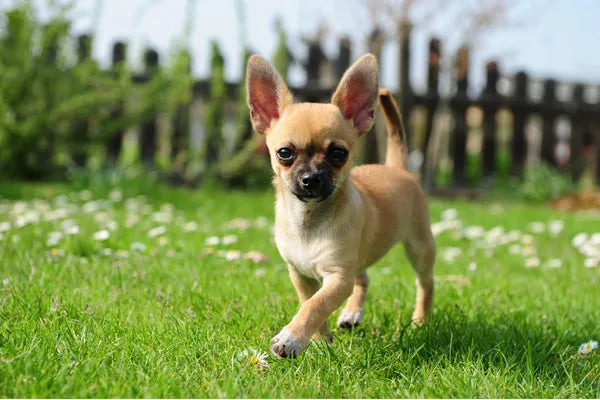
Chihuahua

Chi (informal) · Long-Coat Chihuahua / Smooth-Coat Chihuahua (coat variety names)

  • Low exercise needs
  • Low grooming commitment
  • Apartment-friendly
  • Calm temperament
  • Suitable for first-time owners
Chihuahua Breed Guide
Temperament

Bold, alert and fiercely loyal to their person — a big personality in an extremely small package. Can be wary of strangers and protective of their owner. Tends to form an intense bond with one person. Can be reactive toward larger dogs if not well socialised. Prone to anxiety and problem behaviours if over-pampered or under-socialised.

Lifespan
14–16 years — one of the longest-lived dog breeds.
Adult Size
Under 2.7 kg (6 lb) by breed standard. 15–23 cm tall. The world's smallest recognised breed.
Care Level
Low to Medium
Coat Type

Two coat varieties: smooth coat (short, shiny, close-lying) and long coat (soft, slightly wavy, with feathering). Both are moderate shedders. Neither coat variety is hypoallergenic.

Energy Level

Low to Medium. Short walks and indoor play are sufficient — do not over-exercise in heat or cold.

is this the right breed for you?

Owner Suitability

Suitable for first-time owners, apartment dwellers, singles and retirees. Requires experienced handling to prevent small-dog syndrome and anxiety. Does not suit households with very young children or large boisterous dogs. Devoted and low-exercise.

Where the breed comes from

Origin & History

The Chihuahua is the smallest recognised dog breed in the world and one of the oldest breeds in the Americas. Believed to descend from the Techichi, a small companion dog kept by the Toltec civilisation of ancient Mexico, the modern Chihuahua takes its name from the Mexican state of Chihuahua where the breed was discovered and developed in the mid-19th century. Introduced to the United States and subsequently to Australia, the Chihuahua became one of the world's most recognisable small breeds. Two coat varieties are recognised: smooth coat (short-haired) and long coat. Under the Australian National Kennel Council (ANKC), the Chihuahua is classified in Group 1 (Toys).

Get it right early

Tips for First-Time Owners

  1. 1 Treat the Chihuahua as a dog, not a toy — the most common welfare problem in this breed is over-protection and under-socialisation. A Chihuahua that is carried everywhere and never trained becomes anxious, reactive and difficult; one that is socialised, trained and allowed to walk and explore becomes a confident, well-adjusted companion.
  2. 2 Commit to daily tooth brushing from puppyhood — dental disease is the single most common and significant health issue in this breed, and daily brushing is the most effective prevention available.
  3. 3 Always use a harness rather than a collar for lead walking — collars place dangerous pressure on the delicate trachea and can cause or worsen collapsing trachea.
  4. 4 Supervise all interactions with children and teach children to sit on the floor rather than picking the dog up — a fall from arms height can cause serious injury or death in a dog of this size.
  5. 5 Source from a breeder who health-screens for luxating patella and is honest about the fontanelle status of apple-dome individuals.
Daily Routine

Care & Exercise

Chihuahuas require two short daily walks plus indoor play — they are not high-exercise dogs. They are sensitive to temperature extremes and should not be exercised in very hot or cold conditions without appropriate protection. Training should begin from puppyhood; the Chihuahua's small size often leads owners to excuse behaviours that would not be tolerated in a larger dog — this is a mistake that leads to anxiety, reactivity and problem behaviour. Positive reinforcement training from puppyhood builds a confident, well-mannered dog. Dental care is the most significant ongoing health commitment. Feed a quality small-breed food in carefully measured small portions twice daily.

Coat Care Routine

Grooming

Smooth coat: Minimal grooming — a weekly wipe-down with a damp cloth or soft brush to remove loose hair and keep the coat gleaming. Bathe every three to four weeks. Long coat: Brush two to three times per week with a soft slicker brush to prevent tangles, particularly in the feathering around the ears, neck and legs. Bathe every three to four weeks. Both coat types: Check and clean ears weekly. Dental hygiene is the most critical grooming task — Chihuahuas are highly prone to severe dental disease due to their small jaw and crowded teeth. Brush teeth daily if possible. Trim nails every three to four weeks — nails grow quickly in this breed and overgrown nails affect gait and comfort.

Did you know

Fun Facts

The Chihuahua is the world's smallest recognised dog breed and also one of the longest-lived, with a typical lifespan of 14–16 years and many individuals reaching 18 or even 20 years — a lifespan longer than almost all other dog breeds.

The Chihuahua is named after the Mexican state of Chihuahua, where significant numbers of the breed were first discovered by Americans in the mid-1800s. However, archaeologists have found remains of Techichi dogs — widely considered the Chihuahua's direct ancestor — at ancient Toltec sites dating back to the 9th century AD, making the breed's lineage arguably one of the oldest in the Americas.

A Chihuahua holds the official Guinness World Record for the shortest dog ever measured — Miracle Milly, a Chihuahua from Florida, measured 9.65 cm tall at the shoulder, making her the shortest dog in recorded history.

Day-to-day interaction

Handling & Socialisation

Socialisation is critical and frequently neglected in this breed due to small size. A Chihuahua without adequate socialisation becomes fearful, reactive and anxious — a combination that can lead to defensive biting. Puppy school from as early as possible, followed by consistent positive exposure to a wide variety of people, dogs, environments and handling, is as important for a Chihuahua as for any large breed. Resist the urge to carry the dog everywhere — allowing it to walk and explore builds confidence and reduces anxiety. Teach children to sit down with the dog rather than picking it up; falls can be fatal in this breed.

Keep them stimulated

Enrichment

Chihuahuas are intelligent and benefit from regular mental stimulation through training, puzzle toys and interactive play. Short trick-training sessions are ideal — this breed enjoys learning and is capable of a wide range of commands and tricks. Appropriately sized puzzle feeders, snuffle mats and scatter feeding encourage natural foraging. Indoor enrichment suits this breed well given its small size and temperature sensitivity. Rotate toys to maintain novelty. Despite the small size, this breed benefits from confidence-building enrichment — allowing it to explore new environments, navigate moderate physical challenges, and succeed at tasks builds the independent confidence that prevents anxiety.

What to watch for

Common Health Issues

Dental Disease: The most significant and common health concern in Chihuahuas. The small jaw causes crowding of teeth, rapid tartar accumulation and early tooth loss. Daily tooth brushing from puppyhood and regular professional dental cleans under veterinary supervision are essential.

Patella Luxation (Luxating Patella): Kneecap dislocation; very common in small breeds. Ranges from mild to requiring surgical correction.

Hypoglycaemia: Low blood sugar, particularly in very small or toy puppies. Feed small meals regularly and do not allow extended periods between meals in young dogs.

Collapsing Trachea: Weakness in the tracheal rings causing a honking cough, particularly during exercise or excitement. Use a harness rather than a collar to reduce tracheal pressure.

Hydrocephalus and Fontanelle: Apple-dome skulls may have an open fontanelle (soft spot on the skull) — avoid any pressure or impact to the head in affected dogs.

Temperature Sensitivity: Chihuahuas chill rapidly and overheat easily. A coat or jumper in cold weather is often necessary.

Everything you need

Essentials Shopping List

Setup checklist

  • Quality small-breed dog food (age-appropriate; portion-controlled)
  • Shallow stainless steel food and water bowls
  • Small harness (essential — no collar for lead walking)
  • Short lead
  • Crate (small, cosy)
  • Small, warm, comfortable dog bed
  • Soft slicker brush (long coat)
  • Fine-tooth comb (long coat)
  • Damp cloth or soft brush (smooth coat)
  • Dog-safe shampoo
  • Ear cleaning solution
  • Dog toothbrush and dog-safe toothpaste (daily use)
  • Small nail clippers
  • Small training treats (tiny, low-calorie)
  • Small fillable chew toy
  • Small puzzle feeder
  • Variety of small toys
  • Dog coat or jumper (for cold weather)
  • Poo bags
  • Flea, tick and worming prevention (vet recommended)
  • Pet insurance (from day one)
FAQ

Commonly Asked Questions

  • How long do Chihuahuas live?

    14–16 years is typical, with many individuals reaching 18 or beyond. They are one of the longest-lived of all dog breeds.

  • Are Chihuahuas good with children?

    With older, gentle children and appropriate supervision, yes. They are not recommended with toddlers or very young children due to their fragile size and tendency to snap if startled or mishandled. Teach children to sit on the floor rather than picking the dog up.

  • Do Chihuahuas need a lot of exercise?

    No — two short daily walks plus indoor play is adequate. They are temperature-sensitive and should not be exercised in extremes of heat or cold without protection.

  • Why use a harness rather than a collar?

    Chihuahuas are prone to collapsing trachea — a condition affecting the tracheal rings that causes a honking cough and breathing difficulty. Collar pressure directly on the throat worsens this condition; a harness distributes pressure across the chest instead.

  • Are Chihuahuas easy to train?

    Yes, with positive reinforcement and consistency. Their small size often leads owners to skip training, which is a mistake — a trained Chihuahua is significantly more confident and better-behaved than an untrained one.

Need help?Our specialists are in-store every day to help with sourcing, training and supplies.

Visit Kellyville Pets