Breed Guide6 min read

Shih Tzu

Lion Dog · Chrysanthemum Dog (informal — refers to face appearance) · Shih Tzu Kou (Mandarin: lion dog)

  • Calm temperament
  • Low-shedding
  • Good with other pets
  • Apartment-friendly
  • Suitable for first-time owners
  • Good with children
  • Low exercise needs
Shih Tzu Breed Guide
Temperament

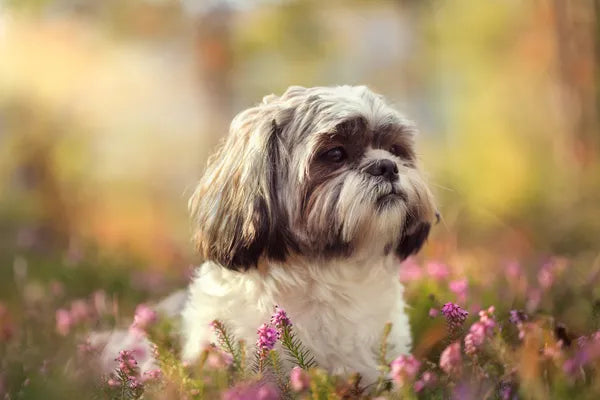
Affectionate, confident and surprisingly spirited for a small dog. Devoted to family and generally good with children who handle it gently. Playful and outgoing with a touch of regal independence. Can be stubborn — the Shih Tzu knows its own mind. Generally sociable with other dogs and pets.

Lifespan
10–16 years; many individuals reach the higher end of this range with good care
Adult Size
4–7.5 kg; 23–27 cm tall at the shoulder
Care Level
Low to Medium
Coat Type

Long, silky, dense double coat. Minimal shedder — shed hair is retained in the coat rather than falling freely. Hypoallergenic-friendly, though not allergen-free. High grooming commitment. Many pet owners opt for a shorter clip.

Energy Level

Low to Medium. Two short daily walks and indoor play are sufficient.

is this the right breed for you?

Owner Suitability

Excellent for first-time owners, apartment dwellers, families with gentle children, retirees and those seeking a devoted companion. Adaptable and people-oriented. Does not suit households where it will be left alone for extended periods. The brachycephalic face requires heat awareness in Australian conditions.

Where the breed comes from

Origin & History

The Shih Tzu is one of the world's oldest companion dog breeds, originating in Tibet and China, where flat-faced dogs were bred as palace pets for Chinese royalty for over 1,000 years. Shih Tzus lived exclusively within the walls of the Forbidden City and were considered sacred — breeding them was a closely guarded imperial secret. They were not introduced to the Western world until 1930 when a pair was gifted from China to England, having been virtually unknown outside East Asia for their entire existence. Recognised by the Kennel Club in 1946, the Shih Tzu rapidly became popular globally. Under the Australian National Kennel Council (ANKC), the Shih Tzu is classified in Group 1 (Toys).

Get it right early

Tips for First-Time Owners

  1. 1 Begin daily tooth brushing from the first week home — dental disease is the most significant long-term health concern in this breed and daily brushing from puppyhood is the most effective prevention available.
  2. 2 Keep the face trimmed and the eye area clean daily — the prominent eyes are vulnerable and daily wiping prevents tear-staining and detects any early eye problems.
  3. 3 Never exercise in hot or humid weather — the flat face compromises heat dissipation. Air conditioning in Australian summers is essential.
  4. 4 Always use a harness rather than a collar — tracheal pressure from a collar can worsen any brachycephalic breathing concerns.
  5. 5 Consider a puppy cut — maintaining the coat in a short clip significantly reduces daily grooming burden while keeping the dog comfortable and well-groomed.
Daily Routine

Care & Exercise

The Shih Tzu is a low-exercise breed well-suited to apartment and compact living. Two short daily walks plus indoor play provide adequate activity. Daily coat and dental care are the most significant ongoing commitments. Build separation tolerance from puppyhood — the breed forms intense bonds and can develop anxiety without early independence conditioning. In Australian conditions, brachycephalic individuals must not be exercised in hot or humid weather and must have access to air conditioning indoors during summer. Feed a quality small-breed diet in measured portions twice daily. Annual vet checks, ear care and dental care are essential.

Coat Care Routine

Grooming

The Shih Tzu coat is high-maintenance. Daily brushing is essential — without it, the long silky coat tangles and mats rapidly, particularly behind the ears, in the armpits and around the legs. Professional grooming every six to eight weeks for trimming is strongly recommended. Many owners maintain a shorter 'puppy cut' to significantly reduce daily grooming requirements while retaining the breed's soft, appealing appearance. Clean the eye area daily — the flat face directs tears toward the facial coat causing staining, particularly in lighter-coloured individuals. Check and clean ears weekly. Brush teeth daily — the small jaw causes crowding and rapid tartar accumulation. Bathe every three to four weeks. Trim nails every three to four weeks. Always use a harness rather than a collar — tracheal pressure from a collar can worsen any brachycephalic breathing concerns.

Did you know

Fun Facts

The Shih Tzu was kept exclusively within the Forbidden City in China for over 1,000 years — bred only for Chinese emperors and given only as gifts to favoured royalty. The breed was entirely unknown to the outside world until 1930, making it one of the most recently 'discovered' of all ancient companion breeds despite its thousand-year history.

The Shih Tzu is directly related to the Lhasa Apso — the Tibetan temple dog — which the Dalai Lama periodically gifted to the Chinese imperial court. Chinese court breeders then crossed these Tibetan dogs with flat-faced Chinese breeds including the Pekingese to create the imperial dog that became the modern Shih Tzu.

The name 'Shih Tzu' means 'lion dog' in Mandarin — a reference to the dog's resemblance to the traditional Chinese artistic depiction of lions, which were sacred Buddhist symbols and guardians. The elaborate head coat styled upward and outward into the characteristic chrysanthemum-like 'bloom' around the face was cultivated specifically to enhance this lion-like appearance.

Day-to-day interaction

Handling & Socialisation

Early socialisation is important to prevent the anxiety and fearfulness that can develop in companion breeds without adequate exposure. Puppy school is recommended. Training requires patience and consistency — the Shih Tzu's independent streak means it learns on its own terms. Short, positive, reward-based sessions work best. Teach children to sit on the floor with the dog rather than picking it up; falls from arms height can injure a dog of this size. The prominent eyes are vulnerable — handle carefully around the face.

Keep them stimulated

Enrichment

Shih Tzus are intelligent and enjoy mental enrichment despite their small size and companion-dog classification. Short trick-training sessions, small puzzle feeders, sniff games and indoor enrichment engage the breed's intelligence and prevent boredom-related problem barking. Rotate toys regularly. The breed is happiest when involved in family activities and benefits from a consistent daily routine. Avoid reinforcing clingy, anxious behaviour through excessive carrying — a confident Shih Tzu is better enriched and less stressed than an over-dependent one.

What to watch for

Common Health Issues

Brachycephalic Concerns: The Shih Tzu's flat face can cause mild to moderate airway compromise. Most individuals snuffle and snore without serious issue, but more severely affected individuals may benefit from BOAS assessment. Never exercise in hot or humid weather — provide air conditioning in Australian summers.

Dental Disease: Most significant long-term health concern — the small jaw causes extreme crowding and early tooth loss. Daily brushing from puppyhood is the most effective prevention.

Eye Conditions: Prominent eyes are vulnerable to corneal ulcers and scratches. Keep hair trimmed away from the eyes; wipe the eye area daily; seek prompt veterinary attention for any cloudiness, redness or squinting.

Patella Luxation: Very common in small breeds; source from health-screened breeders.

Hip Dysplasia: Reported in some lines; source from health-screened parents.

Tear Staining: Daily cleaning and veterinary investigation of underlying causes recommended.

Separation Anxiety: Build independence from day one.

Everything you need

Essentials Shopping List

Setup checklist

  • Quality small-breed dog food (age-appropriate)
  • Shallow stainless steel food and water bowls
  • Small harness (always — never a collar for lead walking)
  • Short lead
  • Crate
  • Small, comfortable dog bed
  • Soft pin brush and fine-tooth comb (daily use)
  • Dog-safe detangling spray
  • Dog-safe shampoo
  • Dog-safe eye wipes (daily)
  • Ear cleaning solution
  • Dog toothbrush and dog-safe toothpaste (daily use)
  • Nail clippers
  • Small training treats
  • Small fillable chew toy
  • Small puzzle feeder
  • Variety of small toys
  • Cooling mat (for Australian summers)
  • Poo bags
  • Flea, tick and worming prevention (vet recommended)
  • Pet insurance (from day one)
FAQ

Commonly Asked Questions

  • Are Shih Tzus suitable for hot Australian summers?

    With care. Their flat face compromises panting efficiency. Never exercise in heat; keep the coat trimmed short in summer; provide indoor air conditioning; ensure constant access to fresh water and shade.

  • Do Shih Tzus shed?

    Very minimally — shed hair is caught in the coat rather than released. This is why professional grooming every six to eight weeks is essential to remove the accumulated coat.

  • Are Shih Tzus easy to train?

    They are intelligent but independent. Short, positive, reward-based sessions work best. They respond on their own terms and do not take well to repetitive or harsh training.

  • How much grooming does a Shih Tzu need?

    Daily brushing at home plus professional grooming every six to eight weeks. Many owners keep the coat in a short puppy cut to reduce the daily brushing requirement.

  • What health tests should I ask for from a breeder?

    BOAS assessment of parents; luxating patella clearance; eye examination; dental and jaw structure evaluation.

Need help?Our specialists are in-store every day to help with sourcing, training and supplies.

Visit Kellyville Pets