Breed Guide6 min read

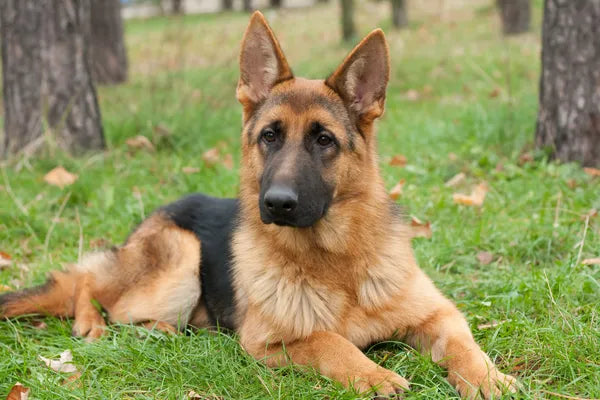
German Shepherd

German Shepherd Dog (GSD) · Alsatian (UK historical name) · Deutsche Schäferhund (German)

  • Easy to train and Good with children
German Shepherd Breed Guide
Temperament

Highly intelligent, loyal and deeply bonded to family. Alert, confident and courageous. Generally good with children and other pets when well socialised, but can be reserved or wary with strangers. The working instinct is strong — needs structure, engagement and a sense of purpose. Without guidance, can become overprotective or anxious.

Lifespan
9–13 years
Adult Size
Males 30–40 kg, 60–65 cm; females 22–32 kg, 55–60 cm. A large, powerful, athletic dog.
Care Level
Medium to High
Coat Type

Double coat; medium-length standard variety or long-coat variety. Heavy, year-round shedder with two major seasonal blow-outs. Not hypoallergenic.

Energy Level

High. Requires 1.5–2 hours of vigorous daily exercise plus mental stimulation.

is this the right breed for you?

Owner Suitability

Intermediate to Advanced. Best suited to experienced, active owners or committed first-time owners willing to invest heavily in training, socialisation and exercise. Demands structured, consistent training from puppyhood. Exceptional in the right hands; challenging without appropriate management.

Where the breed comes from

Origin & History

The German Shepherd (Deutsche Schäferhund) was developed in Germany in the late 19th century by cavalry officer Max von Stephanitz, who aimed to create the ideal German herding and working dog through systematic selective breeding. First exhibited in 1899, the breed proved so versatile — excelling in herding, police and military work, search and rescue, guide dog service and protection — that it rapidly became one of the most widely used working dogs in the world. It has been one of Australia's most consistently popular large breeds for decades. Under the Australian National Kennel Council (ANKC), the German Shepherd is classified in Group 5 (Working Dogs).

Get it right early

Tips for First-Time Owners

  1. 1 Socialise intensively during the critical window of 8–16 weeks and continue throughout the first year — a German Shepherd that is not adequately socialised as a puppy can develop fearfulness and reactivity that is very difficult to address in adulthood.
  2. 2 Commit to ongoing training throughout the dog's life — this is not a breed that can be trained once; it requires continuous engagement, reinforcement and mental challenge.
  3. 3 Source from an ANKC-registered breeder who hip- and elbow-scores breeding dogs and DNA-tests for Degenerative Myelopathy — both conditions have a significant impact on quality of life and can be partially screened for before purchase.
  4. 4 Avoid excessive impact exercise (jumping, hard-surface running) during the first 12–18 months while growth plates are developing — this reduces the risk of worsening any genetic joint predispositions.
  5. 5 Be prepared for the shedding — a German Shepherd is one of the heaviest-shedding breeds available. Invest in a quality deshedding brush, a good vacuum cleaner, and accept that dog hair will be part of life.
Daily Routine

Care & Exercise

The German Shepherd is a demanding breed that requires a substantial daily commitment to exercise, training and mental stimulation. A minimum of 1.5 to 2 hours of vigorous physical activity daily, combined with ongoing structured training, is essential. Without adequate stimulation this breed becomes anxious, destructive and potentially reactive. Training should begin from the first day home and continue throughout the dog's life — this is not a breed that can be trained once and left. Positive reinforcement-based training achieves excellent results; harsh methods create fear and unpredictability. Annual vet checks, hip and elbow scoring awareness, dental care and parasite prevention are foundations of care. Avoid excessive jumping and running on hard surfaces during puppyhood to protect developing joints.

Coat Care Routine

Grooming

The German Shepherd is a heavy shedder and regular grooming is essential for coat health and household management. Brush two to three times per week with an undercoat rake or deshedding brush, increasing to daily brushing during the two major seasonal coat blow-outs. Professional grooming is not typically required but a professional deshed treatment during blow-outs is beneficial. Bathe every six to eight weeks or as needed. Check and clean ears regularly — German Shepherds can be prone to ear infections. Trim nails every three to four weeks. Brush teeth regularly. The coat is relatively easy to maintain outside of shedding seasons.

Did you know

Fun Facts

The German Shepherd was the first breed ever trained as a guide dog for the visually impaired — a program initiated in Germany during World War I to assist blinded veterans, which gave rise to the global guide dog movement. The first guide dog schools in the world used German Shepherds exclusively.

Rin Tin Tin, a German Shepherd rescued from a bombed World War I battlefield in France by American soldier Lee Duncan in 1918, went on to star in 27 Hollywood films and is credited with saving the Warner Bros. studio from bankruptcy during the silent film era — and is reputed to have received the most votes in the first Academy Award for Best Actor, though the Academy awarded the prize to a human.

The German Shepherd's hind leg angulation — the characteristic sloping backline most pronounced in show lines — is a subject of ongoing veterinary and breeding debate. Working-line German Shepherds maintain a straighter topline and are generally considered more structurally sound for long-term joint health.

Day-to-day interaction

Handling & Socialisation

Extensive, structured socialisation from puppyhood is non-negotiable. German Shepherds that are not adequately socialised can develop fearfulness, reactivity and aggression that is extremely difficult to remediate in adulthood. Puppy school followed by ongoing training classes, exposure to a wide variety of people, dogs, sounds, environments and situations during the first year of life, and continued reinforcement throughout adolescence are essential. This breed responds exceptionally well to positive, reward-based training and thrives with clear expectations and consistent leadership.

Keep them stimulated

Enrichment

The German Shepherd's intelligence and working drive make enrichment a fundamental welfare requirement, not a luxury. Without adequate mental and physical stimulation this breed develops behavioural problems rapidly. Structured training activities — obedience, protection sports, agility, tracking, scent work — provide the best enrichment for this working breed. At home, puzzle feeders, training sessions, varied walk routes and interactive play provide daily cognitive engagement. A securely fenced yard with space to run is strongly beneficial. If the dog will be home alone during the day, a dog walker, doggy daycare or structured morning exercise before leaving is important. Consider formal sport or activity training from a young age.

What to watch for

Common Health Issues

Hip Dysplasia: One of the most common hereditary conditions in the breed — abnormal development of the hip joint causing progressive pain, lameness and osteoarthritis. Source from parents with good hip scores (OFA or PennHIP grading). Maintain healthy body weight, avoid excessive jumping in puppies and provide joint-supportive nutrition.

Degenerative Myelopathy (DM): A progressive, incurable neurological disease affecting the spinal cord, causing gradual hind limb weakness and eventually paralysis. DM is particularly prevalent in German Shepherds. Onset is typically from 8–9 years of age. DNA testing for the SOD1 gene mutation is available and recommended. There is no cure; management focuses on maintaining mobility for as long as possible through exercise, hydrotherapy and physiotherapy.

Elbow Dysplasia: Abnormal elbow joint development; source from elbow-scored parents.

Bloat (Gastric Dilatation-Volvulus/GDV): Life-threatening stomach distension and twisting; most common in large, deep-chested breeds. Feed two or more smaller meals daily rather than one large meal; avoid vigorous exercise immediately before or after eating. Emergency veterinary care is required immediately if signs appear (distended abdomen, unproductive retching, restlessness).

Exocrine Pancreatic Insufficiency (EPI): Insufficient production of digestive enzymes causing chronic weight loss despite good appetite. Manageable with enzyme supplementation; source from lines with a clear history of EPI.

Allergies and skin conditions: Environmental and food allergies are reported in the breed.

Everything you need

Essentials Shopping List

Setup checklist

  • Quality large-breed dog food (age-appropriate; joint support formula for seniors)
  • Stainless steel food and water bowls (elevated feeder not recommended — increases GDV risk)
  • Collar with ID tag
  • Harness
  • Standard lead and long training lead
  • Crate (large)
  • Orthopaedic dog bed
  • Undercoat rake or deshedding brush
  • Slicker brush
  • Dog-safe shampoo
  • Ear cleaning solution
  • Dog toothbrush and dog-safe toothpaste
  • Nail clippers
  • High-value training treats
  • Fillable rubber chew toy
  • Puzzle feeders (high-difficulty)
  • Tug toy
  • Fetch toy (ball launcher recommended)
  • Scent work equipment or agility enrolment
  • Poo bags and dispenser
  • Flea, tick and worming prevention (vet recommended)
  • Pet insurance (from day one)
FAQ

Commonly Asked Questions

  • Are German Shepherds good family dogs?

    With proper socialisation and training, yes — they are loyal, protective and generally good with children they are raised with. However, they require experienced, confident handling; they are not ideal for first-time owners without a strong commitment to training.

  • How much exercise does a German Shepherd need?

    1.5–2 hours of vigorous exercise daily, plus mental stimulation through training and enrichment. Under-exercised German Shepherds become destructive, anxious and potentially reactive.

  • What is Degenerative Myelopathy?

    A progressive incurable neurological disease affecting the spinal cord, causing gradual hind limb weakness and eventual paralysis. It typically begins at around 8–9 years of age. DNA testing for the risk gene (SOD1) is available. There is no cure but supportive physiotherapy and hydrotherapy can prolong quality of life.

  • Do German Shepherds shed a lot?

    Yes — heavily year-round with two major seasonal coat blow-outs. Regular deshedding brushing is essential. Dog hair in the home is unavoidable.

  • What health tests should I ask for from a breeder?

    Hip and elbow scores for both parents (OFA, PennHIP or equivalent); DNA test for Degenerative Myelopathy (SOD1); and ideally a clear family history of Exocrine Pancreatic Insufficiency.

Need help?Our specialists are in-store every day to help with sourcing, training and supplies.

Visit Kellyville Pets