Care Guide6 min read

Silkworm

Bombyx mori
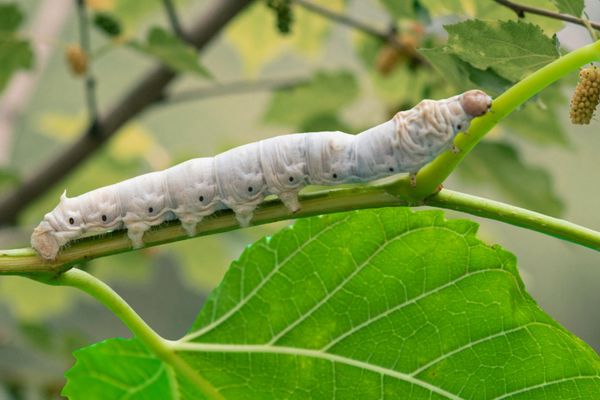
Silkmoth · Mulberry Silkworm

Silkworm Care Guide
Lifespan
6-8 weeks
Adult Size
Full-grown larvae: 7-9cm
Care Level
Low
Diet

Fresh mulberry leaves (Morus species) are the essential food source; dried mulberry leaf powder mixed with water is an acceptable alternative when fresh leaves are unavailable

Enclosure

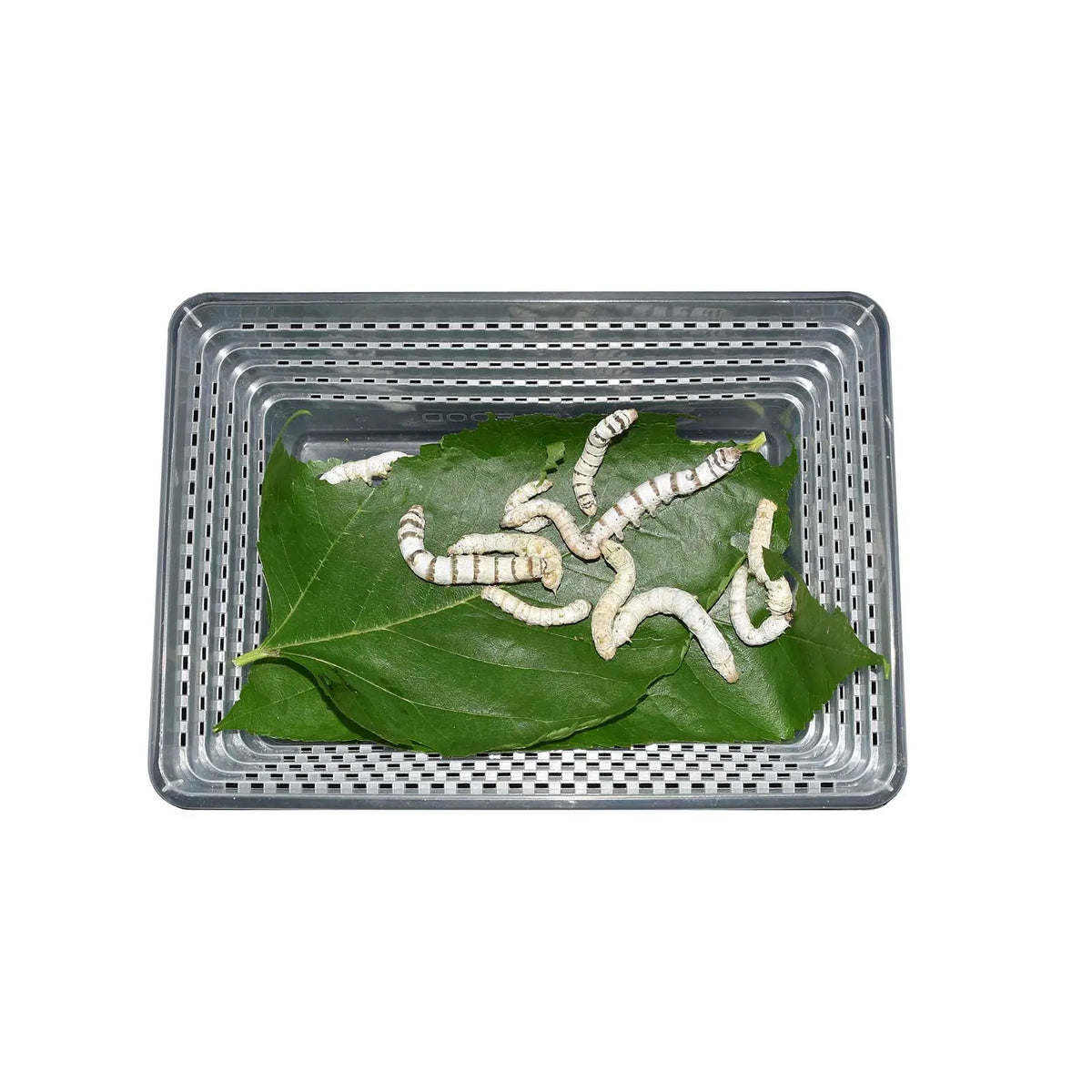
A clean, well-ventilated plastic or cardboard tray, box or container with a breathable lid or mesh cover; no specialist heating required at room temperature

Temperament

Among the most docile of all invertebrates and move slowly, making them ideal for supervised handling by children

Where they come from

Natural History & Origin

Bombyx mori is one of the world's most completely domesticated insects — so thoroughly shaped by thousands of years of human cultivation that it no longer exists as a wild species. Its ancestor, Bombyx mandarina, is native to northern China, where the domestication of the silkworm for textile production is believed to have begun approximately 5,000 years ago.

The silkworm's entire lifecycle — egg, larva, pupa and adult moth — has been shaped by selective breeding to maximise silk yield, docility and ease of handling. Adult moths cannot fly, do not eat, and live only long enough to mate and lay eggs. The larvae are entirely dependent on human-provided food (primarily mulberry leaves) and cannot survive in the wild. This complete dependence on human care, combined with their harmless nature and fascinating lifecycle, makes them an outstanding educational and pet invertebrate for all ages. Full lifecycle: 6–8 weeks from egg hatch to adult moth death. Eggs: 10–14 days to hatch. Larval stage: 4–5 weeks. Pupal (cocoon) stage: 10–14 days. Adult moth: 5–10 days (adults do not feed and live only to reproduce).

In Australia, Bombyx mori is not a native species and its importation is controlled, but captive-bred silkworm eggs and larvae are legally available from specialist suppliers and many pet shops. No keeper licence is required to maintain silkworms.

Get it right early

Tips for First-Time Owners

  1. 1 Secure a reliable source of fresh mulberry leaves before starting — this is the single most important logistical requirement; silkworms cannot be fed most substitutes and a colony will decline very quickly without fresh leaves.
  2. 2 Clean the enclosure every one to two days by transferring larvae onto fresh leaves — accumulated frass is warm and moist and creates ideal conditions for disease.
  3. 3 Never feed wet, wilted or chemically treated leaves — pesticide residues will kill larvae rapidly, and wet leaves cause mould growth that spreads disease through the colony.
  4. 4 When larvae begin to wander and move their heads in a figure-eight pattern, they are ready to spin — provide cardboard tubes or egg carton immediately, or they will spin in the corners of the container and become difficult to manage.
  5. 5 Silkworm eggs can be stored in the refrigerator to pause development and manage timing — this makes it easy to plan when to start a new cycle and is the most practical approach to year-round keeping.
Setting up the habitat

Enclosure & Husbandry

Silkworms do not require a complex or expensive enclosure — a clean, well-ventilated plastic tub, cardboard box or purpose-made silkworm tray is entirely suitable. The most important requirements are adequate ventilation, cleanliness and easy access for daily feeding and cleaning.

A container of approximately 30 cm × 20 cm × 10 cm is suitable for up to 50 larvae in the early instars; larger larvae will need more space as they grow and should be divided into multiple containers if numbers are high. A ventilated lid — mesh, perforated cardboard or a cloth cover secured with a rubber band — allows airflow while preventing escape (larvae will wander, particularly in later instars when they begin searching for a spinning site).

Silkworms do not burrow, do not require substrate, and produce frass (droppings) continuously — the container floor will accumulate frass quickly and must be cleaned at least every two days by gently transferring larvae onto a fresh layer of leaves in a clean container. Never attempt to pick up larvae individually by hand — place a fresh mulberry leaf on top of the current batch and larvae will crawl up onto the fresh leaf within minutes, allowing easy, stress-free transfer.

Temperature should be maintained between 22–28°C for optimal growth. At lower temperatures, larval development slows significantly. At temperatures above 30°C, silkworms are prone to overheating. No UVB, basking heat or specialised lighting is required. When larvae reach their final (fifth) instar and begin to wander or rear up and move their heads in a figure-eight motion, they are preparing to spin their cocoons — provide small cardboard tubes, egg carton sections or bundles of paper to give each larva a spinning anchor point.

What to feed

Dietary Management

Silkworm larvae are almost entirely monophagous — they are evolved to eat mulberry leaves (Morus species) and will not readily accept most substitutes. Fresh mulberry leaves from white mulberry (Morus alba) or black mulberry (Morus nigra) are the ideal food source and should be offered in generous quantities — larvae eat almost continuously and should never run out of food. Leaves should be fresh, clean and free of pesticides, herbicides or other chemical treatments; never collect leaves from roadsides, gardens treated with chemicals, or near agricultural areas that may use sprays.

When fresh mulberry leaves are genuinely unavailable, dried mulberry leaf powder reconstituted with a small amount of water to form a soft paste is a commercially available alternative that many larvae will accept. This is useful during winter or in areas where mulberry trees are not accessible, but fresh leaf is always preferable.

Silkworms do not drink water separately — they obtain all moisture from their food. Do not place wet or freshly washed leaves directly in the enclosure, as excessive moisture causes rapid mould growth and disease. Pat leaves dry or allow them to air dry briefly before offering. Larvae should be fed fresh leaves at least twice daily; older, larger larvae may require three or more feeds per day to keep pace with their intake.

Day-to-day interaction

Handling & Socialisation

Silkworms can be handled freely by all ages. Use a gentle scooping action rather than pinching — larvae are soft-bodied and can be damaged if squeezed. Children should be supervised to ensure gentle handling and hands should be washed before and after contact, as a matter of general hygiene rather than any specific health risk associated with silkworms.

Handling larvae regularly from an early instar helps familiarise them with movement and is a wonderful educational activity. Observing the spinning behaviour of a fifth-instar larva, the emergence of a moth from its cocoon, and the laying of eggs provides a complete and memorable lifecycle experience, particularly for younger keepers.

Did you know

Fun Facts

A single silkworm cocoon is made from a single continuous silk thread that can be up to 1,500 metres long — the basis of the global silk textile industry for over 5,000 years.

Bombyx mori has been so completely domesticated that it is biologically incapable of surviving in the wild — adult moths cannot fly, do not feed, and die within days of emerging. It is one of the very few animals on Earth that exists solely because humans keep and breed it.

The silk thread spun by silkworms is one of the strongest natural fibres known, with a tensile strength comparable to high-grade steel when measured relative to its diameter.

Keep them stimulated

Enrichment

The silkworm lifecycle itself is the primary form of enrichment — for both the animals and their keeper. Providing a variety of fresh mulberry leaf sizes encourages natural browsing behaviour and allows larvae to select leaf material that matches their current body size. Offering spinning structures of varied shapes and sizes (cardboard tubes, rolled paper, egg carton recesses) at the fifth instar allows larvae to select and construct their cocoons with natural variability.

For educational purposes, the lifecycle of Bombyx mori offers an unparalleled opportunity to observe complete metamorphosis — egg to larva (multiple instars), larva to pupa (spinning and cocooning), pupa to adult moth, and egg-laying. Allowing a small group to complete the full cycle, collect eggs, and begin the process again deepens understanding and creates a genuinely self-sustaining educational project.

What to watch for

Common Health Issues

Muscardine (fungal disease) is the most common and serious disease in silkworm cultures, caused by the fungi Beauveria bassiana or Isaria species. Infected larvae become hard and mummified, sometimes with a powdery white or yellow coating. It spreads rapidly through a colony via contact and contaminated surfaces — strict hygiene, clean containers and avoiding damp conditions are the most effective preventative measures. Remove and discard any affected larvae immediately and clean the enclosure thoroughly.

Flacherie is a bacterial disease causing soft, dark, foul-smelling larvae — usually triggered by poor hygiene, overcrowding, overheating or feeding wet or mouldy leaves. Prevention is achieved through cleanliness, correct temperatures and dry, fresh food. Grasserie (nuclear polyhedrosis virus) causes larvae to become shiny, swollen and fragile, eventually liquefying — remove affected individuals immediately to prevent spread. All three conditions are best prevented through consistent hygiene, correct temperature management and quality food. There is no treatment for diseased silkworms; affected individuals should be removed and discarded.

Everything you need

Essentials Shopping List

Setup checklist

  • Ventilated plastic tub, silkworm tray or clean cardboard box (30 × 20 × 10 cm minimum)
  • Mesh or perforated lid for ventilation
  • Fresh mulberry leaves (Morus alba or Morus nigra — pesticide-free)
  • Dried mulberry leaf powder (backup supply)
  • Cardboard tubes or egg carton sections (for spinning stage)
  • Clean paper towel (for container lining)
  • Silkworm eggs or larvae from a reputable supplier
  • Small soft paintbrush or flat spatula (for gentle larva transfer)
  • Hand spray bottle (optional — for very light leaf misting in dry conditions only)
FAQ

Commonly Asked Questions

  • What do I do if I can't find fresh mulberry leaves?

    Dried mulberry leaf powder, available from many reptile and pet suppliers, can be mixed with water to form a soft paste that most larvae will accept. It is a practical short-term alternative, though fresh leaf is always preferred for optimal growth and health.

  • Can I store silkworm eggs and start them later?

    Yes. Eggs that have been laid and allowed to develop for a few days can be placed in a sealed container in the refrigerator (8–12°C) to pause development. They can be stored for several weeks to months this way. Bring to room temperature when ready to hatch a new cycle.

  • Do I need a mulberry tree?

    A mulberry tree is the most convenient and cost-effective long-term leaf source, and Morus alba (White Mulberry) grows readily in most parts of Australia. In the short term, leaves can often be sourced from other keepers, community gardens, and some pet or reptile suppliers.

  • My silkworms have gone dark, soft and smell bad — what has happened?

    This is almost certainly Flacherie, a bacterial infection caused by poor hygiene, overheating or wet food. Remove and discard all affected larvae, clean the enclosure thoroughly, and check that food is dry and fresh before resuming feeding.

  • Do silkworms need any special lighting or heating?

    No. Room temperature of 22–28°C is ideal and requires no additional heating in most Australian homes. No UVB or specialised lighting is needed.

Need help?

Our specialists are in-store every day to help with setup, licensing and feeding.

Visit Kellyville Pets →