


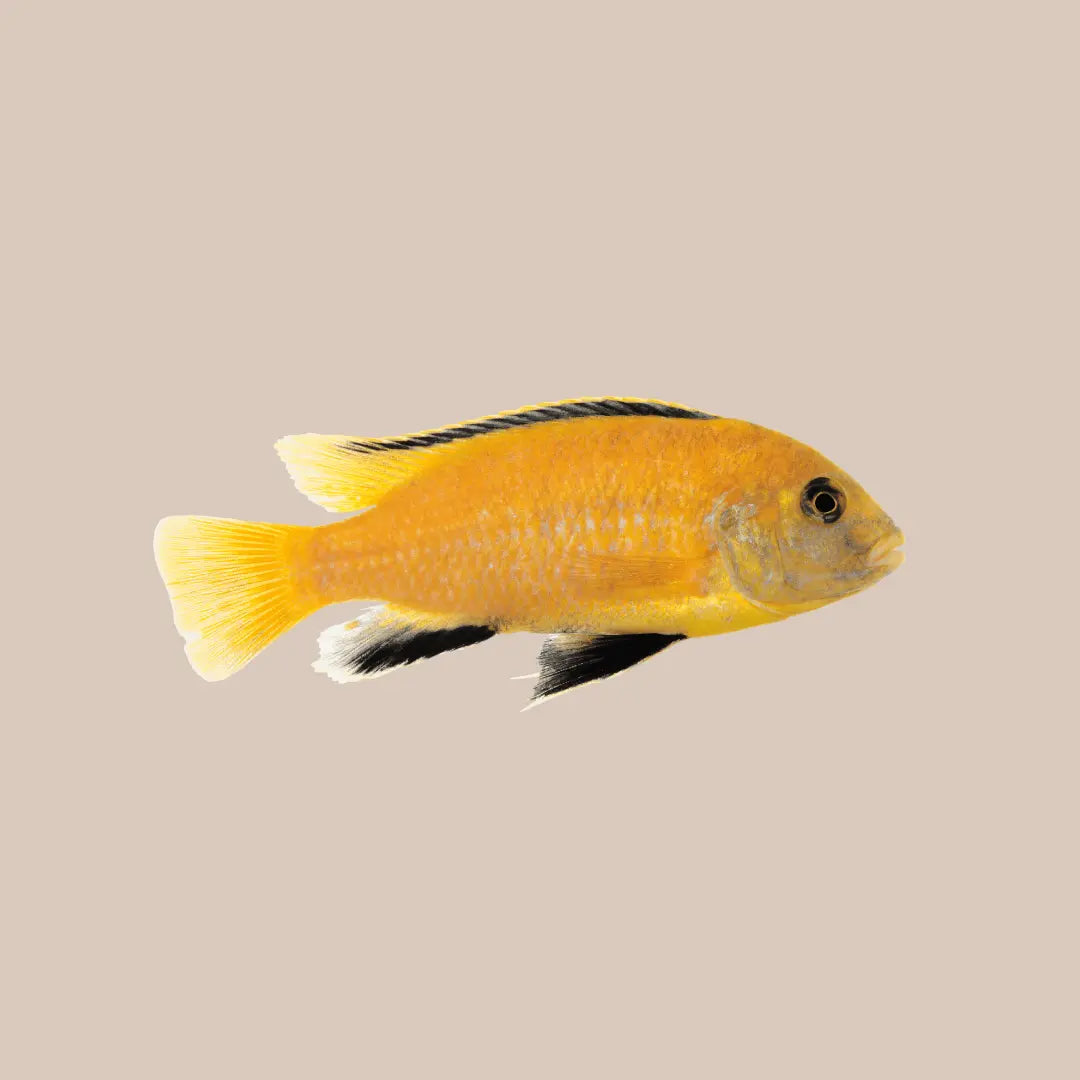
African Cichlids
Cichlidae Family
Download the full care guide (PDF)
Free & Print-ready

8-25 years; varies by species

8-35cm; varies by species

Medium to High


Where they come from
Natural History & Origin


Get it right early
Tips for First-Time Owners
- 1 Maintain hard, alkaline water (pH 7.8-8.5; hardness 10-20 dGH) consistently: this is the single most critical requirement for African cichlid health. Use crushed coral, limestone rocks or buffer products to achieve and maintain the correct chemistry if your tap water is soft or neutral.
- 2 Never feed bloodworms or high-protein animal foods to Mbuna: this causes Malawi Bloat, which is frequently fatal. Feed Mbuna a plant-based spirulina diet.
- 3 For Mbuna, provide more caves than fish and break up all sightlines with rock structure: every individual must have potential refuge. Deliberate slight overcrowding spreads aggression effectively in a well-filtered tank.
- 4 Never mix cichlids from different lake systems: Lake Malawi and Lake Tanganyika species have different water chemistry requirements and are ecologically incompatible as tank mates.
- 5 Allow four to six weeks for the nitrogen cycle to complete fully before adding fish, and quarantine all new fish for two to four weeks before introduction to the display tank.
Setting up the habitat
Enclosure & Husbandry
What to feed
Dietary Management
Day-to-day interaction
Handling & Socialisation
Find your next best friend
Browse all Fish
Our Available Fish


Did you know
Fun Facts
Lake Malawi alone contains over 1,000 described cichlid species — more than the total number of freshwater fish species found in all of Europe combined. This extraordinary diversity is believed to have evolved from a single ancestral cichlid lineage within the past one to two million years, making it the fastest large-scale vertebrate species radiation ever documented.
African cichlids are mouthbrooders: females carry fertilised eggs and developing fry inside their mouths for three to six weeks, fasting throughout the entire brooding period. Fry will dash back into the mother's mouth at any sign of danger for several weeks after becoming free-swimming.
Male Mbuna produce and display egg spots — orange or yellow markings on the anal fin that mimic eggs — during courtship. As the female picks up these 'dummy eggs' during spawning she inadvertently takes in sperm released by the male, fertilising the real eggs already in her mouth: a uniquely sophisticated reproductive deception.
Keep them stimulated
Enrichment
What to watch for
Common Health Issues
Everything you need
Essentials Shopping List
Setup checklist
- Large aquarium: min. 150 cm / 200 L for Mbuna or Peacock colony; 250+ L for Frontosa
- High-quality external canister filter or sump (rated for 2x tank volume)
- Aquarium heater and thermostat (24-27°C)
- Thermometer
- Water quality test kit (ammonia, nitrite, nitrate, pH, hardness)
- Water conditioner / dechlorinator
- Crushed coral substrate or limestone rocks (for buffering pH and hardness)
- Rift Lake salt and buffer products (if local water is soft or neutral)
- Gravel siphon / vacuum
- Rock structure: multiple stacked rocks forming caves and crevices (Mbuna)
- Fine sand substrate (Peacock Cichlid tanks)
- Quality spirulina pellets or flake (Mbuna)
- Quality carnivore cichlid pellets or sticks (Peacocks, Frontosa)
- Frozen krill, mysis shrimp, brine shrimp (Peacocks, Frontosa)
- Aquarium-safe white spot treatment (emergency)
- Quarantine tank (20-40 L, for new and sick fish)
READY TO SET UP
Browse all
Shop the Essentials

Seachem Prime
from$12.99
View →

Aqua One Glass Heater
from$29.99
View →

Seachem Stability Tank Starter
from$12.99
View →

API Tap Water Conditioner
from$11.99
View →

Aqua One Aquis Series II Filter
from$169.00
View →

Fluval 07 Series Canister Filter
from$199.00
View →

Hikari Algae Wafers
from$8.49
View →

Ocean Nutrition Instant Baby Brine Shrimp - 20g
$36.99
View →
FAQ
Commonly Asked Questions
-
Can I mix cichlids from different African lakes?
-
Why are my Mbuna always fighting?
-
What pH and hardness do African cichlids need?
-
Can African cichlids live with plants?
-
Do I need a licence to keep African cichlids in Australia?
Learn more
See more care guides Read about other species
No articles match that search. Try a different word.


Need help?Our specialists are in-store every day to help with set up, licensing and feeding.
Visit Kellyville Pets