Care Guide6 min read

South American Cichlids

Cichlidae Family
Collectively: South American Cichlids.
Angelfish (Pterophyllum scalare)
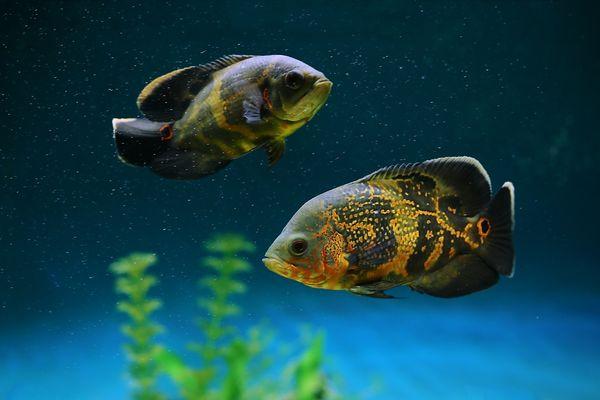
Oscar (Astronotus ocellatus)
German Blue Ram (Mikrogeophagus ramirezi)
Bolivian Ram (Mikrogeophagus altispinosus)
Dwarf Cichlid (Apistogramma spp.)
Eartheater (Geophagus spp.)
Uaru (Uaru amphiacanthoides)

Lifespan
2-15 years; varies by species
Adult Size
5-35cm; varies by species
Care Level
Medium to High (Oscars)
Diet

Quality tropical flakes or pellets for Angelfish and smaller species; large carnivore pellets and varied protein for Oscars; small frozen foods prioritised for Dwarf Cichlids

Enclosure

Species-appropriate aquarium: tall, planted tank for Angelfish; very large, robust setup for Oscars; small planted tank with soft, acidic water for Apistogramma and Rams

Temperament

Varied by species but generally less aggressive than African cichlids. Oscars are highly aggressive and territorial fish

Where they come from

Natural History & Origin

South American cichlids are native to the rivers, lakes and flooded forests of South and Central America, spanning an enormous range of habitats from the clear, blackwater tributaries of the Amazon and Rio Negro to the large, clear rivers of the Orinoco system and the coastal rivers of northeastern Brazil. Unlike African Rift Lake cichlids, South American species occupy a much wider range of water chemistry: soft, acidic blackwater (pH 5.5-6.5) for many Apistogramma and Ram species; soft, neutral (pH 6.5-7.5) water for Angelfish and Oscars; and relatively basic water (pH 7.0-7.5) for Geophagus and related Eartheaters. Eartheaters themselves are a very broad group that covers a wide range of regions so their water conditions are species specific and range from as low as 5.5 pH up to 7.5 for some varieties.

Angelfish are native to slow-moving blackwater rivers, floodplains and quiet tributaries of the Amazon Basin, where they inhabit areas with dense aquatic vegetation and driftwood. They are among the most popular aquarium fish ever kept and have been in the hobby since the 1920s. Lifespan 8-12 years; size 12-25cm.

Oscars are native to a wide range of South American river systems including the Amazon, Parana, Rio Negro and their tributaries. They are large, powerful, highly intelligent fish that develop genuine individual personalities and are known for their ability to recognise their owners. Lifespan 10-15+ years; size 25-35cm.

Apistogramma Dwarf Cichlids are native to the shallow, slow-moving, softwater forest streams, leaf-litter pools and vegetated margins of South American rivers and their tributaries — often areas of extreme water softness and acidity. They are among the most diverse and colourful of all small cichlids and are highly prized by planted aquarium keepers. Lifespan 3-5 years; size 4-9cm.

Get it right early

Tips for First-Time Owners

  1. 1 Match water chemistry to your chosen species before purchasing: Apistogramma and German Blue Rams require soft, acidic water (pH 5.5-7.0) that differs significantly from what most tap water supplies; Oscars and Angelfish tolerate a broader range. Research the specific requirements of your chosen species.
  2. 2 Oscars grow very large very quickly — purchase knowing the minimum adult tank size is 200 litres for a single fish, and do not purchase on the basis of how small the juvenile looks in the shop.
  3. 3 German Blue Rams are temperature-sensitive: keep them consistently above 26°C — below this temperature they rapidly become prone to internal bacterial infections. A reliable, accurate heater is essential.
  4. 4 Quarantine all new fish for two to four weeks before introduction to the display tank: South American cichlids are particularly susceptible to Ich and other parasites introduced via new fish.
  5. 5 Angelfish are vulnerable to fin-nipping: never house them with tiger barbs, serpae tetras or other known fin-nippers. Suitable companions include Corydoras catfish, peaceful tetras, Bristlenose Catfish and docile gouramis.
Setting up the habitat

Enclosure & Husbandry

Tank requirements vary considerably between South American cichlid groups.

Angelfish require a tall aquarium — their laterally compressed, disc-shaped body and long fins are suited to height. A minimum of 80-120 litres in a tall format is recommended for a pair or small group. Water parameters: pH 6.5-7.2, temperature 26-28°C, moderate softness preferred. Angelfish suit a planted community aquarium with other peaceful, similarly-sized, non-fin-nipping species. Dense aquatic planting (tall background plants, broad-leaved midground plants such as Amazon sword, floating plants for diffused light) creates their ideal environment. Avoid pairing with nippy species or very small fish that Angelfish may eat.

Oscars require very large tanks: a minimum of 200 litres for a single adult, 300+ litres for a pair. Water parameters: pH 6.5-7.5, temperature 24-28°C. Oscars are highly destructive of plants and most decor; minimalist setups with smooth rocks, smooth driftwood and bare or pebbled substrate are most practical. Robust external canister filtration rated for at least twice the tank volume is essential given their waste production.

Apistogramma Dwarf Cichlids require soft, acidic water: pH 5.5-7.0 (5.5-6.5 for sensitive species), temperature 24-28°C. A planted tank of 60-100 litres with fine sand substrate, dense planting, driftwood and dried leaf litter (Indian almond leaves) is ideal. They need caves for breeding and shelter — coconut shell halves and small terracotta pots work well. German Blue Rams prefer similar conditions: pH 6.0-7.0, temperature 26-30°C (Rams are particularly sensitive to cold and prone to disease below 26°C). Both groups are incompatible with aggressive tank mates.

Weekly 20-30% water changes are standard across all groups.

What to feed

Dietary Management

South American cichlid dietary requirements vary considerably by species.

Angelfish are omnivores that accept a wide variety of foods: quality tropical flakes, small pellets, frozen bloodworms, frozen brine shrimp and frozen daphnia. They are mid-water feeders that do best with food presented at mid depth. Feed once to twice daily; only offer what is consumed in two to three minutes.

Oscars are voracious carnivore-omnivores with large appetites. The primary diet should be quality large cichlid sticks or pellets. Supplement with frozen silversides, large frozen prawns, earthworms and occasionally live or frozen feeder fish. Avoid over-reliance on feeder goldfish, which are nutritionally poor and carry disease risk. Feed adults once to twice daily; Oscars produce significant waste and tanks must be filtered accordingly.

Apistogramma Dwarf Cichlids and German Blue Rams prefer small, live or frozen foods: frozen bloodworms, frozen brine shrimp, live or frozen daphnia, and micro-pellets. They are less effective at competing for food with larger tank mates and benefit from target feeding. Feed small amounts twice daily.

Remove all uneaten food promptly to maintain water quality. Never feed avocado, onion, processed human food, or any food containing copper.

Day-to-day interaction

Handling & Socialisation

South American cichlids are display fish appreciated through the aquarium glass. Oscars are the most interactive: many will hand-feed, follow the keeper's hand along the glass, and actively solicit attention. Angelfish can be conditioned to hand-feed and become bold at feeding time. Apistogramma are naturally more cryptic and benefit from an environment that encourages natural behaviour over direct interaction.

Physical handling should be avoided except when medically necessary. Use a large, soft fine-mesh net and minimise time out of water.

Angelfish are graceful, relatively peaceful cichlids that can be territorial during breeding but are broadly compatible with appropriate community fish. They pair for life and bonded pairs display clear affection toward each other through mutual following, displaying and fin contact.

Oscars are among the most intelligent and personable of all freshwater fish. They recognise their keeper with certainty, approach the glass at the keeper's appearance, learn feeding routines, and develop distinct individual personalities that keepers find genuinely compelling. They can also be destructive, rearranging decor, uprooting plants and splashing at the waterline when seeking attention.

Apistogramma Dwarf Cichlids are fascinating, colourful fish that display complex pair-bonding, territory establishment and parental care behaviour that belies their small size. Male Apistogramma display their most intense colouration when courting females or defending territory.

Did you know

Fun Facts

Angelfish (Pterophyllum scalare) were the first New World cichlid to be successfully bred in captivity, achieving this milestone in Germany in 1909. In the century since, captive breeding has produced extraordinary diversity in colour and fin form far removed from the wild silver-barred type fish.

Oscars are documented subjects of peer-reviewed research demonstrating that individual fish can recognise their specific keeper's face, distinguishing them from strangers — a level of individual recognition rarely attributed to fish and comparable to abilities previously thought limited to birds and mammals.

Male Apistogramma cichlids can reverse their sex ratio in a breeding group by selectively killing male offspring: females incubating eggs alone can produce a higher proportion of daughters if they detect the absence of other females in the vicinity, an extraordinary reproductive strategy documented in several Apistogramma species.

Keep them stimulated

Enrichment

For Angelfish, a well-planted tall aquarium is itself the most important enrichment: it replicates their natural habitat and provides the sightlines, sheltered areas and swimming space that best express their natural behaviour. Broad-leaved plants (Amazon sword, Echinodorus species) provide resting perches and potential spawning sites. Subdued, consistent lighting and a regular day/night cycle support natural behaviour.

For Oscars, environmental enrichment is critical given their high intelligence. Novel objects introduced safely during maintenance (a new smooth rock, a different driftwood piece) provide stimulation. Oscars will investigate, move, and sometimes mouth new objects. Varied feeding — different food types on different days, and occasional live earthworms — provides feeding enrichment. Oscars particularly enjoy interacting with their keeper through the glass and benefit from consistent daily engagement.

For Apistogramma, a planted tank with caves, driftwood and leaf litter allows full expression of their natural territory-establishment, courtship and breeding behaviour. Watching a pair of Apistogramma defend a clutch of eggs in a coconut cave is one of the most rewarding sights in the freshwater hobby.

What to watch for

Common Health Issues

Hole-in-the-head disease (Hexamita): Parasitic condition causing pitting on the head and lateral line; associated with poor water quality, vitamin deficiency and stress. Particularly common in Oscars and Angelfish kept in suboptimal conditions. Treat under veterinary guidance; prevent through excellent water quality and a varied diet.

Ich (white spot): Very common in South American cichlids, particularly after new fish introduction or temperature drops. Treat with aquarium-safe white spot medication and raise temperature slightly.

Bacterial infections (fin rot, body ulcers): Secondary to injury, poor water quality or stress. Treat with aquarium-safe antibacterial medication and address underlying water quality issues.

German Blue Ram disease sensitivity: Rams are one of the more sensitive cichlids and are prone to internal bacterial infections, particularly when water temperature drops or water quality declines. Maintain 26-30 deg C consistently and test water parameters regularly.

Oscar Hole-in-the-side / Lateral Line Erosion (HLLE): Very common in Oscars maintained in poor water conditions or fed a monotonous diet. Prevent with excellent water quality and dietary variety including fresh vegetables.

Aggression injuries in breeding pairs: Cichlids preparing to spawn become highly territorial; ensure tank mates have adequate escape routes and space.

Everything you need

Essentials Shopping List

Setup checklist

  • Planted tall aquarium: min. 80-120 L for Angelfish; 200+ L for Oscars; 60-100 L for Apistogramma / Rams
  • External canister filter (essential for Oscars: rate for 2-3x tank volume)
  • Aquarium heater and thermostat (26-28°C for Angelfish; 26-30°C for Rams; 24-28°C for Apistogramma;
  • 4-28°C for Oscars)
  • Thermometer (calibrated)
  • Water quality test kit (ammonia, nitrite, nitrate, pH)
  • Water conditioner / dechlorinator
  • Gravel siphon / vacuum
  • Fine sand or aqua soil substrate (Apistogramma / Ram tanks)
  • Smooth gravel or pebble substrate (Oscar tanks)
  • Amazon sword, Echinodorus, Vallisneria, Java fern (Angelfish / Apistogramma)
  • Driftwood and Indian almond leaves (Apistogramma / Ram tanks)
  • Coconut cave halves or small terracotta pots (Apistogramma / Ram breeding)
  • Quality tropical flake or small pellets (Angelfish, Rams, Apistogramma)
  • Large cichlid sticks or pellets (Oscars)
  • Frozen bloodworms, brine shrimp, daphnia (all species)
  • Frozen silversides, large prawns (Oscars)
  • Quarantine tank (for new and sick fish)
  • Aquarium-safe white spot treatment (emergency)
FAQ

Commonly Asked Questions

  • Can Angelfish live with other fish?

    Yes — Angelfish suit a peaceful planted community with Corydoras, peaceful tetras, rasboras and similar. Avoid fin-nippers, very small fish the Angelfish may eat, and aggressive cichlids.

  • How big do Oscars really get?

    25-35 cm is typical for well-kept adults. They grow quickly — a juvenile of 5 cm can reach 20+ cm within 12 months with good feeding. The minimum adult tank size is 200 litres for a single fish.

  • Why are my German Blue Rams dying?

    The most common cause is temperature: below 26°C Rams rapidly become prone to internal bacterial infections that are often fatal. Check the heater accuracy with a reliable thermometer. Poor water quality and unstable parameters are the other primary causes.

  • What water conditions do Apistogramma need?

    Soft, acidic water: pH 5.5-7.0 (5.5-6.5 for many species), temperature 24-28°C, very low to moderate hardness. Many species come from extremely soft, tea-coloured blackwater.

  • Do I need a licence to keep South American cichlids in Australia?

    No licence is required. Source from reputable licensed aquarium suppliers.

Need help?Our specialists are in-store every day to help with set up, licensing and feeding.

Visit Kellyville Pets