Care Guide6 min read

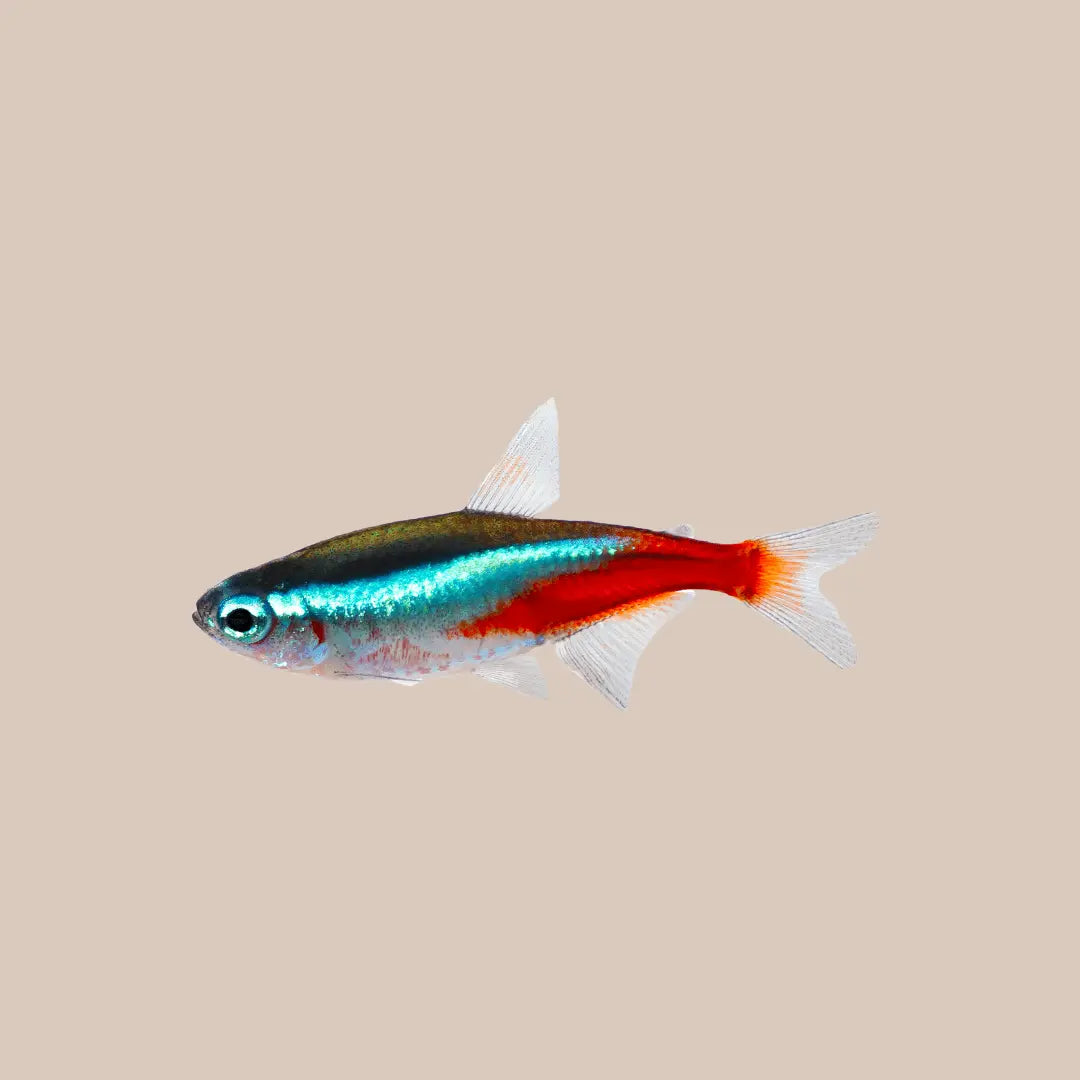
Neon Tetra

Paracheirodon innesi
Neon Fish · Neon (informal)

Neon Tetra Care Guide
Lifespan
5–8 years with good care; up to 10 years in optimal conditions
Adult Size
2.5–4cm
Care Level
Low to Medium
Diet

Omnivore: quality micro-pellets or fine tropical flakes as the staple; supplement with frozen or live baby brine shrimp, daphnia and micro worms; feed small amounts twice daily

Enclosure

Minimum 60 litres for a school of 10+; planted with dark substrate and subdued lighting; 22–26°C; pH 6.0–7.0; gentle filtration

Temperament

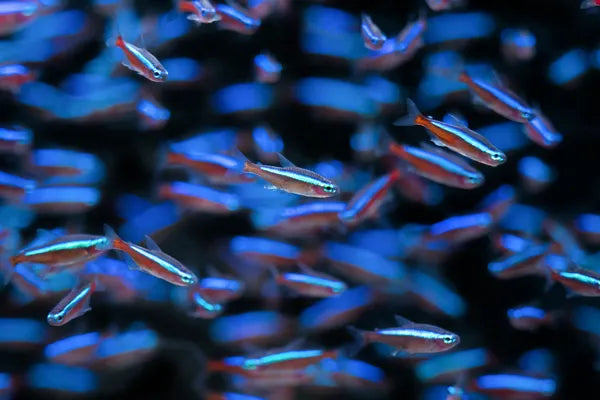
Peaceful, active and social - must be kept in a school of at least six, ideally ten or more. A large school in a planted tank is one of the most visually striking freshwater displays available.

Where they come from

Natural History & Origin

Paracheirodon innesi is native to blackwater and clearwater streams and tributaries of the upper Amazon River basin - primarily Peru, Colombia and Brazil. In the wild it inhabits heavily shaded, slow-moving waters under dense rainforest canopy: soft, slightly acidic, tannin-dark water with minimal direct light. Temperature range typically 20–26°C.

First collected by French aquarium fish exporter Auguste Rabaut in remote Peru in 1934 - the first live specimens in Europe were extraordinary novelties, reportedly exhibited at the Natural History Museum in Paris and attracting large crowds. By the mid-20th century it had become one of the most widely traded freshwater fish in the world. Today virtually all Neon Tetras in the trade are commercially bred, primarily in Southeast Asia.

No licence required in Australia. Never release into Australian waterways.

Get it right early

Tips for First-Time Owners

  1. 1 Cycle the tank completely before adding Neon Tetras - ammonia and nitrite from an uncycled tank are rapidly fatal. Wait until the cycle is complete and parameters are stable.
  2. 2 Keep a school of at least ten - a group of ten or more produces visibly more confident, active and colourful fish that display natural coordinated schooling behaviour.
  3. 3 Quarantine all new fish for two to four weeks before introduction - Neon Tetra Disease is incurable and prevention through quarantine is the only effective strategy.
  4. 4 Use dark substrate and moderate lighting - the Neon Tetra's colouration is most vivid against a dark background. A bright tank with white substrate significantly reduces the visual impact of the school.
  5. 5 Do not house with Angelfish - despite being commonly suggested, Angelfish will eat Neon Tetras as the Angelfish grows. This is predation, not aggression.
Setting up the habitat

Enclosure & Husbandry

Minimum 60 litres for a school of ten or more in a community setting; 40 litres for a dedicated species tank of six to eight. A longer footprint is preferred - Neons are active horizontal swimmers.

Setup should replicate the dimly lit, tannin-stained Amazonian tributary: dark substrate (black or dark brown sand), dense planting with mid-water and floating plants, driftwood and Indian almond leaves for tannins and mild acidification. The electric blue and red colouration is most vivid and most visible against dark substrate under moderate, natural-toned lighting.

Temperature 22–26°C; pH 6.0–7.0; hardness 1–10 dGH. The tank must be fully cycled before any fish are introduced - Neons are sensitive to ammonia and nitrite. Weekly 25% water changes. Gentle filtration only (sponge filter or low-flow internal). Strong currents stress this species. Ensure the tank is fully mature before adding Neons.

What to feed

Dietary Management

Neon Tetras are omnivores with very small mouths - all foods must be fine enough to consume. A quality micro-pellet or finely crushed tropical flake should form the dietary staple; supplement two to three times per week with frozen or live micro-foods: baby brine shrimp, daphnia, micro worms and finely chopped bloodworm. These small proteins enhance colour and condition.

Feed small amounts twice daily - only what the school consumes in two to three minutes. Neons are mid-water feeders; surface-floating foods may be ignored. Varied diet is the most reliable way to maintain vivid iridescent colouration.

Day-to-day interaction

Handling & Socialisation

Fish are not handled. Minimise netting. Use a fine soft mesh net when necessary.

A very small fish that must be kept in a school of at least six - ideally ten or more - to display natural behaviour. Individual fish in small groups become stressed, lose colour and are more vulnerable to disease. They occupy the mid-water column and show no aggression toward any similarly sized or larger peaceful species.

Compatible tank mates must be chosen carefully given the Neon Tetra's very small size - virtually any fish that can fit one in its mouth will eat it. Suitable companions: other small peaceful tetras (Ember, Rummy-nose), Harlequin Rasboras, small Corydoras, small Otocinclus, Dwarf Gouramis, Honey Gouramis, Endler's Livebearers. Avoid: Angelfish (will eat Neons when large enough), large barbs, cichlids of any kind, Bettas and any fish significantly larger than the Neon.

Did you know

Fun Facts

The Neon Tetra's iridescent blue is structural coloration - produced by specialised cells called iridophores that reflect and refract light rather than by pigment. This is the same optical physics responsible for butterfly wing colours and peacock feathers, and explains why the blue stripe shifts intensity depending on light angle and the fish's mood.

When the first live Neon Tetras arrived in Europe from Peru in 1934, they were such an extraordinary novelty that they were reportedly exhibited at the Natural History Museum in Paris and drew widespread press coverage - extraordinary for a fish measuring less than 4 cm.

Neon Tetras naturally and completely fade their colour to near-invisible during sleep at night - a normal physiological response that alarms many new owners seeing their fish looking completely different in the morning. Colour returns fully within minutes of lights coming on.

Keep them stimulated

Enrichment

A densely planted tank with varied depths, dark substrate and floating plants allows natural mid-water schooling. A large, active school in a well-planted tank is its own enrichment - the coordinated movement and colour display of a healthy Neon school is one of the most rewarding observations in freshwater fishkeeping.

Varied feeding - rotating micro-pellets, frozen daphnia, baby brine shrimp and micro worms - stimulates natural foraging. Indian almond leaves and driftwood create the tannin-stained environment the species thrives in and visually enhance colouration.

What to watch for

Common Health Issues

Neon Tetra Disease (NTD): The most serious health concern - caused by the microsporidian parasite Pleistophora hyphessobryconis. Presents as colour fading in patches (blue and red bands become pale or white in affected areas), followed by body wasting, curved spine and death. No effective treatment exists. Prevention only: quarantine all new fish for two to four weeks, maintain excellent water quality, remove affected individuals immediately.

Ich (Ichthyophthirius multifiliis): White spots on body and fins. Treatable with temperature elevation to 28–30°C and appropriate medication.

Velvet (Oodinium): Fine golden dust on body - treat promptly in a hospital tank.

Poor water quality: The most common cause of recurring illness. A fully cycled tank and weekly water changes are the most effective disease prevention.

Everything you need

Essentials Shopping List

Setup checklist

  • Aquarium (minimum 40 litres for small school of 6, minimum 60 litres for school of 10+; longer preferred)
  • Sponge filter or low-flow internal filter
  • Aquarium heater (22–26°C)
  • Thermometer
  • Water quality test kit (ammonia, nitrite, nitrate, pH)
  • Dechlorinator / water conditioner
  • Dark substrate - black or dark brown sand
  • Live plants (mid-water and floating)
  • Driftwood and Indian almond leaves
  • LED aquarium light (moderate; adjustable)
  • Light timer
  • Quality micro-pellets or finely crushed tropical flake
  • Frozen baby brine shrimp, daphnia and micro worms
  • Fine soft aquarium net
  • Gravel vacuum / siphon
  • Quarantine tank (minimum 20 litres; sponge filter; heater)
  • Aquarium-safe algae scraper
FAQ

Commonly Asked Questions

  • Are Neon Tetras good for beginners?

    Yes - one of the best beginner community fish, provided the tank is properly cycled and stable. Sensitive to poor water quality but thrive reliably in a well-maintained established aquarium.

  • Can Neon Tetras live with Angelfish?

    Not recommended. Angelfish will eat Neon Tetras as they grow - this is predatory behaviour, not aggression, and it is instinctive.

  • Why are my Neon Tetras pale in the morning?

    Normal - Neons physiologically fade colour during the night. Returns within minutes of lights coming on.

  • What is Neon Tetra Disease?

    An incurable parasitic disease causing colour fading, body wasting and death. No treatment - prevention through quarantine is the only strategy.

  • How many Neon Tetras should I keep?

    Minimum six; ideally ten or more. Larger schools produce healthier, more active and more spectacular fish.

Need help?Our specialists are in-store every day to help with set up, licensing and feeding.

Visit Kellyville Pets