Care Guide6 min read

Axolotl

Ambystoma mexicanum
Walking Fish ­· Mexican Walking Fish · Mexican Salamander

Axolotl Care Guide
Lifespan
10-15 years
Adult Size
15-45cm; Females typically larger
Care Level
Medium
Diet

Carnivorous diet: earthworms, bloodworms, axolotl pellets and occasional feeder fish, hand-fed with tongs

Enclosure

Cool, well-filtered aquarium (minimum 60cm /75 litres for one adult) with fine sand substrate, hiding spots and stable temperature of 14-20ºC

Temperament

Calm and largely sedentary; they are observation animals best appreciated through the glass

Where they come from

Natural History & Origin

The Axolotl is native exclusively to the lake system of Lake Xochimilco near Mexico City, Mexico. Today wild axolotls are Critically Endangered with populations devastated by introduced predatory fish, pollution and urbanisation. In stark contrast, the axolotl is one of the most extensively maintained amphibians in captivity worldwide, entirely self-sustaining in captive populations.

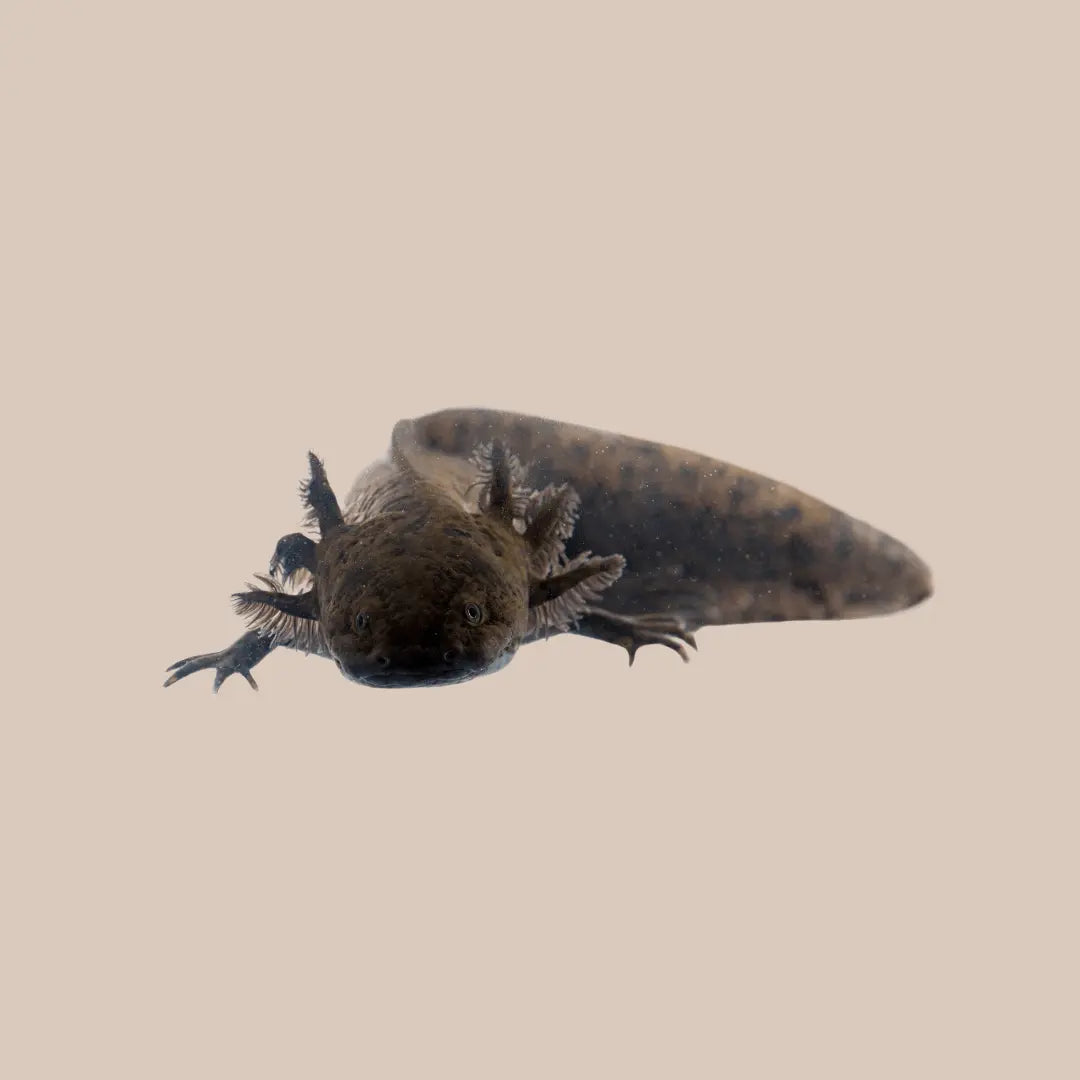
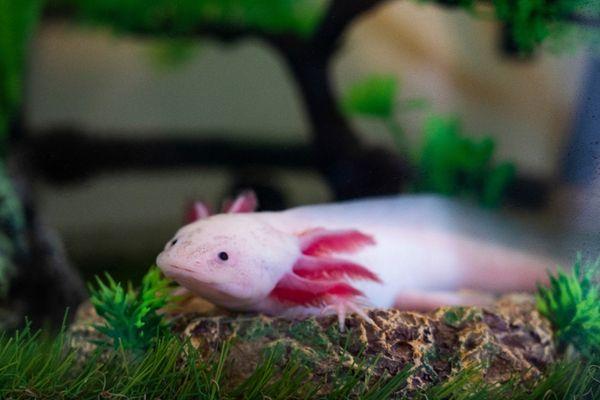
Axolotls are true amphibians but are neotenic, retaining larval characteristics for their entire lives and never undergoing metamorphosis. They remain permanently aquatic, retaining feathery external gills, a broad flat head, and four limbs throughout life. This neoteny makes them extraordinarily valuable in scientific research, particularly the study of regeneration: axolotls can regrow complete limbs, portions of the heart and brain, and even parts of the spinal cord.

Get it right early

Tips for First-Time Owners

  1. 1 Temperature control is critical: axolotls cannot tolerate above 22°C. In warm Australian climates, prepare a cooling plan (chiller, fan, frozen water bottles) before summer.
  2. 2 Only fine sand or bare-bottom substrate: gravel ingestion causes fatal intestinal blockage.
  3. 3 Cycle the tank fully (4-6 weeks minimum) before adding any animal.
  4. 4 Remove all uneaten food within two hours: food waste is the primary cause of ammonia spikes.
  5. 5 Never house axolotls with fish: fish nip the feathery gills, causing injury and stress.
Setting up the habitat

Enclosure & Husbandry

Axolotls require cool, stable water with a preferred range of 14-20°C. In warm Australian climates an aquarium chiller or cooling fan is often necessary in summer. This is the most important and most commonly underestimated requirement.

Minimum tank size: 60 cm (approximately 75 litres) for one adult; 90 cm (150 litres) for a pair. As axolotls generally prefer walking over swimming, a tank with a larger footprint (length and width) is preferable to one with greater depth. This gives the axolotl ample room to move around comfortably. Substrate must be fine sand (2-3 mm particle size) or bare-bottom glass. Coarse gravel is extremely dangerous as axolotls ingest it when feeding, causing fatal intestinal blockage.

Filtration must be gentle as strong currents stress axolotls. A sponge filter or baffled hang-on-back filter is ideal. The tank must be fully cycled before adding axolotls. Provide multiple hides and live or artificial plants for cover. Standard lighting on a 10-12 hour cycle is appropriate. Axolotls should not be kept with fish; tank mates must be same-size axolotls only.

What to feed

Dietary Management

Axolotls are carnivores requiring a meat-based diet. Earthworms (cut to bite-sized pieces) are one of the best staple foods. Other suitable foods include frozen or live bloodworms, frozen or fresh brine shrimp, and quality sinking axolotl or carnivore pellets. Live feeder fish can be offered occasionally but carry disease risk and should not be a staple.

Axolotls swallow food whole; all prey items must be no larger than the width of the axolotl's head. Feed adults two to three times per week; juveniles can be fed daily. Use feeding tongs to deliver food and remove uneaten items promptly: food waste is the primary driver of poor water quality. Remove all uneaten food within one to two hours of feeding.

Day-to-day interaction

Handling & Socialisation

Axolotls rest motionless on the tank bottom during the day (they are nocturnal) and become more active at feeding time and in the evening.

Axolotls should be handled as little as possible. Their skin is extremely delicate and permeable and any unnecessary handling risks damaging the protective mucous layer and introducing infection. When moving an axolotl is unavoidable, use a large, fine, soft-mesh net and minimise time out of water to seconds only. Never hold bare-handed for any length of time. As a precautionary measure, it is recommended to wash your hands with warm water (without soap) to remove any chemical residues from your hands.

Did you know

Fun Facts

Axolotls are neotenic, retaining larval form for life and never transforming into a terrestrial salamander, yet they are sexually mature and can breed.

Axolotls can regenerate not just limbs but also parts of the heart, lungs and brain, and portions of the retina and spinal cord, making them the most regeneratively capable vertebrate known to science.

Their wild population in Lake Xochimilco may number only in the hundreds, yet the captive population worldwide numbers in the millions, one of the most extreme contrasts between wild and captive status of any animal.

Keep them stimulated

Enrichment

Enrichment centres on a naturalistic tank environment. Provide multiple hides of different sizes, live aquatic plants tolerant of cool water (java fern, anubias, water sprite), and rearrange decor occasionally during water changes. Offering live earthworms rather than pellets allows natural hunting behaviour, which is more stimulating for the animal.

What to watch for

Common Health Issues

Fungal infections: White fluffy growths on gills or body, caused by water quality problems or skin damage. Improve water quality; treat with axolotl-safe antifungal under veterinary guidance.

Intestinal impaction from gravel ingestion: Fatal; prevented entirely by using fine sand or bare-bottom substrate.

Ammonia/nitrite toxicity: Causes gill and skin damage; maintain a cycled tank and weekly water change schedule.

Heat stress: Above 22°C causes metabolic failure; monitor temperature daily and have a cooling plan for summer.

Bacterial infections: Arise from poor water quality or wounds; redness, ulceration and lethargy are signs.

Everything you need

Essentials Shopping List

Setup checklist

  • Cycled aquarium (min. 60 cm / 75 litres for one adult)
  • Fine sand substrate or bare-bottom setup (no gravel)
  • Sponge filter or baffled hang-on-back filter
  • Aquarium chiller or cooling fan (essential for Australian summers)
  • Thermometer (checked daily)
  • Aquarium heater (set to max 16-18°C for winter)
  • Caves and hides
  • Aquatic plants (java fern, anubias, water sprite)
  • Water quality test kit (ammonia, nitrite, nitrate, pH)
  • Water conditioner / dechlorinator
  • Feeding tongs or feeding stick
  • Gravel siphon / vacuum
  • Earthworms or nightcrawlers (ongoing food supply)
  • Frozen bloodworms
  • Quality sinking axolotl or carnivore pellets
  • Soft fine-mesh net (for rare necessary transfers)
FAQ

Commonly Asked Questions

  • What temperature does an axolotl need?

    14-20°C ideal; above 22°C they are at serious risk. In warm Australian climates an aquarium chiller is often the most reliable solution.

  • Can I keep an axolotl with fish?

    No. Fish nip their external gills causing injury. Axolotls will also eat small fish. Keep axolotls with same-sized axolotls or alone.

  • Why are my axolotl's gills shrinking?

    Usually a sign of poor water quality. Test for ammonia and nitrite, perform a water change and review your maintenance schedule.

  • How often do I feed an axolotl?

    Adults two to three times per week. Remove all uneaten food within two hours.

  • Do I need a licence?

    No licence is required to keep axolotls in any Australian state or territory.

Need help?

Our specialists are in-store every day to help with setup, licensing and feeding.

Visit Kellyville Pets →