Care Guide6 min read

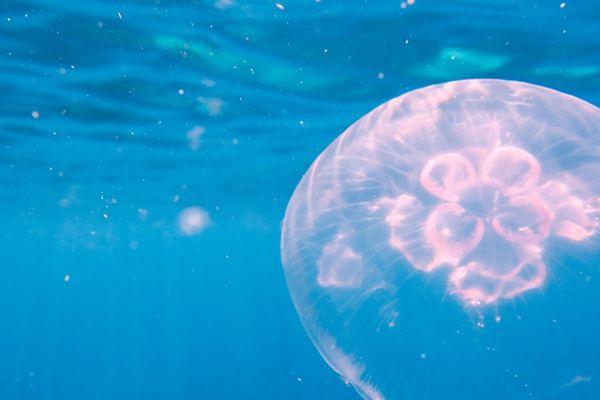
Moon Jellyfish

Aurelia aurita

Common Jellyfish · Moon Jelly

Moon Jellyfish Care Guide
Lifespan
approx. 1 year
Adult Size
up to 15cm diameter
Care Level
Medium
Diet

Live or frozen brine shrimp, rotifers and mysis shrimp, poured over the water surface daily

Enclosure

Specially designed kreisel (circular flow) jellyfish aquarium. Standard aquariums are not suitable and will kill jellyfish

Temperament

Ethereal, peaceful and mesmerising. Jellyfish have no brain, no central nervous system and no capacity for learning or interactive behaviour

Where they come from

Natural History & Origin

Aurelia aurita is found in coastal waters around the world including the Atlantic, Pacific and Indian Oceans and the Mediterranean and Black Seas. In Australia, Moon Jellyfish or very closely related species are found in coastal waters around all states and territories.

In the wild they aggregate in large blooms in coastal bays and estuaries during warmer months. They are planktivores: passive feeders that drift with the current and capture tiny zooplankton on the sticky mucus covering their tentacles and body. Moon Jellyfish have become increasingly popular as aquarium animals over the past decade, supported by the development of purpose-built circular kreisel tanks. They are one of the most manageable jellyfish species for captivity due to their modest temperature and water quality requirements.

Get it right early

Tips for First-Time Owners

  1. 1 A purpose-built kreisel jellyfish tank is not optional: standard aquariums will kill jellyfish.
  2. 2 Pre-prepared natural saltwater from a supplier is safer and more stable than freshly mixed saltwater. If mixing your own, allow it to aerate and stabilise for at least 24 hours.
  3. 3 Jellyfish have no brain: they are not interactive pets. Their appeal is visual and meditative.
  4. 4 Fresh, quality food directly affects bell growth: regularly fed jellyfish grow noticeably; underfed jellyfish shrink.
  5. 5 Moon Jellyfish live approximately one year: plan ahead for sourcing replacement jellyfish.
Setting up the habitat

Enclosure & Husbandry

Moon Jellyfish cannot be kept in standard rectangular aquariums. Their soft bodies are damaged by corners, filter intakes and uneven flow patterns. They require a purpose-built kreisel tank with a circular or cylindrical shape and a gentle, laminar circular water current keeping jellyfish suspended away from all surfaces.

Purpose-built jellyfish aquariums are available from specialist aquarium suppliers. Follow the manufacturer's guidelines for the number and size of jellyfish the tank can support.

Water parameters: temperature 18-25ºC (no heater usually required in Australian homes); pH 7.9-8.4; salinity 34-35 ppt. Pre-prepared marine saltwater is more stable and less stressful than freshly mixed saltwater. Perform 10-15% water changes weekly. Rinse filter sponge monthly in old tank water.

What to feed

Dietary Management

Moon Jellyfish are passive filter feeders capturing food on the sticky mucus of their bell and tentacles. Live or frozen brine shrimp are the most practical and widely accepted food. Rotifers are ideal for small juveniles. Mysis shrimp can supplement for larger individuals.

To feed, prepare the correct amount in a small cup of tank water and pour slowly over the water surface. The circular current will distribute food through the tank. Observe jellyfish stomachs: food should be visible in the central oral arms. Feed until stomachs are visibly full, then stop. Remove any uneaten food with a turkey baster after feeding. Feed daily or every second day. Underfeeding leads to shrinking bell; overfeeding deteriorates water quality.

Day-to-day interaction

Handling & Socialisation

Moon Jellyfish must not be handled. They are extremely fragile and any contact risks destroying the delicate mucus layer and disrupting cnidocyte cells. While Aurelia aurita is among the least venomous jellyfish and generally harmless to humans, the primary concern is damage to the jellyfish. All tank maintenance should use tools (turkey baster, soft sponge on a stick) to minimise disruption.

Their appeal is entirely visual and meditative: the graceful, rhythmic pulsing of a group of Moon Jellyfish in a well-lit kreisel tank is one of the most visually distinctive experiences in the aquarium hobby.

Did you know

Fun Facts

Moon Jellyfish-like creatures have been found in the fossil record from over 500 million years ago, predating most complex animal body plans and surviving every mass extinction event in Earth's history.

Despite having no brain, eyes, heart or central nervous system, Moon Jellyfish can navigate, sense light, detect chemical gradients, and coordinate their entire body through a simple nerve net, demonstrating that complex behaviour can emerge from extraordinarily simple neural architecture.

Under coloured LED lighting, the normally opaque-white body transforms completely: the same animal that appears ghostly white under daylight glows vivid blue, pink or green depending on the light colour.

Keep them stimulated

Enrichment

Jellyfish cannot be enriched in the traditional sense as they have no cognitive capacity. Enrichment is entirely environmental. The coloured LED lighting in purpose-built jellyfish aquariums is the most impactful feature, transforming the translucent bell into vivid blue, pink, green or orange. Maintaining excellent water quality and regular feeding are themselves the most important welfare considerations: a well-fed, high-water-quality jellyfish is a larger, more robust and more beautiful animal.

What to watch for

Common Health Issues

Shrinking and failure to grow: Primary indicator of problems. Usually caused by poor water quality, insufficient feeding frequency, or inappropriate temperature. Perform a water change, increase feeding and check all parameters.

Missing tentacles or holes in the bell: Physical damage from inappropriate flow, contact with surfaces or rough maintenance. Review flow settings.

Bacterial infection: Cloudy mucus, discolouration and tissue deterioration; improve water quality and perform a larger water change.

Salinity fluctuation: Sudden changes cause rapid deterioration; use a hydrometer or refractometer at every water change.

Everything you need

Essentials Shopping List

Setup checklist

  • Purpose-built kreisel jellyfish aquarium
  • Hydrometer or refractometer
  • Thermometer
  • Pre-prepared natural saltwater or marine salt
  • Water quality test kit (ammonia, nitrite, nitrate, pH)
  • Turkey baster or small syringe
  • Soft sponge on a stick
  • Coloured LED aquarium lighting (usually integrated)
  • Frozen brine shrimp
  • Live brine shrimp (or artemia eggs and hatchery)
  • Rotifers (for small juveniles)
  • Frozen mysis shrimp
  • Replacement jellyfish supply (plan ahead)
FAQ

Commonly Asked Questions

  • Can I keep jellyfish in a regular fish tank?

    No. Jellyfish are physically damaged and killed by tank corners, uneven flow and filter intakes. A purpose-built kreisel tank is required.

  • How long do Moon Jellyfish live?

    Approximately one year in captivity.

  • What temperature do jellyfish need?

    18-25ºC, which corresponds broadly to room temperature in most Australian homes.

  • How do I know if my jellyfish are healthy?

    Healthy Moon Jellyfish actively pulse their bells, have intact tentacles, maintain or increase bell diameter, and have visible food in their stomach after feeding. Shrinking is the primary warning sign.

  • Do I need a licence?

    No licence is required in any Australian state.

Need help?Our specialists are in-store every day to help with set up, licensing and feeding.

Visit Kellyville Pets