Care Guide6 min read

Discus

Symphysodon species

King of the Aquarium · Pompadour Fish
Heckel Discus (Symphysodon discus)
Blue Discus (Symphysodon haraldi)
Brown Discus (Symphysodon aequifasciatus)

Discus Care Guide
Lifespan
10-15 years
Adult Size
12-20cm
Care Level
High
Diet

Quality Discus pellets or granules as the dietary foundation, supplemented generously with frozen bloodworms, brine shrimp and beef heart mix

Enclosure

Dedicated Discus aquarium (minimum 150-200 litres for a group of six), warm (28-32ºC), soft and acidic water, with gentle filtration

Temperament

Intelligent, personable and responsive for a fish. Well-settled Discus become bold, recognise their keeper, and approach eagerly at feeding time

Where they come from

Natural History & Origin

Wild Discus are native to warm, soft, acidic blackwater rivers and flooded forest habitats of the Amazon Basin, characterised by very warm water (28-32ºC), extremely soft and acidic conditions (pH 5.5-7.0), low mineral content, heavy tannin staining, low current and dense vegetation.

Discus have earned a reputation as one of the most challenging aquarium fish. They are temperature-sensitive, prone to disease under stress, and best maintained in a dedicated setup. They are not recommended for beginner aquarists without considerable preparation. However, in experienced hands with a well-maintained warm soft-water aquarium, Discus are unparalleled in beauty and have a surprisingly personable nature, learning to recognise their keeper.

Get it right early

Tips for First-Time Owners

  1. 1 Research Discus care thoroughly and establish a mature tank for at least two months before purchasing fish.
  2. 2 Water quality consistency is everything: sudden changes in temperature, pH or hardness cause immediate stress.
  3. 3 Purchase a minimum of six Discus: lone or paired individuals are more stressed and disease-prone.
  4. 4 Source only from reputable Discus specialists who can provide disease-free stock with known water parameters.
  5. 5 Do not attempt Discus as your first fish: gain experience with tropical community fish and hardier cichlids first.
Setting up the habitat

Enclosure & Husbandry

Discus require water maintained consistently at 28-32ºC with a reliable heater accurate to 0.5ºC. They need soft, slightly acidic water (pH 6.0-7.2; hardness below 15 dGH ideally). In areas with hard tap water, an RO unit or mixing with RO water is often necessary.

Minimum tank: 150-200 litres for a group of six (the recommended minimum group size). Discus tanks are either planted (warm-water species like Amazon sword, Vallisneria, Java fern) or bare-bottom (easier to keep clinically clean). Filtration should provide gentle water movement; a sponge filter combined with a lightly baffled canister filter is common. Water changes of 20-30% are required two to three times per week. All replacement water must be conditioned, heated to tank temperature and pH/hardness-adjusted.

What to feed

Dietary Management

Discus have higher protein requirements than most aquarium fish. The staple diet should be a quality Discus-specific pellet or granule. Supplement generously with frozen bloodworms and frozen or fresh brine shrimp. Many experienced Discus keepers also feed a beef heart mix (finely minced beef heart combined with shrimp, spinach and vitamins), which is highly nutritious and eagerly consumed.

Feed adult Discus two to three times daily; small stomachs favour frequent smaller meals over infrequent large ones. Remove uneaten food promptly. Never feed live tubifex worms, which carry a high risk of bacterial disease. Juvenile Discus require four to five feedings daily. Newly acquired Discus may refuse food; patience and offering live or frozen brine shrimp as an inducement is often necessary.

Day-to-day interaction

Handling & Socialisation

Discus are display fish appreciated through the aquarium glass. Acclimatisation to hand-feeding, holding food at the water surface and allowing Discus to take it from the fingers, is a rewarding step once fish are fully settled. Transfers should use a large, fine-mesh soft net and minimise time out of water.

They are relatively peaceful within their group. Dominant individuals may bully subordinates at feeding time; providing multiple feeding areas reduces this.

Did you know

Fun Facts

Discus use remarkable parenting: both parents secrete nutritious mucus from their skin on which newly hatched fry feed for their first week of life, taking turns to present their flanks to the fry.

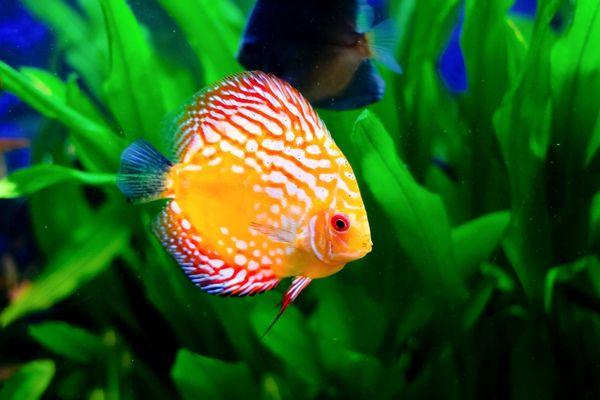
Symphysodon discus (Heckel Discus) is considered by many aquarists the most challenging and most beautiful wild Discus species, with its vivid red barring and bold black vertical bar.

Despite their reputation for difficulty, Discus in a well-maintained aquarium respond to their keeper with a degree of recognition and responsiveness that surprises many fishkeepers.

Keep them stimulated

Enrichment

A high-quality, naturalistic aquarium environment provides the most enrichment. In a planted tank, varied species at different heights create a layered environment reflecting the natural blackwater habitat and reducing stress. Driftwood and dried leaf litter provide visual barriers, natural tannins and a naturalistic feel. A varied and consistent feeding schedule creates the recognition behaviour that makes Discus so appealing.

What to watch for

Common Health Issues

Hexamita / Hole-in-the-head disease: Intestinal flagellate parasites exacerbated by poor water quality; white stringy faeces, lethargy, pitting on the head. Requires veterinary-guided treatment.

White spot (Ich): Treat promptly; particularly dangerous in warm Discus tanks.

Bacterial infections: Often secondary to stress and poor water quality; treat with appropriate antibacterial medication.

Fluke infestations (skin and gill flukes): Common in newly acquired fish; scratching, rapid gill movement, mucus. Treat with aquarium-safe antiparasitic medication.

Nutritional deficiency: Varied diet is essential for health and colouration.

Everything you need

Essentials Shopping List

Setup checklist

  • Dedicated Discus aquarium (min. 150-200 L for a group of six)
  • Accurate aquarium heater and thermostat (29-30ºC)
  • Thermometer (calibrated)
  • Combination sponge filter and gentle canister filter
  • Reverse osmosis unit or water softener (if local water is hard)
  • Water quality test kit (ammonia, nitrite, nitrate, pH, hardness)
  • Water conditioner / dechlorinator
  • TDS meter
  • Gravel siphon / vacuum
  • Driftwood and Indian almond leaves
  • Aquarium plants (Amazon sword, Vallisneria, Java fern)
  • Quality Discus pellets or granules
  • Frozen bloodworms
  • Frozen brine shrimp
  • Beef heart mix (homemade or commercial)
  • Fine-mesh soft net
FAQ

Commonly Asked Questions

  • What temperature do Discus need?

    28-32ºC; 29-30ºC is considered optimal for most captive strains.

  • Can Discus be kept with other fish?

    Yes, but tank mates must tolerate high temperatures and be peaceful. Suitable companions include cardinal tetras, rummy nose tetras, sterbai corydoras and some dwarf cichlid species.

  • Why is my Discus dark and not eating?

    Darkened colouration is the primary stress indicator. Check temperature (sudden drop is the most common cause), test all water parameters, and assess for disease signs. Seek attention promptly if the fish remains dark for more than 24-48 hours.

  • How often do I need to do water changes?

    Two to three times per week for a planted tank; daily in a bare-bottom intensive setup.

  • Do I need a licence?

    No licence is required in any Australian state.

Need help?Our specialists are in-store every day to help with set up, licensing and feeding.

Visit Kellyville Pets