Care Guide6 min read

King Quail

Synoicus chinensis chinensis
Blue-breasted Quail · Chinese Painted Quail · Asian Blue Quail · Chung-chi

King Quail Care Guide
Lifespan
3-6 years
Adult Size
14-16cm; 28-45g
Care Level
Low
Diet

Quality small finch or quail seed mix as the dietary foundation, with egg and biscuit food, live insects, fresh greens and shell grit

Enclosure

Ground-level section of an aviary (minimum 60 x 60 x 45cm floor area per pair), or a dedicated ground-level quail enclosure with dense ground cover material

Temperament

Calm, unobtrusive and non-aggressive. Males produce a soft, pleasant melodic call. Settled pairs display naturally on the aviary floor and integrate well with other species

Where they come from

Natural History & Origin

The King Quail is the smallest of the true quails, native to a vast range spanning South and Southeast Asia, China, Japan, the Philippines, Indonesia and Australia. In Australia, they are found across the northern and eastern coastal regions — from Cape York Peninsula through Queensland, New South Wales, and into Victoria — inhabiting dense grassland, dense ground cover along watercourses, and the edges of sugar cane fields. They are cryptic, secretive birds that spend almost all of their time on or near the ground, relying on camouflage rather than flight to avoid predators.

In aviculture, King Quail are enormously popular as 'cleaners' in mixed aviaries — they live on the aviary floor, consuming fallen seed, insects and droppings that might otherwise accumulate, contributing to a cleaner, healthier aviary environment. They are completely compatible with finches, canaries, doves and grass parrots and cause no harm to other aviary birds. They are also kept in dedicated quail enclosures as attractive and interesting pets in their own right.

In NSW, King Quail are one of the 41 exempt native species — no keeper licence is required. They are widely available from breeders and bird suppliers.

Get it right early

Tips for First-Time Owners

  1. 1 Dense ground cover is the single most important welfare provision for King Quail — a pair without adequate hiding spots will be in a state of chronic low-level stress that affects health, breeding success and lifespan.
  2. 2 In a mixed aviary, King Quail make excellent floor companions for finches, canaries, doves and grass parrots — they occupy a completely different spatial niche and contribute to aviary hygiene by consuming fallen seed and invertebrates.
  3. 3 Never use a bare wire floor in a King Quail enclosure — it is stressful and can injure the feet. Soft natural substrate (dry grass, bark, hay) is essential.
  4. 4 Scatter food at ground level in different positions each day rather than only in a central dish — this encourages natural foraging behaviour and keeps the birds active and engaged.
  5. 5 In NSW, no keeper licence is required for King Quail — they are one of 41 exempt native species. Requirements vary in other states.
Setting up the habitat

Enclosure & Husbandry

King Quail are ground-dwelling birds and need appropriate ground-level space more than height. As aviary floor companions, they utilise the floor space of an existing finch or parakeet aviary and require no additional housing beyond what is already provided — this is their primary appeal in mixed aviary settings. At least 0.5 m² of floor space per pair is recommended to avoid territorial conflict.

For dedicated quail housing, a low enclosure of at least 90cm L x 60cm W x 45cm H provides adequate space for a pair. Cover the floor with a deep layer of dry grass, dry leaves, soft hay, or fine bark mulch — King Quail spend all of their time on the ground and need soft, natural substrate to walk on, dust-bathe in, and build basic nests within. Never use a bare wire floor, which is extremely stressful and injurious to quail.

Provide dense ground cover — tussocks of dry grass, small shrubs, cork bark pieces or timber hide sections — as King Quail are easily stressed in open, exposed environments. They need to feel hidden and secure to remain calm and healthy. Food and water must always be placed at ground level. Do not house with aggressive species, dogs, cats or other animals that may startle them.

What to feed

Dietary Management

King Quail are primarily seed eaters and should be provided with a quality small finch or quail seed mix containing millet, canary seed, pannicum and other small seeds. Unlike larger quail, they do not generally consume pelleted food readily, though very small crumbles can be offered. In an aviary setting they will also consume fallen seed from perches above, reducing waste significantly.

Supplement the diet with egg and biscuit food — important particularly during breeding season to provide protein for egg production and chick growth. Live food — small mealworms, micro-crickets, ant eggs or small mealworm larvae — is greatly appreciated and provides essential animal protein. Small, fresh greens (chickweed, spinach, endive, seeding grasses) can be scattered on the aviary floor to encourage natural foraging behaviour.

Shell grit must always be available — quail are ground feeders and need shell grit for both digestion and calcium. Fresh, clean water in a shallow dish must be available at all times; ensure the dish is shallow enough that newly hatched chicks cannot drown if breeding occurs.

Day-to-day interaction

Handling & Socialisation

King Quail are primarily observation birds and handling should be kept to an absolute minimum. They are very fast-moving and easily stressed when handled, and repeated unnecessary handling can cause chronic stress and shortened lifespan. If handling is required — for health checks, transfer or treatment — use a small, cupped catch-and-release technique quickly and calmly. Never hold King Quail by the legs or wings.

King Quail benefit most from being left to live naturally in an appropriate environment with compatible company. Pairs or small groups (one male to one or two females) should be maintained to allow natural social and breeding behaviour. King Quail are not aggressive and cause no disturbance to other aviary birds. Males produce a soft, melodic call — not loud but pleasant and audible.

When comfortable in their environment, King Quail move freely on the aviary floor, display their attractive plumage, and engage in natural ground-foraging behaviour. When stressed — by a perceived predator, a sudden noise, or insufficient cover — they will attempt to fly vertically (flush), which can cause injury in low-roofed enclosures. Adequate cover prevents most flush incidents.

Did you know

Fun Facts

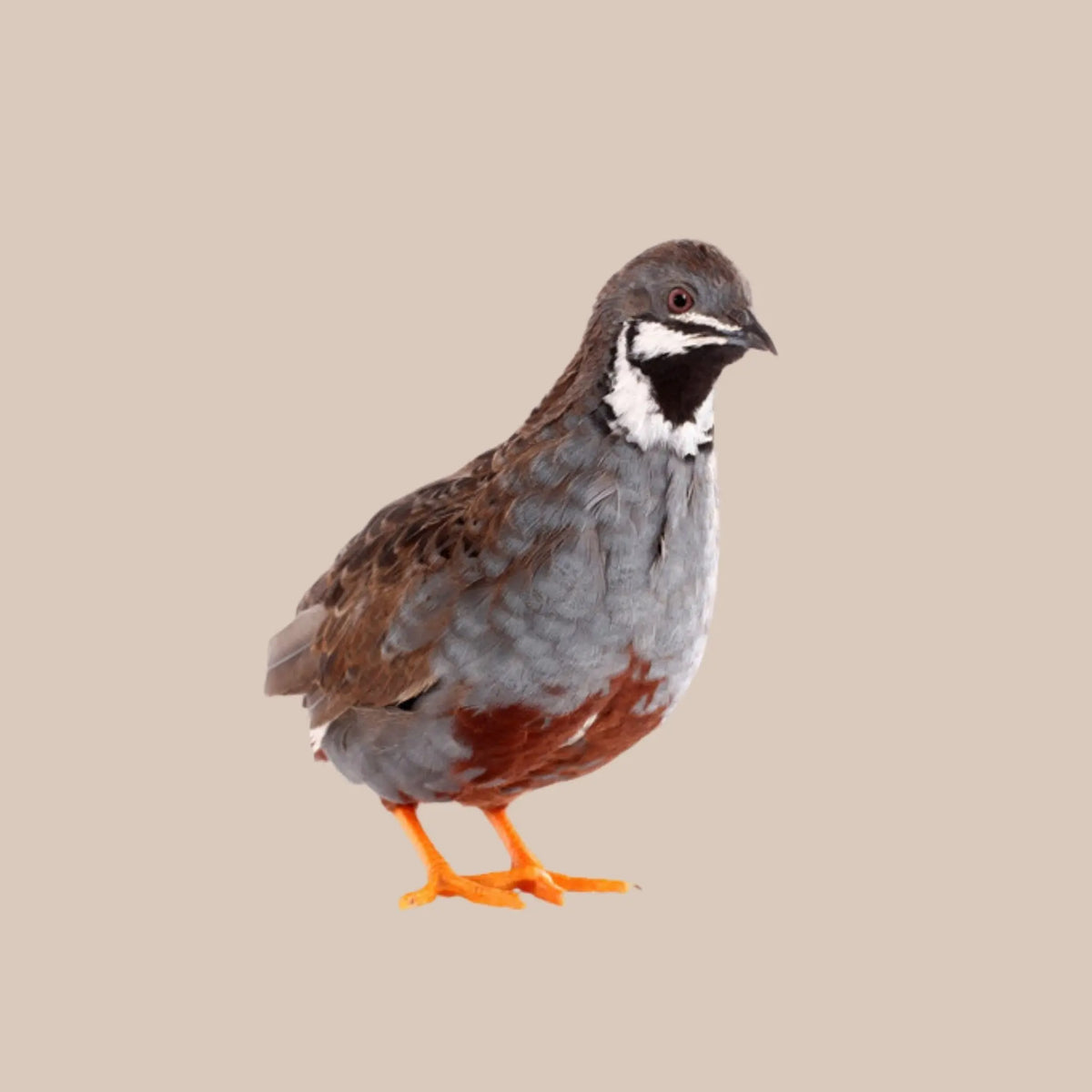
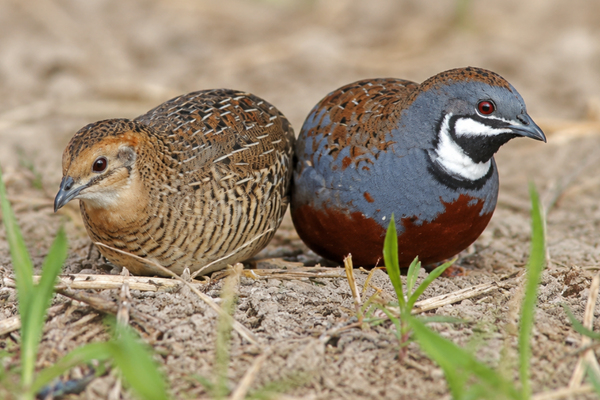
Despite being one of the smallest quail species in the world, the King Quail male is one of the most intricately patterned — the combination of blue-grey, chestnut, black and white in the male's breeding plumage has few parallels among ground-dwelling birds of similar size.

King Quail chicks are among the smallest and most precocial of any bird — they hatch fully feathered and mobile, capable of running within hours of hatching, and are completely self-feeding within days without any brooding assistance from the parents beyond warmth.

In aviculture, King Quail are often referred to as 'self-cleaning cleaners' — not only do they consume fallen seed and food debris, but they also consume their own droppings to some degree (coprophagy), reducing the organic load on the aviary floor.

Keep them stimulated

Enrichment

The best enrichment for King Quail is a well-designed, naturalistic enclosure that fully accommodates their ground-dwelling lifestyle. Dense ground cover — dry grass tussocks, cork bark, logs and leaf litter — allows the birds to move through the environment in a naturalistic way, choosing their own shelter and resting positions. Varying the distribution of ground cover periodically provides novelty.

Scattering food items — seed, mealworms, greens — across the floor in different positions each day encourages natural foraging and searching behaviour, which is the most fundamental expression of the King Quail's daily activity. In a mixed aviary, the constant presence and activity of companion finch and parakeet species provides environmental complexity and stimulation. A dedicated dust bath area of dry fine soil or sand allows the natural parasite-management behaviour that is important for feather and skin health.

What to watch for

Common Health Issues

Stress-related flushing injuries: King Quail will attempt to fly vertically when frightened, and can strike the ceiling or top of the aviary with significant force, causing head and neck injuries. Minimise this risk by providing dense ground cover (reduces fear response), keeping enclosure height moderate, and padding the aviary ceiling or top with soft material in high-risk areas.

Respiratory infections: Often linked to damp or poorly drained enclosure floors. Keep substrate dry and well-ventilated.

Intestinal parasites and coccidiosis: Can spread rapidly in wet, contaminated substrate — maintain a clean, dry floor and change water daily.

External parasites: Lice and mites can affect ground-dwelling birds; maintain clean, dry substrate and inspect birds periodically.

Egg binding: Can occur in breeding females; calcium supplementation and correct diet reduce risk.

Everything you need

Essentials Shopping List

Setup checklist

  • Dedicated quail enclosure — minimum 90 x 60 x 45cm floor area per pair; or aviary floor in mixed species setup
  • Soft natural ground substrate — dry grass, bark mulch, fine hay (10–15 cm depth)
  • Dense ground cover — dry grass tussocks, cork bark pieces, small logs
  • Shallow water dish (shallow enough that chicks cannot drown)
  • Quality finch or quail seed mix
  • Egg and biscuit food
  • Live mealworms or micro-crickets (protein supplement)
  • Fresh leafy greens and seeding grasses
  • Shell grit (always available)
  • Dust bath area — dry fine soil or sand
  • Avian-safe disinfectant
FAQ

Commonly Asked Questions

  • Will King Quail disturb my finches or other aviary birds?

    No — King Quail are entirely peaceful and are among the most compatible aviary floor companions available. They do not compete with perching birds for space, food or nesting sites.

  • Can I keep a single King Quail?

    King Quail naturally live in pairs or small groups and are best kept as a pair or in a small group of one male to one or two females. A solitary King Quail will be stressed and is likely to be chronically anxious.

  • How do I tell a male from a female King Quail?

    Adult males have the distinctive blue-grey chest, chestnut belly and bold black and white facial markings. Females are warm brown with barring throughout. The distinction is clear in adults; chicks and juveniles of both sexes look similar until their adult plumage develops.

  • Do King Quail fly?

    They are capable of flight but rarely fly in normal circumstances — their natural response to danger is to crouch and hide rather than fly. When startled, they can flush violently, which is the primary injury risk in captivity.

  • Do I need a licence to keep King Quail in NSW?

    No — King Quail are one of 41 exempt native species in NSW and no keeper licence is required. Requirements vary in other states — confirm with your state wildlife authority.

Need help?Our specialists are in-store every day to help with set up, licensing and feeding.

Visit Kellyville Pets