


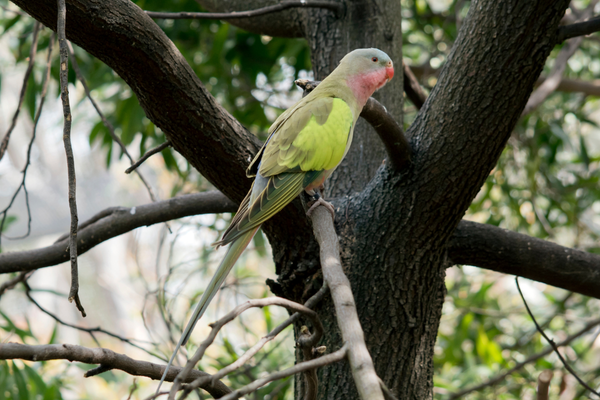
The Princess Parrot is named after Princess Alexandra of Denmark, who later became Queen Alexandra of England — the species was described scientifically in 1863, the same year of her marriage to the Prince of Wales.
Princess Parrot
Polytelis alexandrae

15-20+ years

34-46cm; 90-110g

Low


Where they come from
Natural History & Origin


Get it right early
Tips for First-Time Owners
- 1 Princess Parrots are one of the most elegant-looking Australian parrots — their long tail is a defining feature and the enclosure must be tall enough to accommodate it without causing damage.
- 2 These birds are well suited to aviary keeping and can do very well as a pair in an outdoor flight aviary — they do not necessarily need to be intensively handled to lead a fulfilling life.
- 3 Lutino Princess Parrots are among the most widely available and popular mutations — if selecting a lutino, enquire about the bird's background as some lutino bloodlines can carry associated health vulnerabilities.
- 4 A pellet-supplemented, varied diet is essential for long-term health — Princess Parrots on seed-only diets develop nutritional deficiencies over time.
- 5 In NSW, no keeper licence is required for a Princess Parrot — they are an exempt native species. Requirements vary in other states — confirm with your state wildlife authority and source from a reputable, licensed captive breeder.
Setting up the habitat
Enclosure & Husbandry
What to feed
Dietary Management
Day-to-day interaction
Handling & Socialisation
Find your next best friend
Browse all Handraised Birds
Our Available Handraised Birds
Did you know
Fun Facts
In the wild, Princess Parrots are considered one of Australia's most rarely observed parrots due to their remote, arid habitat and nomadic habits — sightings of wild flocks are uncommon and are considered special events among birdwatchers.
The long, tapering central tail feathers of the Princess Parrot can account for more than a third of the bird's total body length, giving it one of the most proportionally elongated tails of any Australian parrot species.
Keep them stimulated
Enrichment
What to watch for
Common Health Issues
Everything you need
Essentials Shopping List
Setup checklist
- Medium cage or flight aviary — minimum 90 × 50 × 90cm indoor cage; 2.4m L × 0.9m W × 1.8m H outdoor aviary recommended
- Multiple natural timber perches (eucalyptus, grevillea, bottlebrush)
- Food and water dishes (minimum two sets)
- Quality medium parrot pellets
- Quality small parrot seed mix
- Cuttlebone and iodine bell
- Vitamin supplement
- Broad-spectrum bird wormer (quarterly)
- Varied fresh fruit and vegetables (daily)
- Rotating toys: swings, bells, chew items, foraging toys
- Fresh native branches (eucalyptus, grevillea, bottlebrush)
- Shallow bathing dish
- Breathable cage cover
- Avian-safe cage disinfectant
- Annual avian vet check (ongoing)
- Fauna keeper licence (all states and territories)
READY TO SET UP
Browse all
Shop the Essentials

Avigrain Wild Bird Mix 20kg
$28.49
View →

Avigrain Small Parrot Mix 20kg
$36.49
View →

Avigrain Budgie Blue 20kg
$52.99
View →

Budgie Mix
from$15.99
View →

Forage Gourmet Eclectus Food
from$32.99
View →

Forage Pinecone Bird Treat
from$21.49
View →

Save 10%
Vetafarm Parrot Essentials

Forage Gourmet Conure & Quaker Food
from$17.99
View →
FAQ
Commonly Asked Questions
-
Are Princess Parrots good talking birds?
-
Are Princess Parrots better as cage birds or aviary birds?
-
How do I tell male from female Princess Parrots?
-
Do Princess Parrots like being handled?
-
Do I need a licence to keep a Princess Parrot in Australia?
Learn more
See more care guides Read about other species
No articles match that search. Try a different word.


Need help?Our specialists are in-store every day to help with set up, licensing and feeding.
Visit Kellyville Pets