


The Scarlet-chested Parrot male is considered by many aviculturalists to be the most brilliantly coloured of all Australian parrots — the combination of vivid scarlet chest, blue face and green upperparts has no parallel among comparable-sized Australian bird species.
Grass Parrot
Neophema species

10-15 years

18-23cm; 40-65g

Low


Where they come from
Natural History & Origin


Get it right early
Tips for First-Time Owners
- 1 A planted outdoor aviary with access to natural sunlight is the gold standard for Neophema grass parrots — it allows the natural ground-foraging, flight exercise and environmental complexity that best supports their health and breeding success.
- 2 Seeding grasses are the most important dietary supplement you can provide — source them from pesticide-free areas or grow your own for a year-round supply.
- 3 Bourke's Parrots are the most beginner-friendly Neophema species — surprisingly tame even as parent-raised birds, gentle in temperament and hardy in captivity. They are universally recommended as the best starting point for new grass parrot keepers.
- 4 In NSW, the Turquoise Parrot requires a Class 1 Bird Keeper Licence; Bourke's, Scarlet-chested and Elegant Parrots are exempt. Confirm requirements for all species with your state wildlife authority before purchasing.
- 5 Never house grass parrots with larger, more dominant species — their gentle temperament makes them vulnerable to intimidation and injury from larger parrots. They are often compatible with finches, canaries, doves and other grass parrots depending on space and breeding conditions.
Setting up the habitat
Enclosure & Husbandry
What to feed
Dietary Management
Day-to-day interaction
Handling & Socialisation
Find your next best friend
Browse all Aviary Birds
Our Available Aviary Birds
Did you know
Fun Facts
Bourke's Parrots are predominantly crepuscular — most active at dawn and dusk — and in the wild may fly many kilometres to and from water sources during these low-light periods, a behavioural adaptation to their harsh arid habitat.
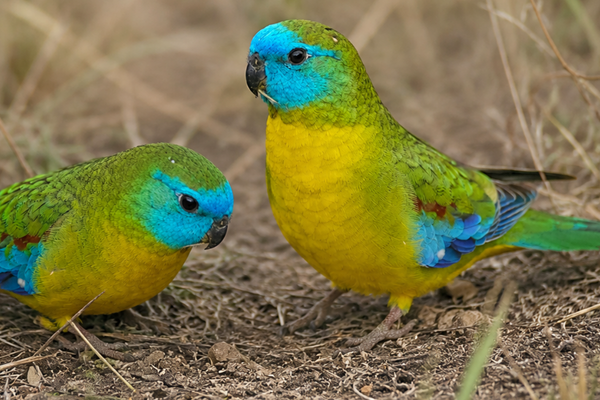
The Turquoise Parrot declined severely in the wild during the early 20th century due to habitat clearing, drought and predation by introduced animals, and was believed extinct for a period in the 1930s and 1940s before wild populations were rediscovered. Captive breeding has since produced a large, thriving population in Australian aviculture.
Keep them stimulated
Enrichment
What to watch for
Common Health Issues
Everything you need
Essentials Shopping List
Setup checklist
- Outdoor aviary — minimum 1.8 m L x 0.9 m W x 1.8 m H per pair; 2.4–3.6 m length preferred; OR indoor flight cage (minimum 90 x 45 x 60 cm)
- Natural ground cover — grass tussocks, leaf litter, low shrubs
- Natural timber perches from native species (eucalyptus, grevillea, bottlebrush)
- Small parrot nest box (15 x 15 x 25 cm) — for breeding pairs
- Food and water dishes (at ground or low level)
- Quality small parrot or neophema seed mix
- Seeding grasses (pesticide-free — regular fresh supply)
- Egg and biscuit food (especially during breeding and moult)
- Fresh leafy greens (daily)
- Shell grit (always available)
- Cuttlebone
- Vitamin supplement
- Shallow bathing dish
- Broad-spectrum bird wormer (quarterly)
- Avian-safe aviary disinfectant
- Annual vet check (recommended)
- Fauna keeper licence (Turquoise Parrot — Class 1 in NSW; confirm all species/states with wildlife authority)
READY TO SET UP
Browse all
Shop the Essentials

Avigrain Wild Bird Mix 20kg
$28.49
View →

Avigrain Small Parrot Mix 20kg
$36.49
View →

Avigrain Budgie Blue 20kg
$52.99
View →

Budgie Mix
from$15.99
View →

Forage Pinecone Bird Treat
from$21.49
View →

Save 10%
Vetafarm Parrot Essentials

Forage Gourmet Conure & Quaker Food
from$17.99
View →

Avigrain Grey Striped Sunflower Seed 15kg
$37.99
View →
FAQ
Commonly Asked Questions
-
Which Neophema species is best for a beginner?
-
Can I keep different Neophema species together?
-
Do grass parrots make good pets for handling?
-
Do I need a licence for Neophema parrots in NSW?
-
Are grass parrots noisy?
Learn more
See more care guides Read about other species
No articles match that search. Try a different word.


Need help?Our specialists are in-store every day to help with set up, licensing and feeding.
Visit Kellyville Pets