Care Guide6 min read

Red-tailed Black Cockatoo

Calyptorhynchus banksii
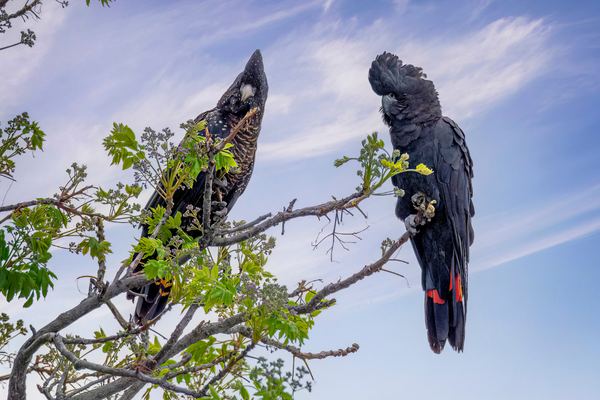
Banksian Cockatoo · Red-tailed Cockatoo · Banks' Black Cockatoo

Red-tailed Black Cockatoo Care Guide
Lifespan
40-50+ years
Adult Size
55-65cm; 680-950g
Care Level
High
Diet

Quality large parrot or cockatoo pellets as the dietary foundation, with daily fresh fruit, vegetables and native seed

Enclosure

Very large, purpose-built outdoor aviary or indoor room-sized enclosure, with multiple heavy-duty perches, native branches and large robust toys

Temperament

Deeply bonded, highly intelligent and emotionally expressive. Less vocal than white cockatoos but powerful when they call

Where they come from

Natural History & Origin

The Red-Tailed Black Cockatoo is found across much of mainland Australia, with different subspecies occupying distinct geographic ranges. The Northern subspecies (C. b. banksii) and the Large-billed subspecies (C. b. macrorhynchus) are widespread across tropical and subtropical northern and northeastern Australia, inhabiting open eucalypt woodland, tropical savanna and forest, where they feed primarily on seeds of eucalyptus, casuarina, grevillea and other native trees. The Forest subspecies (C. b. naso) is restricted to jarrah forests of southwestern Western Australia. The Inland subspecies (C. b. samueli) occupies the inland wheat belt and river systems of western and inland Australia. The Southeastern subspecies (C. b. graptogyne) is restricted to a small area of Victoria and South Australia and is listed as Endangered — this subspecies must not be kept as a pet.

Red-Tailed Black Cockatoos are among the most impressive birds in Australian aviculture. They are long-lived, highly intelligent, and deeply bonded to their owners. They are also a very significant commitment — requiring a very large, purpose-built enclosure or aviary, extensive daily interaction, and an experienced keeper. Hand-raised male birds are generally considered the most tractable as pets.

A fauna keeper licence is required in all states and territories. Some states may require an advanced or higher-class wildlife licence for this species. Confirm current requirements with your state wildlife authority before purchasing.

Get it right early

Tips for First-Time Owners

  1. 1 The housing requirement for a Red-Tailed Black Cockatoo is a purpose-built large aviary or bird room — this is not negotiable and cannot be substituted with a large standard cage.
  2. 2 This bird may outlive you — this is not a metaphor. A lifespan of 40-50+ years is realistic. Provisions for the bird's future care in your absence are a genuine legal and ethical responsibility.
  3. 3 Daily branch provision is as important as daily food — the ability to chew and strip native branches is a fundamental psychological and physical need for this species.
  4. 4 The Southeastern subspecies (C. b. graptogyne) is Endangered and must not be kept — confirm subspecies identification with your breeder and compliance with your state wildlife authority.
  5. 5 A fauna keeper licence is required in all states and territories; in NSW a Class 1 Licence is required and all transactions must be notified in writing. Confirm all requirements before purchasing.
Setting up the habitat

Enclosure & Husbandry

Red-Tailed Black Cockatoos cannot be adequately housed in a standard bird cage — they require a purpose-built, large outdoor aviary or a dedicated indoor space. A minimum aviary size for a single bird is 6m L × 2m W × 2.5m H; larger is strongly recommended. The aviary must be constructed from extremely heavy-gauge wire framing — standard birdcage wire will be destroyed by the powerful beak of a large black cockatoo. Steel framing and heavy-grade 12.7mm × 12.7mm or 25mm × 25mm welded wire are appropriate minimum standards.

Provide heavy-duty hardwood perches of large diameter (minimum 5–8 cm), securely fixed. Regularly provide fresh native timber branches — eucalyptus, casuarina, grevillea — for chewing, foraging and environmental enrichment. These will be stripped and destroyed rapidly and should be replaced frequently. This is not optional — branch chewing is a fundamental physical and psychological need for this species.

Include multiple heavy-duty toy stations, a dedicated food and water area, and protected weatherproof shelter within the aviary. For indoor housing, a dedicated bird room of at least 3m × 3m with bird-proofed surfaces is the minimum workable indoor arrangement. Keep strictly away from kitchen fumes.

What to feed

Dietary Management

Red-Tailed Black Cockatoos should be fed a quality large parrot or cockatoo pellet as the primary dietary component — approximately 60–70% of total diet. Supplement daily with a generous variety of fresh fruit and vegetables, including apple (seeds removed), pear, mango, fig, capsicum, corn, broccoli, carrot, leafy greens and sweet potato. Never feed lettuce, avocado, apple seeds, chocolate, caffeine, onion, garlic or processed and salted human foods.

In the wild, Red-Tailed Black Cockatoos specialise in cracking large, hard seed capsules from trees such as eucalyptus, casuarina and grevillea — providing native nuts, fresh eucalyptus branches with seed capsules, and casuarina branches for natural feeding behaviour is highly beneficial. A quality large parrot or cockatoo seed mix can supplement the diet. Sunflower seeds are high in fat and should be limited.

A quality calcium supplement such as a quality liquid calcium supplement is recommended, particularly for birds in their first year. Cuttlebone and iodine bells should always be available. Vitamin supplements (a quality bird vitamin supplement) can be added to water two to three times per week. Fresh water must be changed daily. Worming every three months with a broad-spectrum bird wormer.

Day-to-day interaction

Handling & Socialisation

Red-Tailed Black Cockatoos form extremely strong attachments to their primary carers and can express a wide range of emotions — contentment, excitement, frustration and apparent affection — with great clarity. They are not as continuously vocal as white cockatoos, but when they do call, the sound is deep, powerful and carries considerable distance. Hand-raised males are generally considered the most manageable and interactive.

Red-Tailed Black Cockatoos require confident, consistent and experienced handling. They are powerful birds with enormous beak force — a serious bite from a large black cockatoo is a significant injury risk. Establish step-up and step-down as foundational safety behaviours from day one using positive reinforcement. Never punish or force a defensive bird — patience and reward-based training are the only effective approach.

Handle for at least one to two hours daily to maintain tameness and bond strength. Read body language consistently — raised crest, flattened feathers and tail fanning indicate emotional state and should inform the interaction. Out-of-cage or aviary time with a dedicated perch stand is important for physical activity and social engagement.

Did you know

Fun Facts

The Red-Tailed Black Cockatoo is named after Joseph Banks, the botanist who sailed with Captain James Cook — its species name banksii honours his contributions to the documentation of Australian natural history during the 1770 voyage of HMB Endeavour.

All cockatoos, including Red-Tailed Black Cockatoos, are almost exclusively left-footed — they use the left foot to hold food items and manipulate objects in the same way humans are right or left-handed, and the preference for the left foot is consistent across nearly all cockatoo species.

Wild Red-Tailed Black Cockatoos are seed specialists that can extract seeds from some of the hardest, most tightly sealed seed capsules of any bird — their massive beak can crack eucalyptus and casuarina seed capsules that would resist tools, and this specialised feeding behaviour makes them important seed dispersers in Australian forests.

Keep them stimulated

Enrichment

Red-Tailed Black Cockatoos require an exceptional level of enrichment given their intelligence, physical strength and longevity. Providing fresh native branches daily is the most fundamental form of enrichment — branch chewing is a deeply ingrained natural behaviour that supports psychological wellbeing and beak health simultaneously. Eucalyptus, casuarina and grevillea branches with seed capsules provide the most engagement.

Large, heavy-duty chew toys, foraging stations and puzzle feeders of appropriate size challenge the bird's intelligence and provide physical activity. Rotate enrichment items regularly. Positive reinforcement trick training provides cognitive engagement and strengthens the keeper-bird relationship significantly. For birds in large outdoor aviaries, seasonal variation in temperature, natural sunlight, and the sounds and smells of the outdoor environment are themselves a form of environmental enrichment.

What to watch for

Common Health Issues

Feather Destructive Behaviour: Can develop with insufficient social interaction, inadequate enrichment or underlying medical causes — prevention requires high daily engagement and environmental complexity.

PBFD (Psittacine Beak and Feather Disease): A serious and incurable viral disease particularly devastating in this species — source from PBFD-tested, reputable breeders.

Psittacosis (Chlamydiosis): Annual vet checks and hygiene are preventative.

Proventricular Dilatation Disease (PDD): A serious neurological and digestive viral disease — source from healthy breeders.

Heavy metal toxicity: Ensure all cage and aviary materials are free of zinc and lead — large cockatoos will chew cage fittings.

Respiratory infections: Maintain good aviary ventilation. Any significant changes in behaviour, appetite or physical condition in a bird of this value and longevity should be assessed by an experienced avian vet promptly.

Everything you need

Essentials Shopping List

Setup checklist

  • Very large purpose-built outdoor aviary — minimum 6m L × 2m W × 2.5m H with heavy-gauge wire on steel framing
  • Heavy-duty hardwood perches (minimum 5–8 cm diameter), multiple, very securely fixed
  • Dedicated play stand / perch station for out-of-aviary time
  • Stainless steel heavy-duty food and water dishes
  • Quality large parrot or cockatoo pellets
  • Quality calcium supplement
  • Varied fresh fruit and vegetables (daily)
  • Quality large parrot or cockatoo seed mix (supplement)
  • Cuttlebone and iodine bell
  • Vitamin supplement
  • Broad-spectrum bird wormer (quarterly)
  • Large heavy-duty chew toys and foraging stations (ongoing)
  • Fresh native branches — eucalyptus, casuarina, grevillea (daily or near-daily replacement)
  • Avian-safe disinfectant
  • Annual avian vet check (ongoing)
  • Fauna keeper licence — Class 1 in NSW; confirm requirements in other states
FAQ

Commonly Asked Questions

  • How long do Red-Tailed Black Cockatoos really live?

    Very long — 40–50 years in captivity is realistic, and some individuals may live considerably longer. This is one of the most important factors to consider before acquiring one.

  • Do male and female birds make equally good pets?

    Hand-raised males are often regarded as especially interactive, though temperament varies considerably between individuals. Females can also make excellent pets but may be somewhat more independent or territorial in some individuals.

  • What subspecies are available to keep in Australia?

    The Northern (C. b. banksii) and Large-billed (C. b. macrorhynchus) subspecies are most commonly available in captive aviculture. The Southeastern subspecies (C. b. graptogyne) is Endangered and must not be kept — verify subspecies with your breeder.

  • What size aviary does a Red-Tailed Black Cockatoo need?

    An absolute minimum of 6m L × 2m W × 2.5m H, constructed from very heavy-gauge wire on steel framing. Larger is always better. Standard bird cages are entirely inadequate.

  • Do I need a special licence for this species?

    A fauna keeper licence is required in all states and territories. In NSW a Class 1 Bird Keeper Licence is specifically required and transactions must be notified. Confirm current requirements with your state wildlife authority.

Need help?Our specialists are in-store every day to help with set up, licensing and feeding.

Visit Kellyville Pets